Department of Pharmacy, Pharmacology and Toxicology, School of Veterinary Medicine and Sciences, University of Ngaoundéré, Ngaoundéré, Cameroon.
MOSAIC, Yaoundé, Cameroon.
BMC Public Health. 2019 Aug 19;19(1):1135. doi: 10.1186/s12889-019-7450-5.
Antimicrobial resistance (AMR) is widely acknowledged as a global health problem, yet in many parts of the world its magnitude is not well elucidated. A baseline assessment of the AMR prevalence is a priority for implementation of laboratory-based AMR surveillance This review, focused on a One health approach, aimed at describing the current status of AMR in Cameroon.
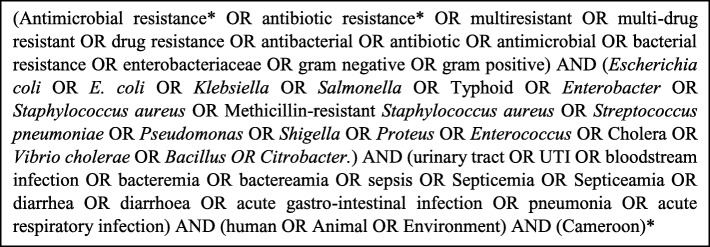
PubMed, Google Scholar and African Journals Online databases were searched for articles published in English and French in accordance with the PRISMA guidelines. Retrieval and screening of article was done using a structured search string with strict inclusion/exclusion criteria. Free-text and grey literature were obtained by contacting the authors directly. The pooled prevalence and 95% confidence intervals were calculated for each pathogen-antibiotic pairs using random-effects models.
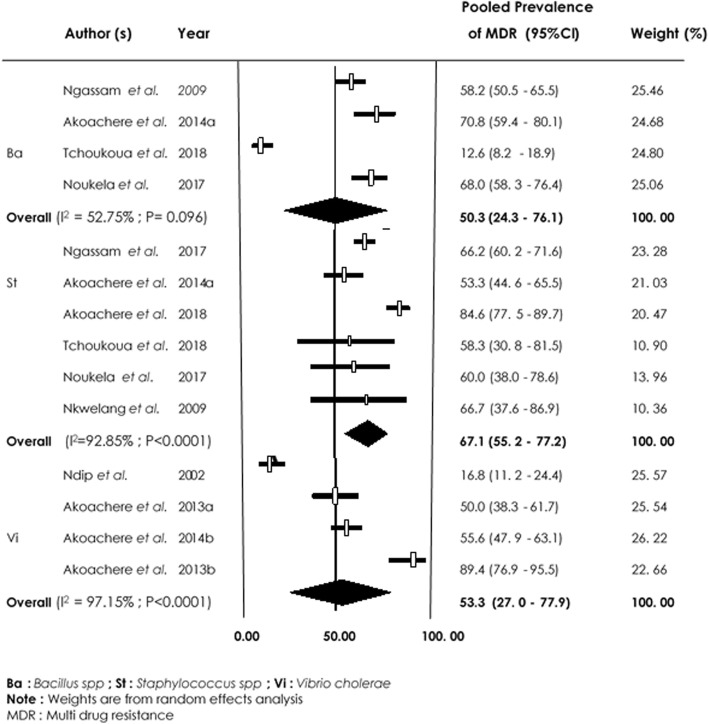
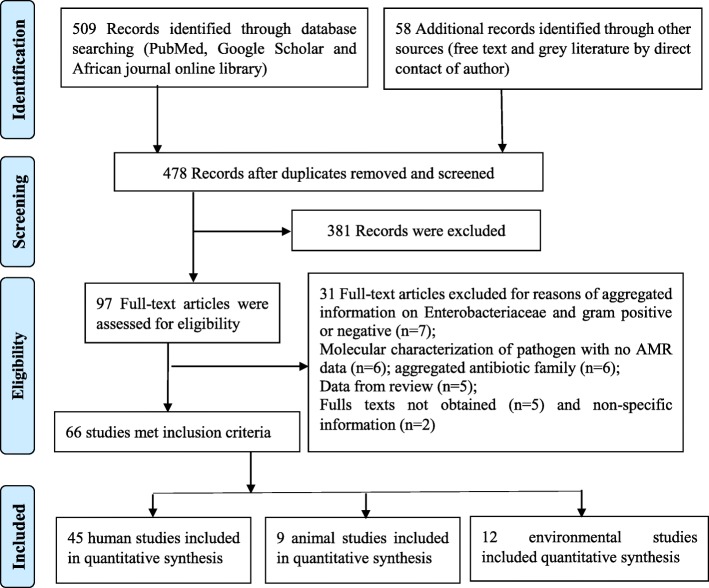
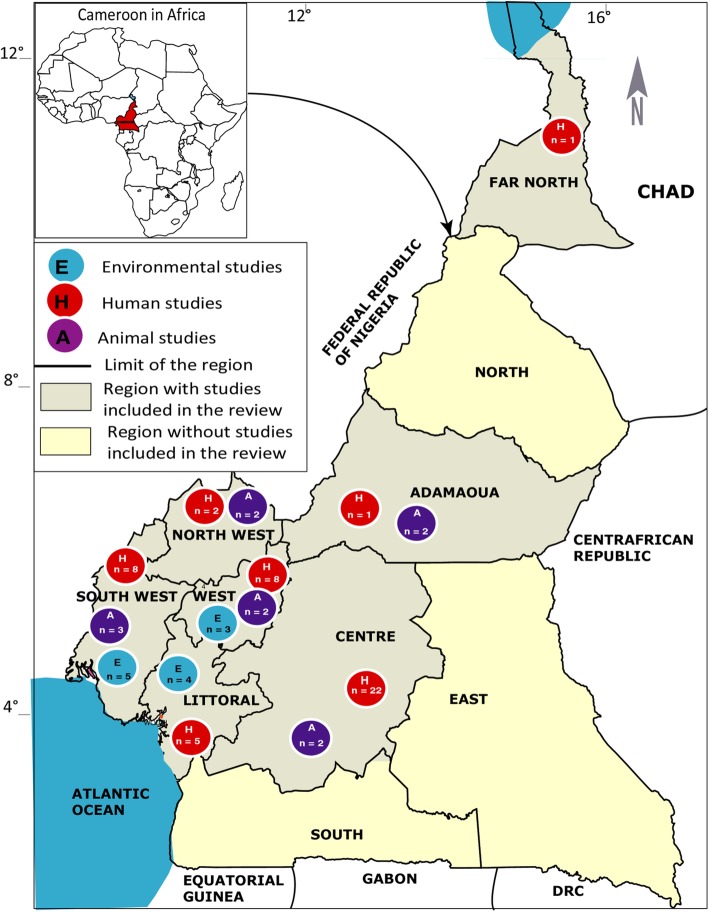
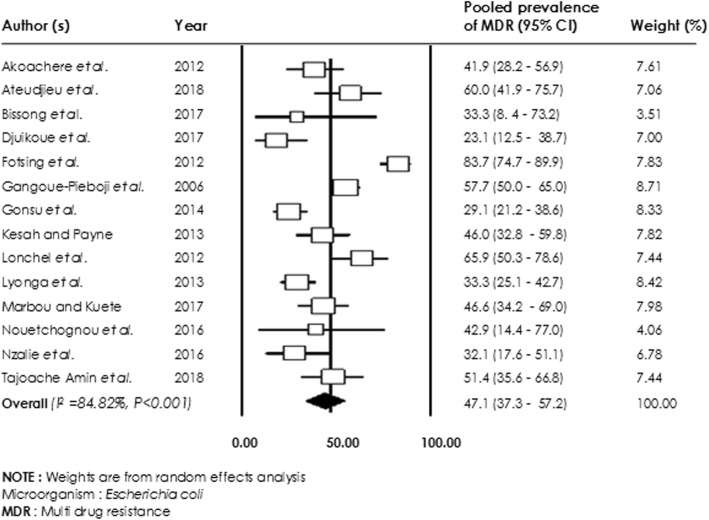
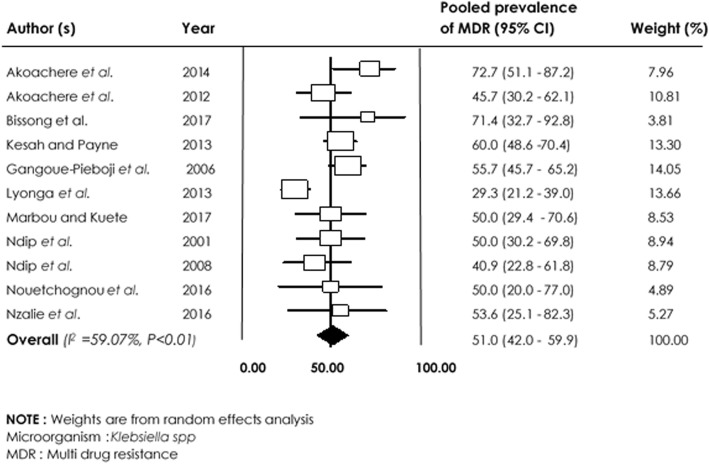
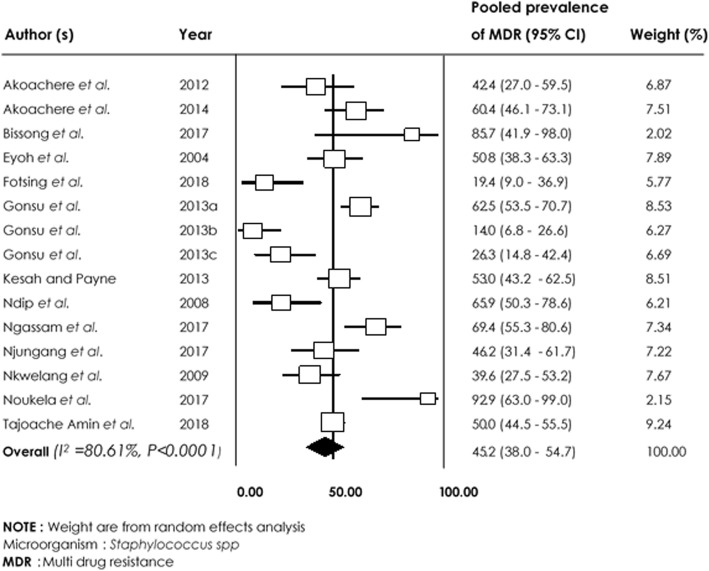
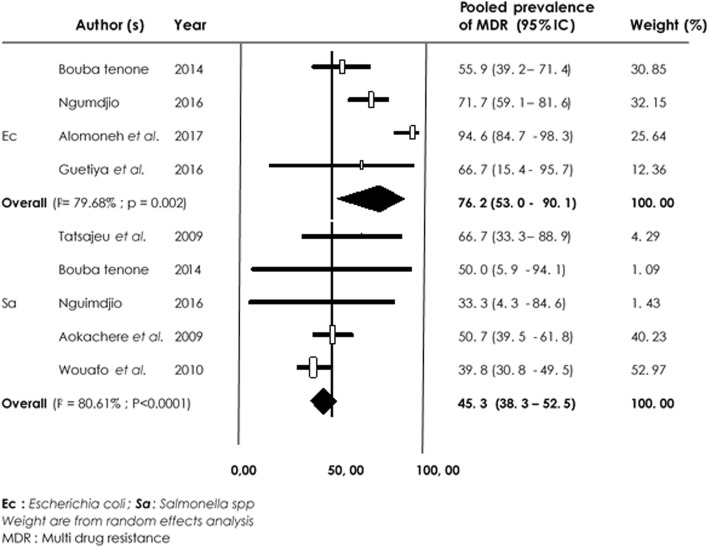
Amongst 97 full-text articles reviewed, 66 met the eligibility criteria. The studies originated from the Centre (24; 36.4%), South-West (16; 24.2%), West (13; 19.7%), Littoral (9; 13.6%) and other (4; 6.1%) regions of Cameroon. These studies reported AMR in human (45; 68.2%), animals (9; 13.6%) and the environment (12; 18.2%). Overall, 19 species of bacteria were tested against 48 antibiotics. These organisms were resistant to all classes of antibiotics and showed high levels of multidrug resistance. Escherichia coli, Klebsiella pneumoniae and Staphylococcus spp were reported in 23, 19 and 18 of the human studies and revealed multidrug resistance (MDR) rates of 47.1% [95% CI (37.3-57.2%)], 51.0% [95% CI (42.0-59.9)] and 45.2% [95% CI (38.0-54.7)], respectively. Salmonella spp was reported in 6 of the animal studies and showed a MDR rate of 46.2% [95% CI (39.2-53.5%)] while Staphylococcus spp in 8 of environment studies showed MDR rate of 67.1% [95% CI (55.2-77.2%)].
This review shows that resistance to commonly prescribed antibiotics in Cameroon is high. The findings emphasize the urgent need to address gaps in the standardization of AMR diagnostics, reporting and use of available information to optimize treatment guidelines for the arsenal of antibiotics. Effective AMR surveillance through continued data sharing, large-scale collaboration, and coordination of all stakeholders is essential to understand and manage the AMR national burden.
抗菌药物耐药性(AMR)被广泛认为是一个全球性的健康问题,但在世界许多地方,其严重程度尚未得到充分阐明。对 AMR 流行率进行基线评估是实施基于实验室的 AMR 监测的优先事项。本综述重点关注一种“同一健康”方法,旨在描述喀麦隆的 AMR 现状。
根据 PRISMA 指南,在 PubMed、Google Scholar 和 African Journals Online 数据库中搜索以英文和法文发表的文章。使用严格的纳入/排除标准的结构化搜索字符串进行文章的检索和筛选。通过直接联系作者获取自由文本和灰色文献。使用随机效应模型计算每个病原体-抗生素对的汇总患病率和 95%置信区间。
在审查的 97 篇全文文章中,有 66 篇符合入选标准。这些研究来自喀麦隆的中心(24 篇;36.4%)、西南(16 篇;24.2%)、西部(13 篇;19.7%)、滨海(9 篇;13.6%)和其他地区(4 篇;6.1%)。这些研究报告了人类(45 篇;68.2%)、动物(9 篇;13.6%)和环境(12 篇;18.2%)中的 AMR。总体而言,19 种细菌对抗生素 48 种进行了测试。这些生物体对所有类别的抗生素均有耐药性,并表现出高水平的多重耐药性。在 23 篇、19 篇和 18 篇人类研究中报告了大肠杆菌、肺炎克雷伯菌和金黄色葡萄球菌,它们的多重耐药率分别为 47.1%[95%CI(37.3-57.2%)]、51.0%[95%CI(42.0-59.9)]和 45.2%[95%CI(38.0-54.7)]。在 6 篇动物研究中报告了沙门氏菌,其多重耐药率为 46.2%[95%CI(39.2-53.5%)],而在 8 篇环境研究中报告了金黄色葡萄球菌,其多重耐药率为 67.1%[95%CI(55.2-77.2%)]。
本综述表明,在喀麦隆,对常用抗生素的耐药性很高。这些发现强调了迫切需要解决 AMR 诊断、报告和利用现有信息标准化方面的差距,以优化抗生素武器库的治疗指南。通过持续的数据共享、大规模合作和协调所有利益攸关方,开展有效的 AMR 监测,对于了解和管理 AMR 的国家负担至关重要。