Zhao Ying-Qi, Zeng Donglin, Tangen Catherine M, LeBlanc Michael L
Associate Member, Public Health Sciences Division, Fred Hutchinson Cancer Research Center, Seattle, WA, 98109.
Professor, Department of Biostatistics, University of North Carolina at Chapel Hill, Chapel Hill, NC, 27599.
Electron J Stat. 2019;13(1):1717-1743. doi: 10.1214/19-EJS1540. Epub 2019 Apr 30.
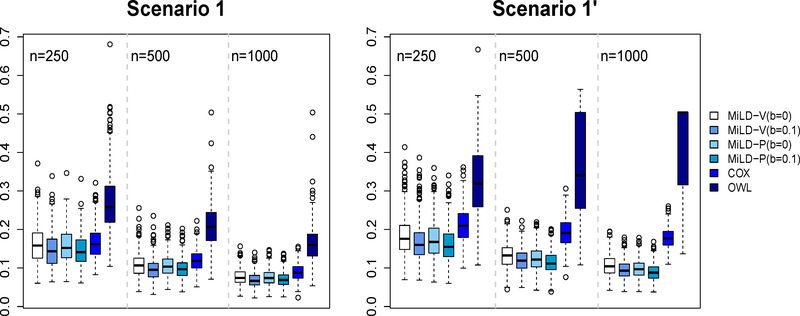
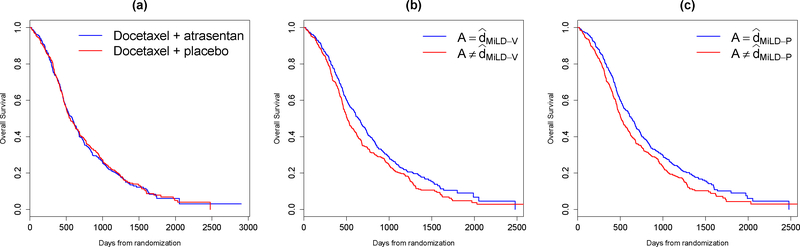
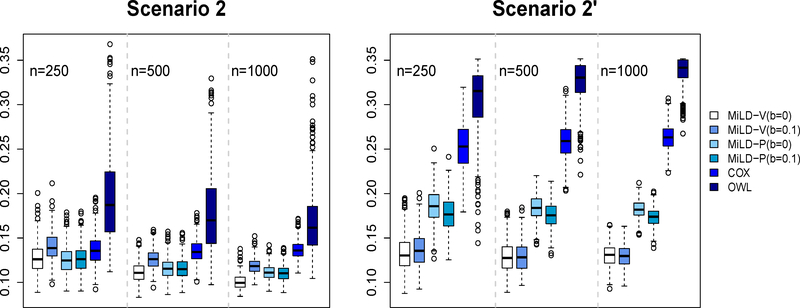
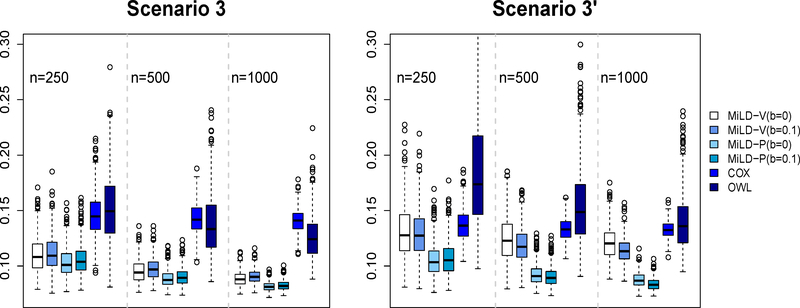
Treatment rules based on individual patient characteristics that are easy to interpret and disseminate are important in clinical practice. Properly planned and conducted randomized clinical trials are used to construct individualized treatment rules. However, it is often a concern that trial participants lack representativeness, so it limits the applicability of the derived rules to a target population. In this work, we use data from a single trial study to propose a two-stage procedure to derive a robust and parsimonious rule to maximize the benefit in the target population. The procedure allows a wide range of possible covariate distributions in the target population, with minimal assumptions on the first two moments of the covariate distribution. The practical utility and favorable performance of the methodology are demonstrated using extensive simulations and a real data application.
基于易于解释和传播的个体患者特征的治疗规则在临床实践中很重要。精心规划和实施的随机临床试验用于构建个体化治疗规则。然而,人们常常担心试验参与者缺乏代表性,因此这限制了所推导规则对目标人群的适用性。在这项工作中,我们使用来自单个试验研究的数据提出了一种两阶段程序,以推导一个稳健且简洁的规则,从而在目标人群中最大化获益。该程序允许目标人群中存在广泛的协变量分布可能性,对协变量分布的前两个矩的假设最少。通过广泛的模拟和实际数据应用证明了该方法的实际效用和良好性能。