Bokare Anuja, Takami Ashley, Kim Jung Han, Dong Alexis, Chen Alan, Valerio Ronald, Gunn Steven, Erogbogbo Folarin
San Jose State University, 1 Washington Square, San Jose, California 95112, United States.
ACS Omega. 2019 Mar 4;4(3):4650-4657. doi: 10.1021/acsomega.9b00128. eCollection 2019 Mar 31.
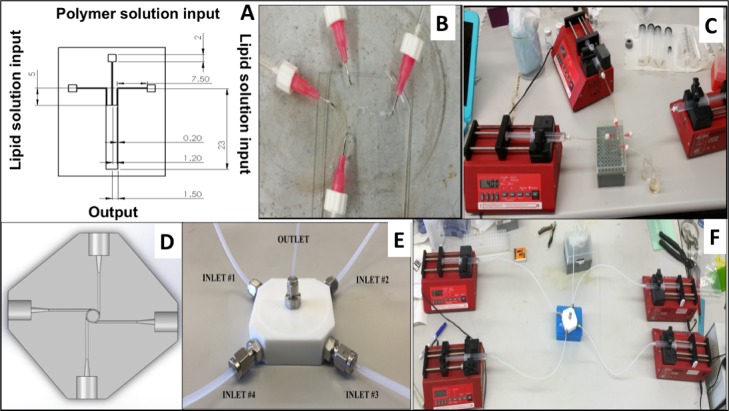
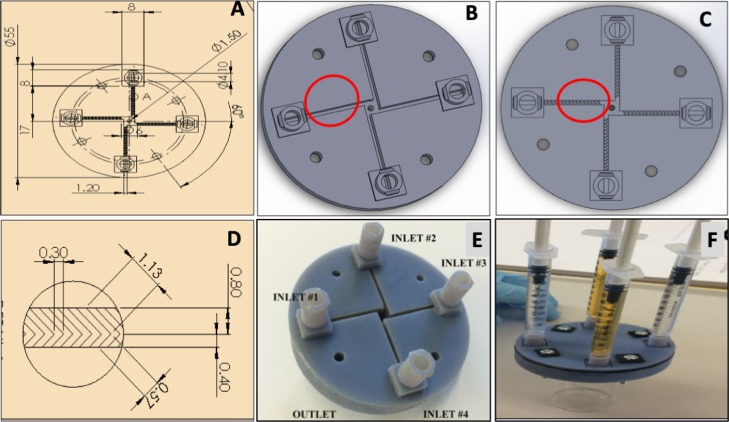
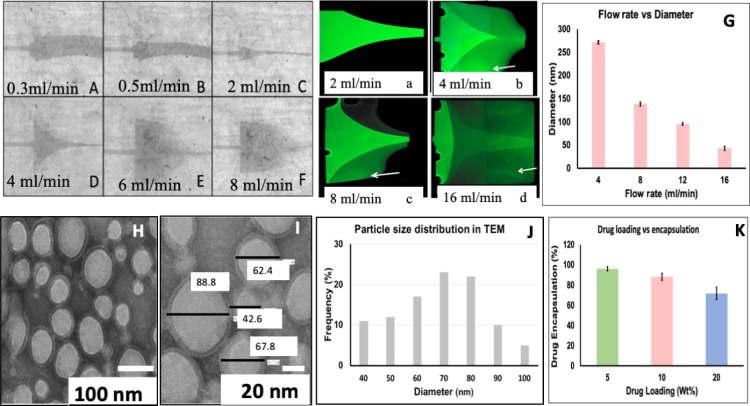
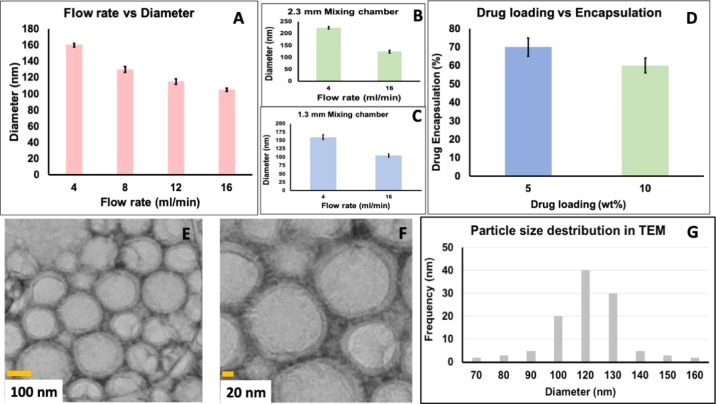
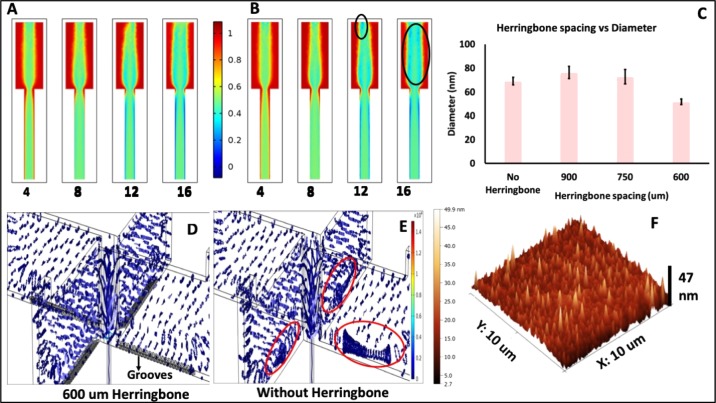
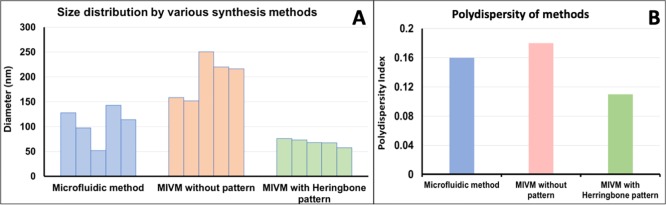
Major barriers to the implementation of nanotechnology include reproducible synthesis and scalability. Batch solution phase methods do not appear to have the potential to overcome these barriers. Microfluidic methods have been investigated as a means to enable controllable and reproducible synthesis; however, the most popular constituent of microfluidics, polydimethylsiloxane, is ill-suited for mass production. Multi-inlet vortex mixers (MIVMs) have been proposed as a method for scalable nanoparticle production; however, the control and reproducibility of the nanoparticle is wanting. Here, we investigate the ability to improve the control and reproducibility of nanoparticles produced by using 3D printed MIVMs with herringbone patterns in the flow channels. We compare three methods, viz., microfluidic, MIVM, and herringbone-patterned MIVM methods, for the synthesis of lipid-polymer hybrid nanoparticles (LPHNPs). The 3D printed herringbone-patterned MIVM method resulted in the smallest LPHNPs with the most uniform size distribution and shows more reproducible results as compared to the other two methods. To elucidate the mechanism underlying these results, concentration slices and vorticity streamlines of mixing chambers have been analyzed for 3D printed herringbone-patterned MIVM devices. The results bode well for LPHNPs, a formulation widely investigated for its improved therapeutic efficacy and biocompatibility. The herringbone-patterned device also has the potential to be broadly applied to many solution phase processes that take advantage of efficient mixing. The methods discussed here have broad implications for reproducible production of nanoparticles with constituents such as siRNA, proteins, quantum dots, and inorganic materials.
纳米技术实施的主要障碍包括可重复合成和可扩展性。间歇溶液相方法似乎没有克服这些障碍的潜力。微流控方法已被研究作为实现可控和可重复合成的一种手段;然而,微流控中最常用的成分聚二甲基硅氧烷并不适合大规模生产。多入口涡旋混合器(MIVM)已被提议作为一种可扩展的纳米颗粒生产方法;然而,纳米颗粒的控制和可重复性仍有待提高。在此,我们研究了使用在流动通道中具有人字形图案的3D打印MIVM来提高纳米颗粒的控制和可重复性的能力。我们比较了三种方法,即微流控法、MIVM法和人字形图案MIVM法,用于合成脂质-聚合物杂化纳米颗粒(LPHNP)。与其他两种方法相比,3D打印人字形图案MIVM法产生的LPHNP最小,尺寸分布最均匀,并且显示出更可重复的结果。为了阐明这些结果背后的机制,对3D打印人字形图案MIVM装置的混合室的浓度切片和涡流线进行了分析。这些结果对LPHNP来说是个好兆头,LPHNP是一种因其改善的治疗效果和生物相容性而被广泛研究的制剂。人字形图案装置还具有广泛应用于许多利用高效混合的溶液相过程的潜力。这里讨论的方法对使用诸如siRNA、蛋白质、量子点和无机材料等成分可重复生产纳米颗粒具有广泛的意义。