Liu Zhi, Li Jia-Xin, Wang Chong-Zhi, Zhang Dan-Li, Wen Xin, Ruan Chang-Chun, Li Yu, Yuan Chun-Su
College of Chinese Medicinal Materials, Engineering Research Center of Chinese Ministry of Education for Edible and Medicinal Fungi, and Institute of Agricultural Modernization, Jilin Agricultural University, Changchun 130118, China.
Tang Center for Herbal Medicine Research, and The Pritzker School of Medicine, University of Chicago, Chicago, IIllinois 60637, United States.
ACS Omega. 2019 Aug 1;4(8):13114-13123. doi: 10.1021/acsomega.9b01001. eCollection 2019 Aug 20.
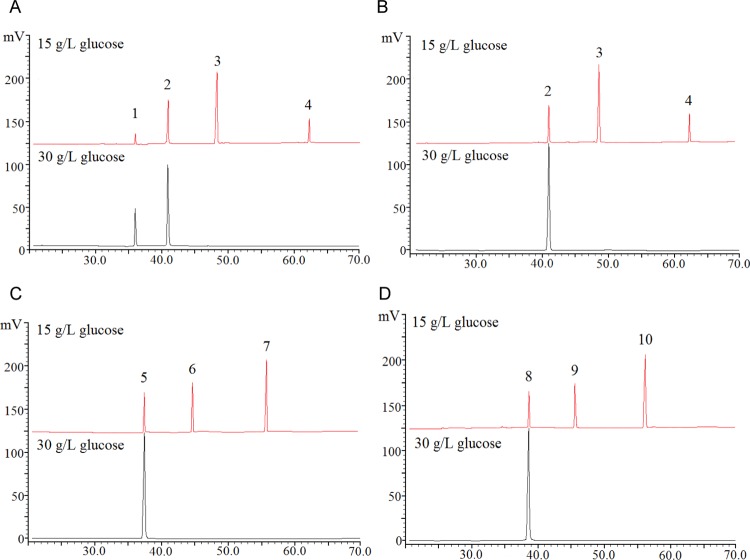
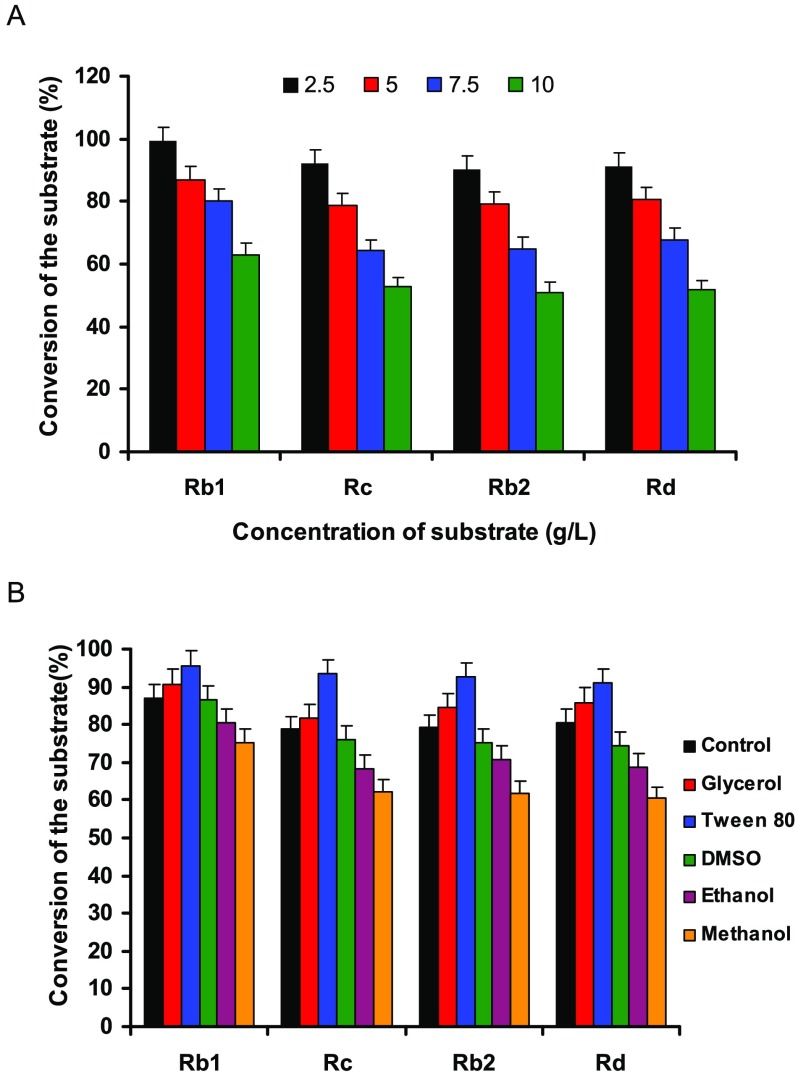
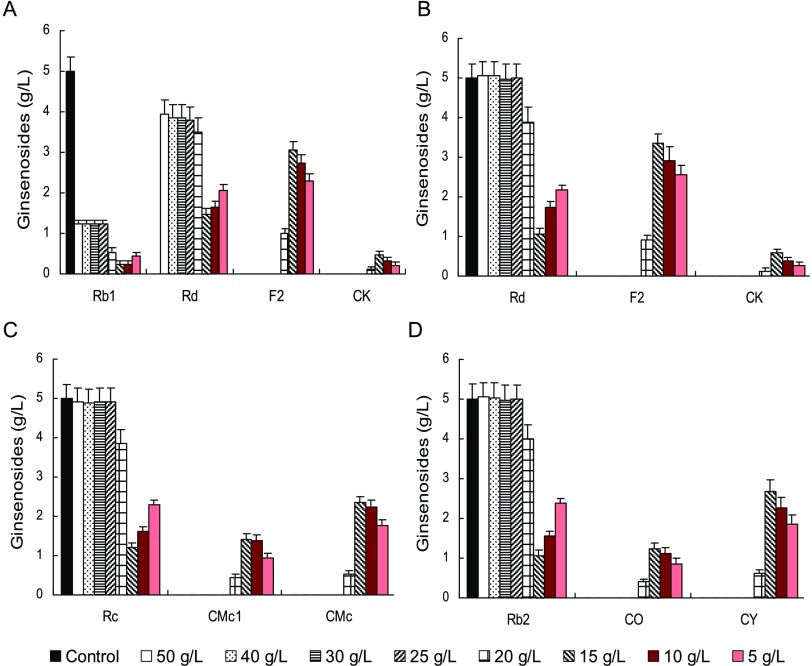
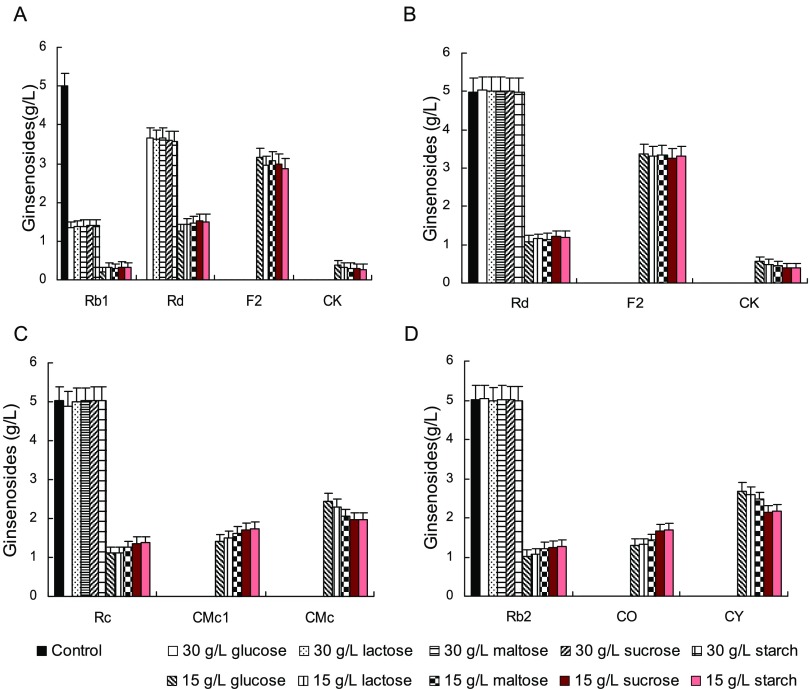
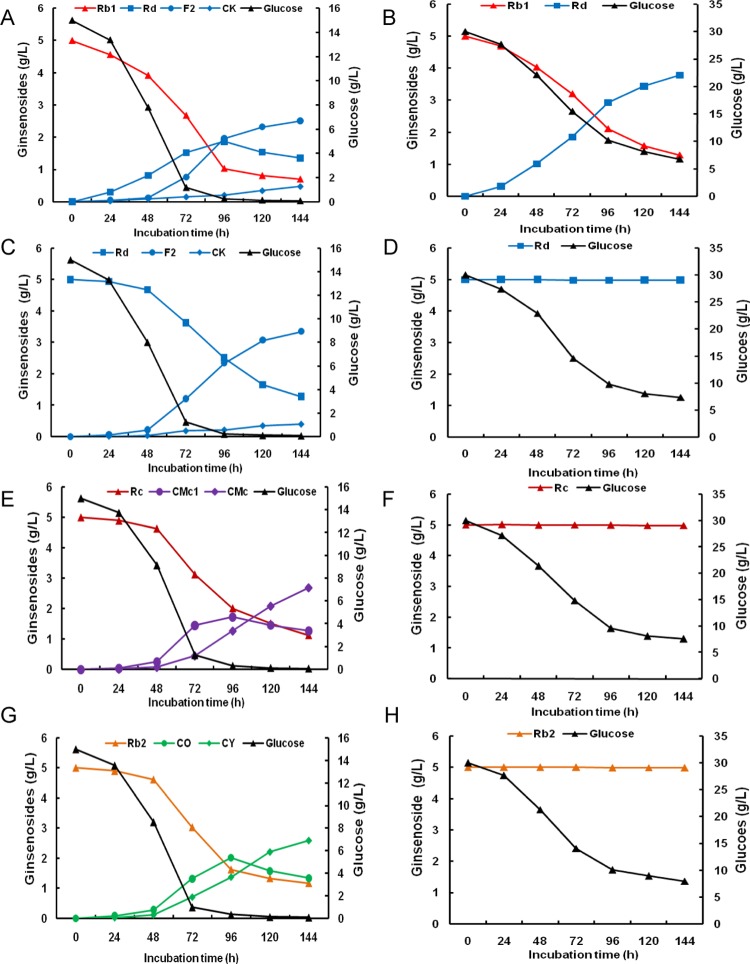
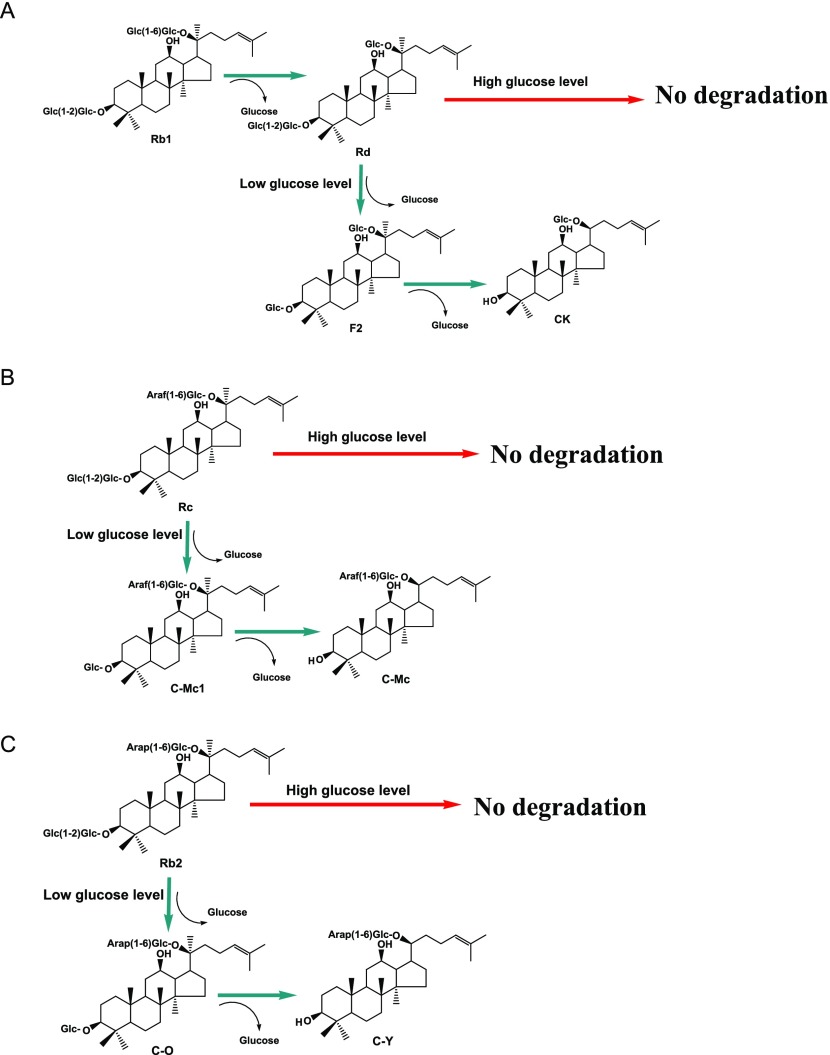
Previous studies have shown that many kinds of microorganisms, including bacteria, yeasts, and filamentous fungi, can convert parent ginsenosides into minor ginsenosides. However, most microorganisms used for ginsenoside transformations may not be safe for food consumption and drug development. In this study, 24 edible and medicinal mushrooms were screened by high-performance liquid chromatography analyses for their ability to microbiologically transform protopanaxadiol (PPD)-type ginsenosides. We observed that the degradation of ginsenosides by was inhibited by high concentrations of sugar in the culture medium. However, the inhibition was avoided by maintaining sugar concentration below 15 g L. showed a strong ability to convert PPD-type ginsenosides (Rb, Rc, Rb, and Rd) into minor ginsenosides (F, C-O, C-Y, C-Mc, C-Mc, and C-K). The production and bioconversion rates of minor ginsenosides were significantly higher than those previously reported by food microorganisms. The fermentation process is efficient, nontoxic, eco-friendly, and economical, and the required biotransformation systems are readily available. This is the first report about the biotransformation of major ginsenosides into minor ginsenosides through fermentation by edible and medicinal mushrooms. Our results provide a green biodegradation strategy in transformation of ginsenosides using edible and medicinal mushrooms.
先前的研究表明,包括细菌、酵母和丝状真菌在内的多种微生物可将人参皂苷原转化为次要人参皂苷。然而,大多数用于人参皂苷转化的微生物可能对食品消费和药物开发不安全。在本研究中,通过高效液相色谱分析筛选了24种食用和药用蘑菇对原人参二醇(PPD)型人参皂苷的微生物转化能力。我们观察到培养基中高浓度的糖会抑制蘑菇对人参皂苷的降解。然而,通过将糖浓度维持在15 g/L以下可避免这种抑制。该蘑菇表现出将PPD型人参皂苷(Rb1、Rc、Rb2和Rd)转化为次要人参皂苷(F2、C-O、C-Y、C-Mc1、C-Mc2和C-K)的强大能力。次要人参皂苷的产量和生物转化率显著高于先前食品微生物的报道。该发酵过程高效、无毒、环保且经济,所需的生物转化系统易于获得。这是关于食用和药用蘑菇通过发酵将主要人参皂苷转化为次要人参皂苷的首次报道。我们的结果为人参皂苷利用食用和药用蘑菇进行转化提供了一种绿色生物降解策略。