Castro-Rodriguez Jose A, Cifuentes Lorena, Martinez Fernando D
Division of Pediatrics, School of Medicine, Pontificia Universidad Catolica de Chile, Santiago, Chile.
Asthma and Airway Disease Research Center, University of Arizona, Tucson, AZ, United States.
Front Pediatr. 2019 Jul 31;7:320. doi: 10.3389/fped.2019.00320. eCollection 2019.
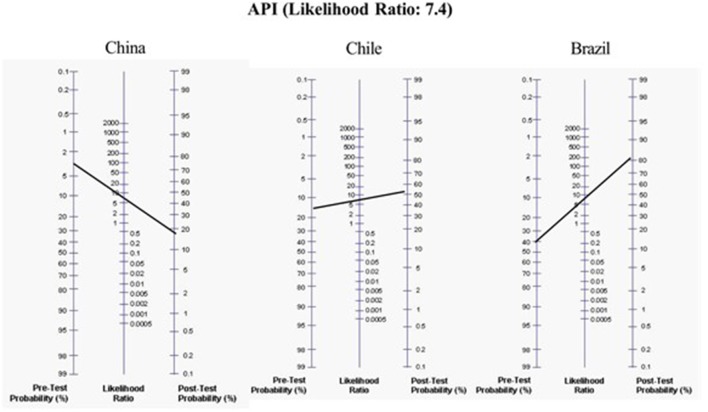
Asthma is no longer considered a single disease, but a common label for a set of heterogeneous conditions with shared clinical symptoms but associated with different cellular and molecular mechanisms. Several wheezing phenotypes coexist at preschool age but not all preschoolers with recurrent wheezing develop asthma at school-age; and since at the present no accurate single screening test using genetic or biochemical markers has been developed to determine which preschooler with recurrent wheezing will have asthma at school age, the asthma diagnosis still needs to be based on clinical predicted models or scores. The purpose of this review is to summarize the existing and most frequently used asthma predicting models, to discuss their advantages/disadvantages, and their accomplishment on all the necessary consecutive steps for any predictive model. Seven most popular asthma predictive models were reviewed (original API, Isle of Wight, PIAMA, modified API, ucAPI, APT Leicestersher, and ademAPI). Among these, the original API has a good positive LR~7.4 (increases the probability of a prediction of asthma by 2-7 times), and it is also simple: it only requires four clinical parameters and a peripheral blood sample for eosinophil count. It is thus an easy model to use in any rural or urban health care system. However, because its negative LR is not good, it cannot be used to rule out the development of asthma.
哮喘不再被视为单一疾病,而是一组具有共同临床症状但与不同细胞和分子机制相关的异质性疾病的通用标签。几种喘息表型在学龄前儿童中共存,但并非所有反复喘息的学龄前儿童在学龄期都会发展为哮喘;而且由于目前尚未开发出使用遗传或生化标志物的准确单一筛查测试来确定哪些反复喘息的学龄前儿童在学龄期会患哮喘,哮喘诊断仍需基于临床预测模型或评分。本综述的目的是总结现有的和最常用的哮喘预测模型,讨论它们的优缺点,以及它们在任何预测模型所有必要连续步骤中的完成情况。对七个最流行的哮喘预测模型进行了综述(原始API、怀特岛模型、PIAMA、改良API、ucAPI、APT莱斯特郡模型和ademAPI)。其中,原始API具有良好的阳性似然比~7.4(将哮喘预测概率提高2至7倍),而且它也很简单:只需要四个临床参数和一份外周血样本用于嗜酸性粒细胞计数。因此,它是一个易于在任何农村或城市医疗系统中使用的模型。然而,由于其阴性似然比不佳,它不能用于排除哮喘的发展。