Chechliński Łukasz, Siemiątkowska Barbara, Majewski Michał
Faculty of Mechatronics, Warsaw University of Technology, 00-661 Warsaw, Poland.
MCMS Warka Ltd., 05-660 Warka, Poland.
Sensors (Basel). 2019 Aug 31;19(17):3787. doi: 10.3390/s19173787.
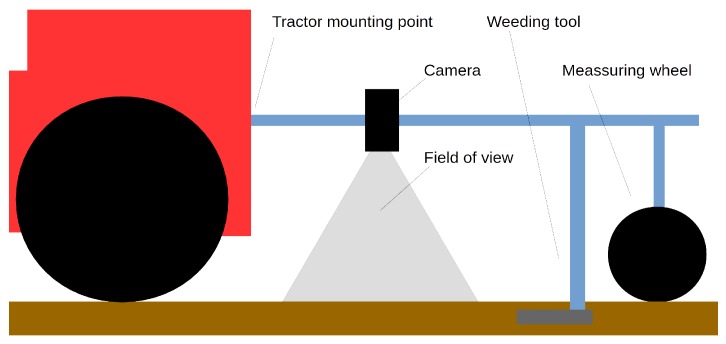
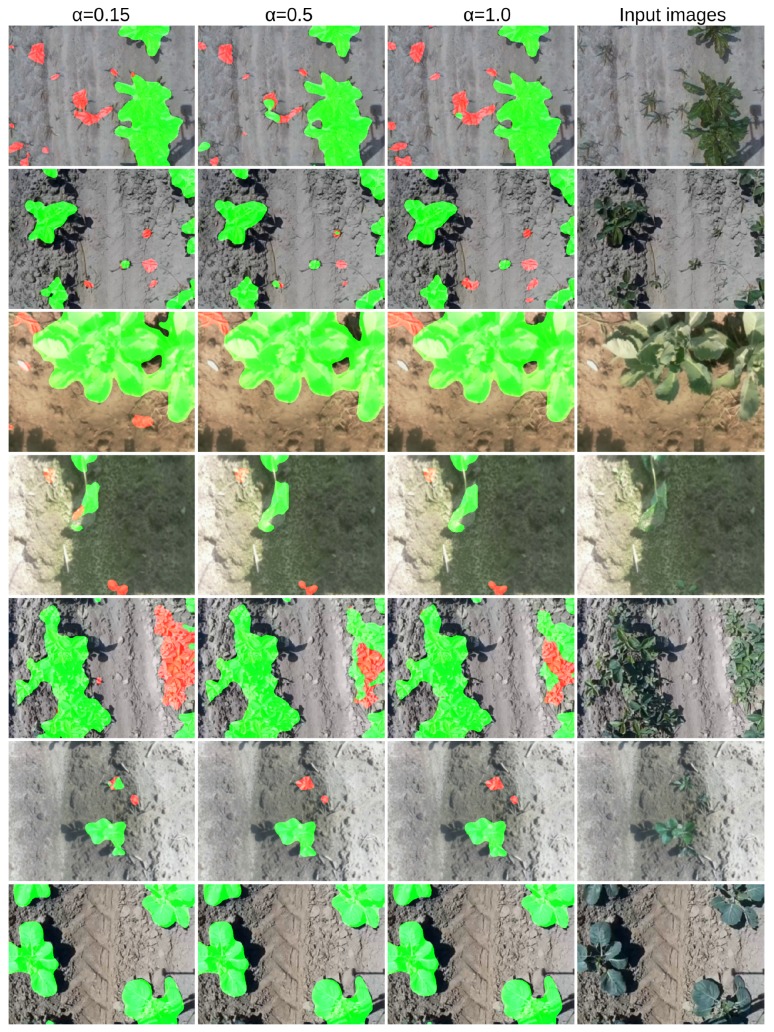
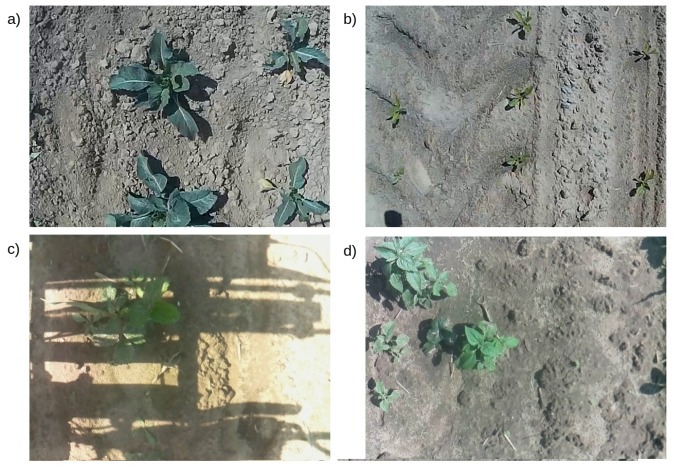
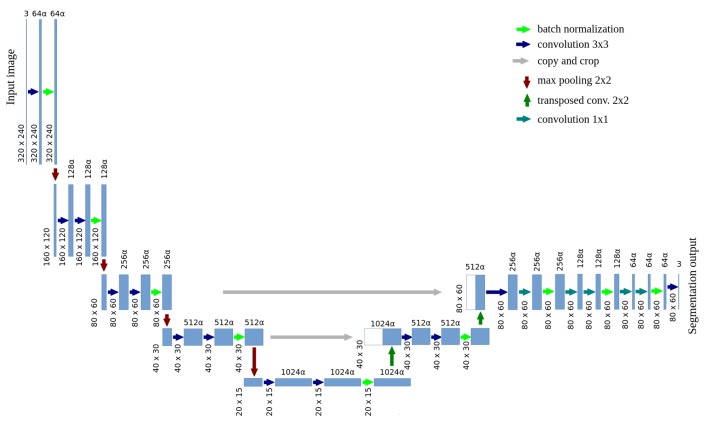
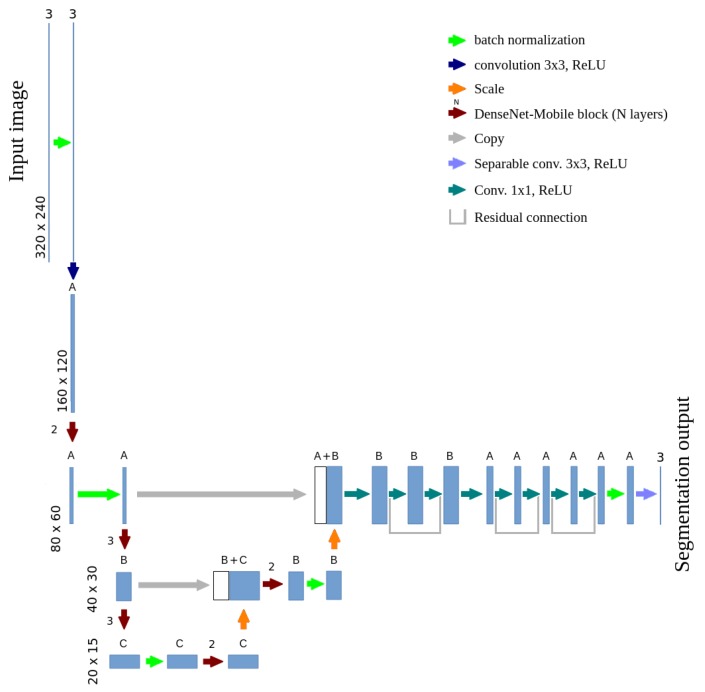
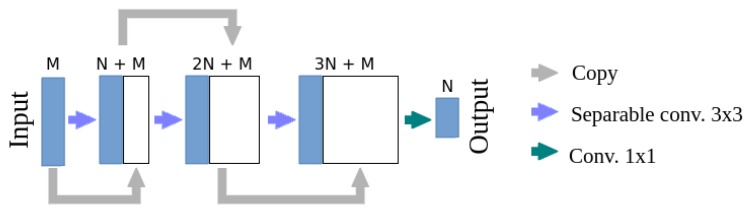
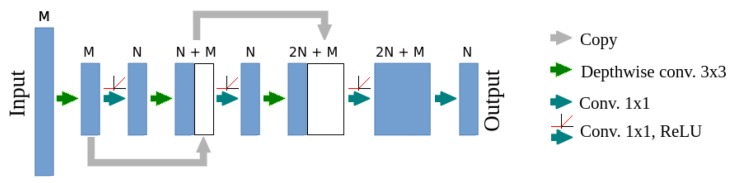
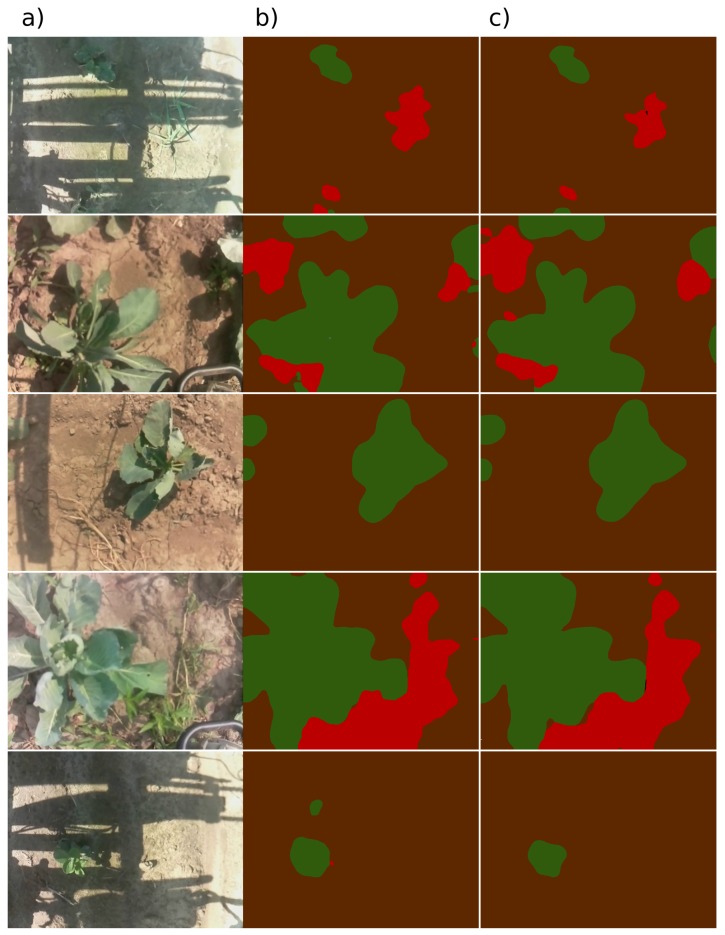
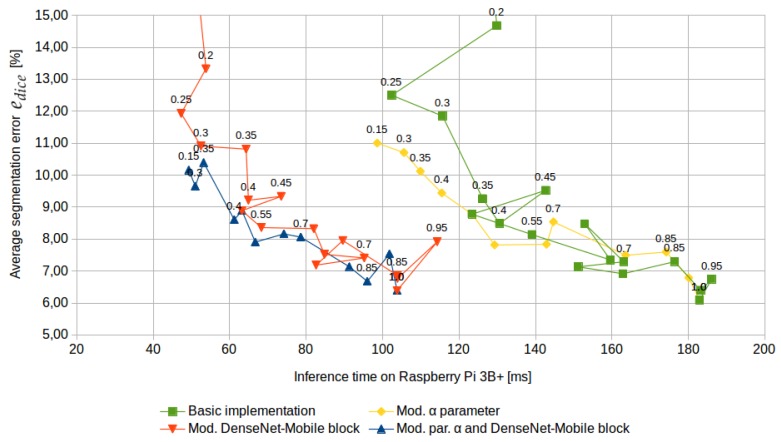
Automated weeding is an important research area in agrorobotics. Weeds can be removed mechanically or with the precise usage of herbicides. Deep Learning techniques achieved state of the art results in many computer vision tasks, however their deployment on low-cost mobile computers is still challenging. The described system contains several novelties, compared both with its previous version and related work. It is a part of a project of the automatic weeding machine, developed by the Warsaw University of Technology and MCMS Warka Ltd. Obtained models reach satisfying accuracy (detecting 47-67% of weed area, misclasifing as weed 0.1-0.9% of crop area) at over 10 FPS on the Raspberry Pi 3B+ computer. It was tested for four different plant species at different growth stadiums and lighting conditions. The system performing semantic segmentation is based on Convolutional Neural Networks. Its custom architecture combines U-Net, MobileNets, DenseNet and ResNet concepts. Amount of needed manual ground truth labels was significantly decreased by the usage of the knowledge distillation process, learning final model which mimics an ensemble of complex models on a large database of unlabeled data. Further decrease of the inference time was obtained by two custom modifications: in the usage of separable convolutions in DenseNet block and in the number of channels in each layer. In the authors' opinion, the described novelties can be easily transferred to other agrorobotics tasks.
自动除草是农业机器人技术中的一个重要研究领域。杂草可以通过机械方式清除,也可以精确使用除草剂来清除。深度学习技术在许多计算机视觉任务中取得了领先成果,然而将其部署在低成本移动计算机上仍然具有挑战性。与之前的版本和相关工作相比,所描述的系统有几个新颖之处。它是华沙理工大学和MCMS瓦尔卡有限公司开发的自动除草机项目的一部分。在树莓派3B +计算机上,所获得的模型在超过10帧每秒的速度下达到了令人满意的准确率(检测到47 - 67%的杂草面积,将0.1 - 0.9%的作物面积误分类为杂草)。该系统在不同生长阶段和光照条件下对四种不同的植物物种进行了测试。执行语义分割的系统基于卷积神经网络。其定制架构结合了U-Net、MobileNets、DenseNet和ResNet的概念。通过使用知识蒸馏过程,在大量未标记数据的数据库上学习模仿复杂模型集成的最终模型,所需的手动地面真值标签数量显著减少。通过两个定制修改进一步减少了推理时间:在DenseNet块中使用可分离卷积以及在每层中的通道数量。作者认为,所描述的新颖之处可以很容易地转移到其他农业机器人任务中。