Wu Wenli, Ye Junyong, Wang Qi, Luo Jin, Xu Shengsheng
Department of Radiology, The First Affiliated Hospital, Chongqing Medical University, Chongqing, China.
Key Laboratory of Optoelectronic Technology and Systems of the Ministry of Education, Chongqing University, Chongqing, China.
Front Oncol. 2019 Aug 30;9:821. doi: 10.3389/fonc.2019.00821. eCollection 2019.
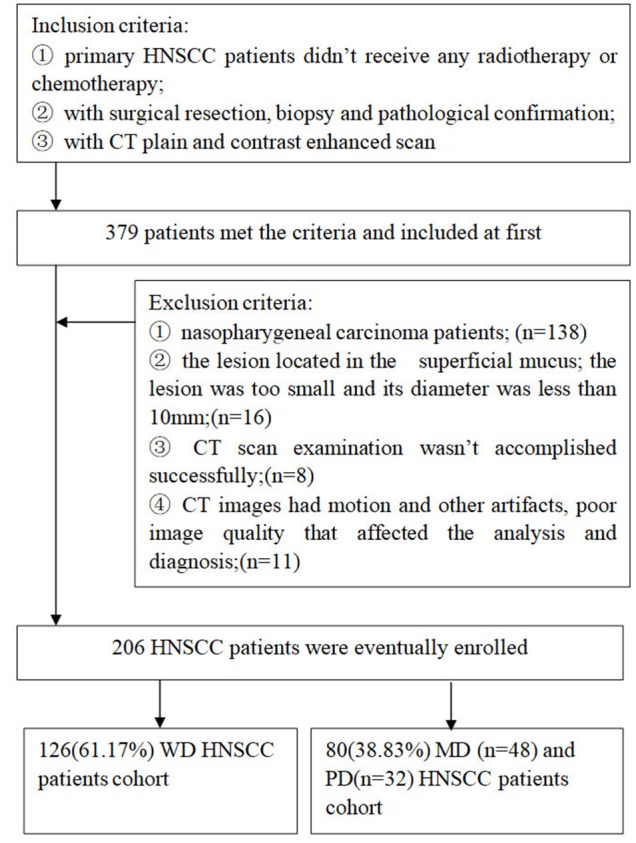
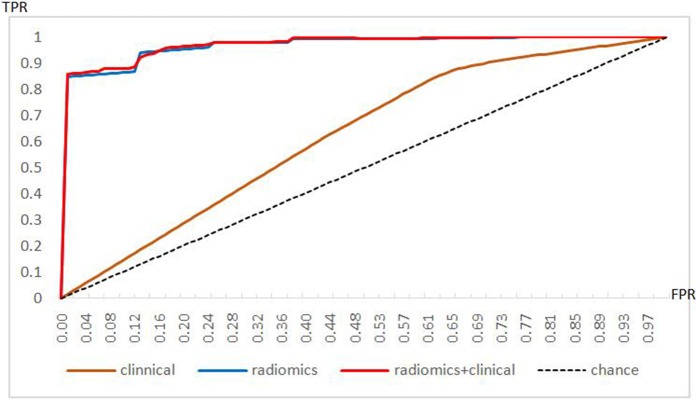
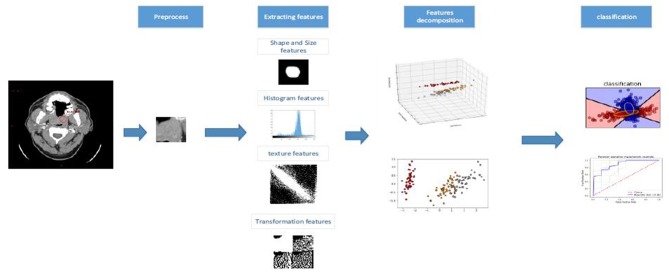
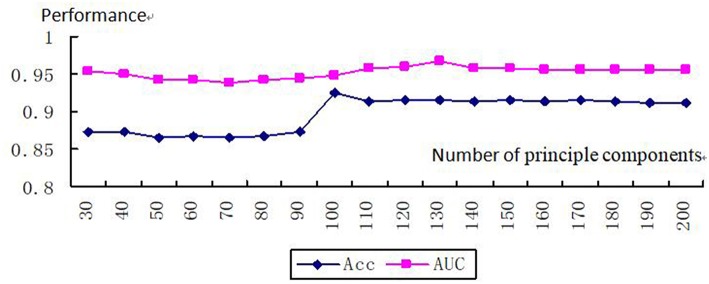
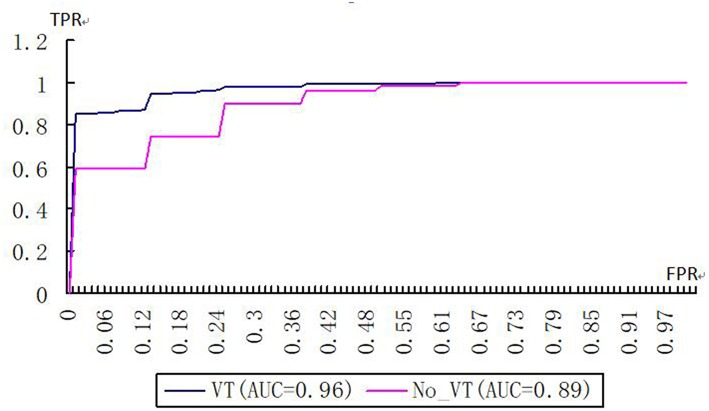
Radiomics has been widely used to non-invasively mine quantitative information from medical images and could potentially predict tumor phenotypes. Pathologic grade is considered a predictive prognostic factor for head and neck squamous cell carcinoma (HNSCC) patients. A preoperative histological assessment can be important in the clinical management of patients. We applied radiomics analysis to devise non-invasive biomarkers and accurately differentiate between well-differentiated (WD) and moderately differentiated (MD) and poorly differentiated (PD) HNSCC. This study involved 206 consecutive HNSCC patients (training cohort: = 137; testing cohort: = 69). In total, we extracted 670 radiomics features from contrast-enhanced computed tomography (CT) images. Radiomics signatures were constructed with a kernel principal component analysis (KPCA), random forest classifier and a variance-threshold (VT) selection. The associations between the radiomics signatures and HNSCC histological grades were investigated. A clinical model and combined model were also constructed. Areas under the receiver operating characteristic curves (AUCs) were applied to evaluate the performances of the three models. In total, 670 features were selected by the KPCA and random forest methods from the CT images. The radiomics signatures had a good performance in discriminating between the two cohorts of HNSCC grades, with an AUC of 0.96 and an accuracy of 0.92. The specificity, accuracy, sensitivity, positive predictive value (PPV), and negative predictive value (NPV) of the abovementioned method with a VT selection for determining HNSCC grades were 0.83, 0.92, 0.96, 0.94, and 0.91, respectively; without VT, the corresponding results were 0.70, 0.83, 0.88, 0.80, and 0.84. The differences in accuracy, sensitivity and NPV were significant between these approaches ( < 0.05). The AUCs with VT and without VT were 0.96 and 0.89, respectively ( < 0.05). Compared to the combined model and the radiomics signatures, The clinical model had a worse performance, and the differences were significant ( < 0.05). The combined model had the best performance, but the difference between the combined model and the radiomics signature weren't significant ( > 0.05). The CT-based radiomics signature could discriminate between WD and MD and PD HNSCC and might serve as a biomarker for preoperative grading.
放射组学已被广泛用于从医学图像中无创地挖掘定量信息,并有可能预测肿瘤表型。病理分级被认为是头颈部鳞状细胞癌(HNSCC)患者的一个预测性预后因素。术前组织学评估在患者的临床管理中可能很重要。我们应用放射组学分析来设计无创生物标志物,并准确区分高分化(WD)、中分化(MD)和低分化(PD)的HNSCC。本研究纳入了206例连续的HNSCC患者(训练队列: = 137;测试队列: = 69)。我们总共从增强计算机断层扫描(CT)图像中提取了670个放射组学特征。利用核主成分分析(KPCA)、随机森林分类器和方差阈值(VT)选择构建放射组学特征。研究了放射组学特征与HNSCC组织学分级之间的关联。还构建了一个临床模型和一个联合模型。应用受试者操作特征曲线(AUC)下的面积来评估这三个模型的性能。通过KPCA和随机森林方法从CT图像中总共选择了670个特征。放射组学特征在区分HNSCC分级的两个队列方面表现良好,AUC为0.96,准确率为0.92。上述采用VT选择来确定HNSCC分级的方法的特异性、准确率、敏感性、阳性预测值(PPV)和阴性预测值(NPV)分别为0.83、0.92、0.96、0.94和0.91;不采用VT时,相应结果分别为0.70、0.83、0.88、0.80和0.84。这些方法在准确率、敏感性和NPV方面的差异具有统计学意义(<0.05)。采用VT和不采用VT时的AUC分别为0.96和0.89(<0.05)。与联合模型和放射组学特征相比,临床模型的性能较差,差异具有统计学意义(<0.05)。联合模型表现最佳,但联合模型与放射组学特征之间的差异不具有统计学意义(>0.05)。基于CT的放射组学特征可以区分WD、MD和PD的HNSCC,并可能作为术前分级的生物标志物。