Institute of Applied Synthetic Chemistry and Institute of Chemical Technologies and Analytics, Faculty of Technical Chemistry, Vienna University of Technology, Getreidemarkt 9, 1060 Vienna, Austria.
Biosensors (Basel). 2019 Sep 19;9(3):110. doi: 10.3390/bios9030110.
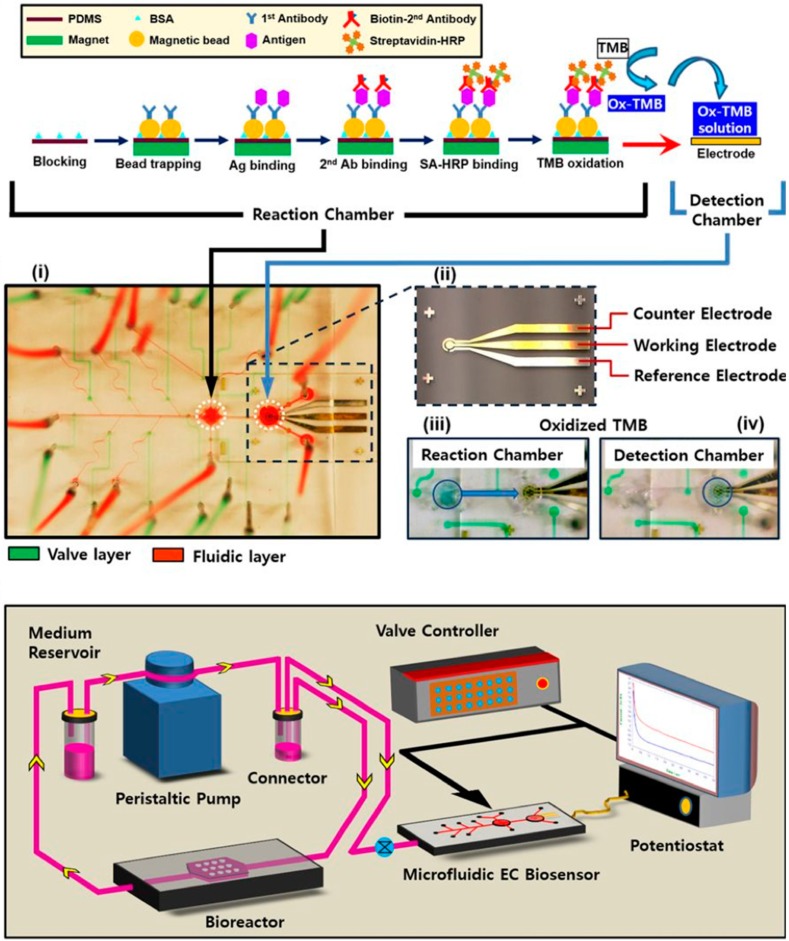
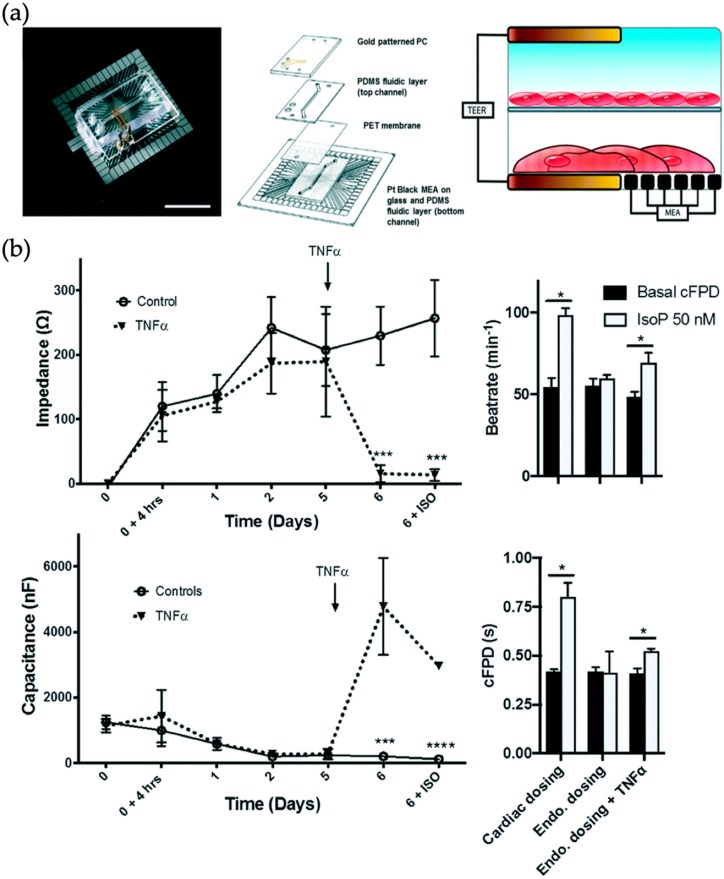
Organs-on-chips are considered next generation tools capable of recreating like, physiological-relevant microenvironments needed to cultivate 3D tissue-engineered constructs (e.g., hydrogel-based organoids and spheroids) as well as tissue barriers. These microphysiological systems are ideally suited to (a) reduce animal testing by generating human organ models, (b) facilitate drug development and (c) perform personalized medicine by integrating patient-derived cells and patient-derived induced pluripotent stem cells (iPSCs) into microfluidic devices. An important aspect of any diagnostic device and cell analysis platform, however, is the integration and application of a variety of sensing strategies to provide reliable, high-content information on the health status of the model of choice. To overcome the analytical limitations of organs-on-a-chip systems a variety of biosensors have been integrated to provide continuous data on organ-specific reactions and dynamic tissue responses. Here, we review the latest trends in biosensors fit for monitoring human physiology in organs-on-a-chip systems including optical and electrochemical biosensors.
器官芯片被认为是下一代工具,能够模拟培养 3D 组织工程构建体(例如基于水凝胶的类器官和球体)以及组织屏障所需的类似生理相关的微环境。这些微生理系统非常适合 (a) 通过生成人体器官模型减少动物测试,(b) 促进药物开发,以及 (c) 通过将患者来源的细胞和患者来源的诱导多能干细胞 (iPSC) 整合到微流控设备中进行个性化医疗。然而,任何诊断设备和细胞分析平台的一个重要方面是集成和应用各种传感策略,以提供有关所选模型健康状况的可靠、高信息量信息。为了克服器官芯片系统的分析局限性,已经整合了各种生物传感器,以提供关于器官特异性反应和动态组织反应的连续数据。在这里,我们回顾了适合监测器官芯片系统中人体生理学的最新生物传感器趋势,包括光学和电化学生物传感器。