Merks Piotr, Świeczkowski Damian, Balcerzak Marcin, Drelich Ewelina, Białoszewska Katarzyna, Cwalina Natalia, Zdanowski Szymon, Krysiński Jerzy, Gromadzka Grażyna, Jaguszewski Miłosz
Faculty of Medicine, Collegium Medicum, Cardinal Stefan Wyszyński University, Warsaw, Poland.
Piktorex sp. z o.o., Warsaw, Poland.
Patient Prefer Adherence. 2019 Oct 2;13:1667-1676. doi: 10.2147/PPA.S214419. eCollection 2019.
To evaluate the practical utility of pharmaceutical pictograms in routine practice in community pharmacy. The primary outcome (composite endpoint) consisted of three elements: i) complete use of the whole package of medication, ii) taking the recommended dose twice a day, and iii) subjective assessment of patients' perspective on medical information about antibiotic therapy obtained during the pharmacy consultation measured by Net Promoter Score in scale from 1 to 10 where 1 is the lowest and 10 the highest possible rating.
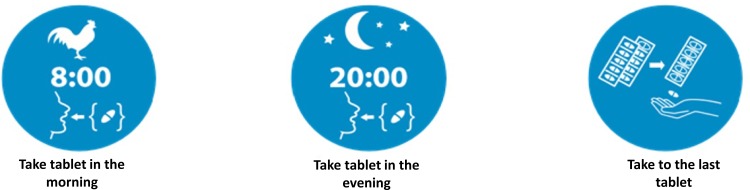
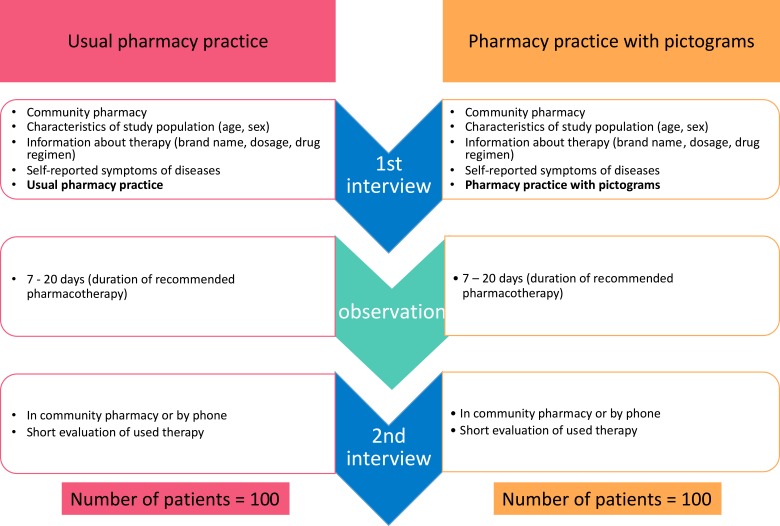
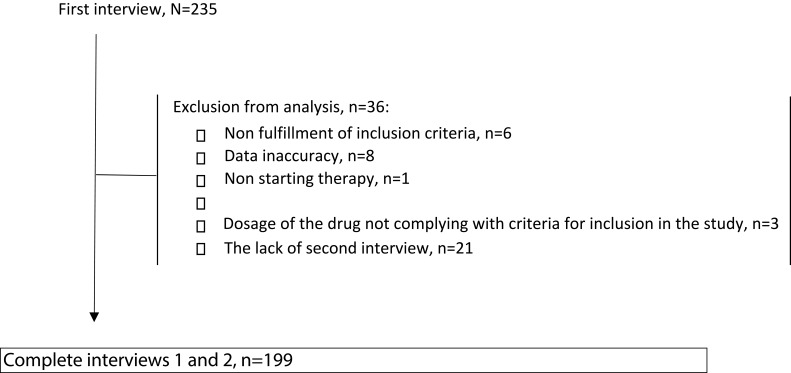
A multicenter, randomized controlled study was conducted. Community pharmacies (n = 64) which agreed to participate in the study were assigned to one of two groups: i) study - providing an antibiotic with pictograms placed on the external packaging of the medicinal product containing information about drug regimen (n = 32); or ii) control - providing an antibiotic according to usual pharmacy practice (n = 32). Two semi-structured interviews were performed. Data were collected from 199 patients with a mean age ± SD of 45.5 ± 17.0 years.
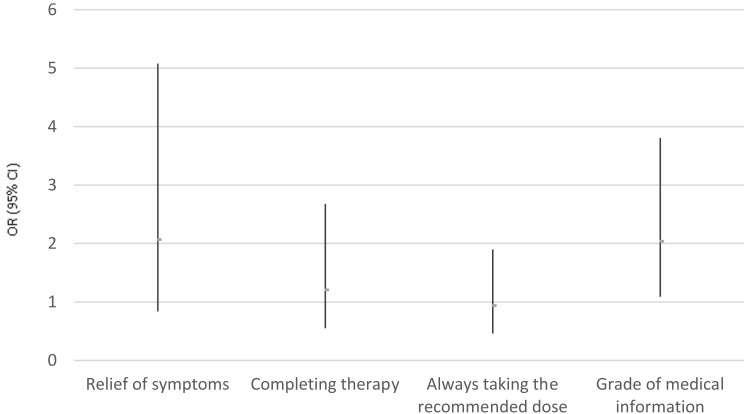
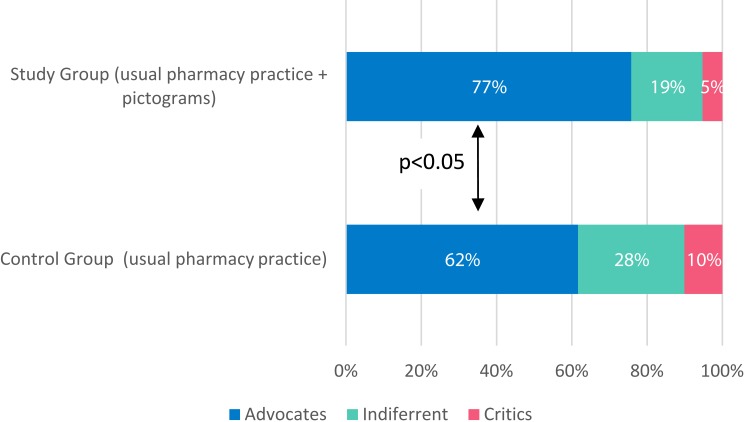
In the control group, 15.7% of participants discontinued therapy before using the whole package compared with 13.4% of participants in the study group. In the control group, 81.3% of patients reported that they always took the medication twice a day as recommended by their healthcare providers compared with 80.4% of patients in the study group. The Net Promoter Score was higher for pharmacy practice with than without pictograms (71.3% vs 51.5%, respectively, <0.005). The chance that a patient was an advocate of pharmaceutical services (scores 9 and 10) was twice as likely in the case of pharmaceutical practice supported by pictograms (<0.02). The composite endpoint was achieved more frequently in the population using pictograms, however this difference was not statistically significant (<0.34).
The pharmaceutical pictograms are readily accepted by patients and could prove to be a valuable support for pharmacists in conducting pharmaceutical care. Further representative research is needed to evaluate the true effectiveness of this solution.
评估药品象形图在社区药房日常实践中的实际效用。主要结局(复合终点)包括三个要素:i)完整使用整包药物;ii)每天按推荐剂量服用两次;iii)通过净推荐值(Net Promoter Score)对患者在药房咨询期间获得的抗生素治疗医疗信息的主观评估进行测量,评分范围为1至10分,1分为最低分,10分为最高分。
进行了一项多中心随机对照研究。同意参与研究的社区药房(n = 64)被分为两组之一:i)研究组 - 提供一种抗生素,其药品外包装上带有象形图,包含用药方案信息(n = 32);或ii)对照组 - 按照药房常规做法提供抗生素(n = 32)。进行了两次半结构化访谈。收集了199例患者的数据,其平均年龄±标准差为45.5±17.0岁。
在对照组中,15.7%的参与者在使用完整包药物之前就停止了治疗,而研究组中这一比例为13.4%。在对照组中,81.3%的患者报告他们总是按照医疗服务提供者的建议每天服用两次药物,而研究组中这一比例为80.4%。有象形图的药房实践净推荐值高于没有象形图的情况(分别为71.3%和51.5%,<0.005)。在有象形图支持的药房实践中,患者成为药品服务倡导者(评分9分和10分)的可能性是没有象形图情况的两倍(<0.02)。使用象形图的人群更频繁地达到复合终点,然而这种差异无统计学意义(<0.34)。
药品象形图很容易被患者接受,并且可能被证明是药剂师开展药学服务的宝贵支持。需要进一步的代表性研究来评估该解决方案的真正有效性。