Department of Ophthalmology, Inselspital, Freiburgstrasse, CH-3010, Bern, Switzerland.
Department of Clinical Research, University of Bern, Murtenstrasse 31, CH-3010, Bern, Switzerland.
Sci Rep. 2019 Oct 25;9(1):15303. doi: 10.1038/s41598-019-51698-5.
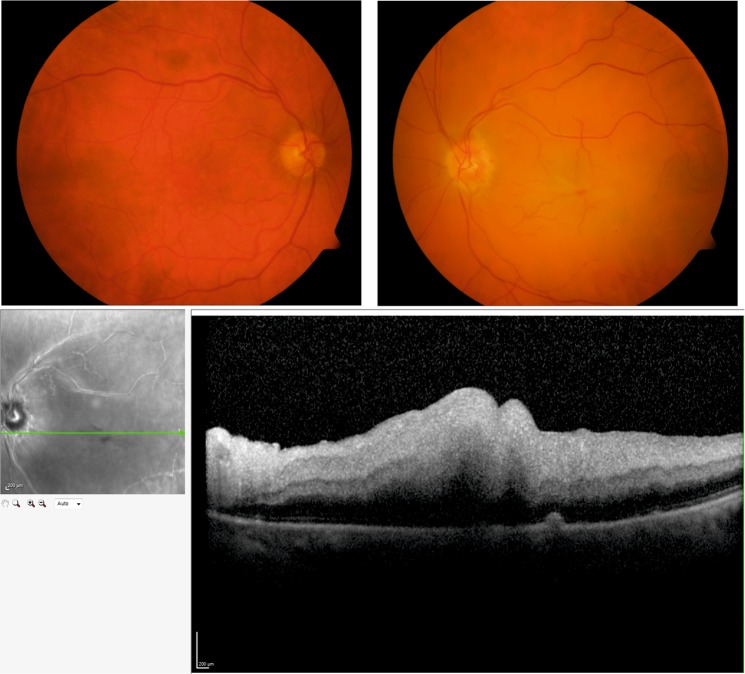
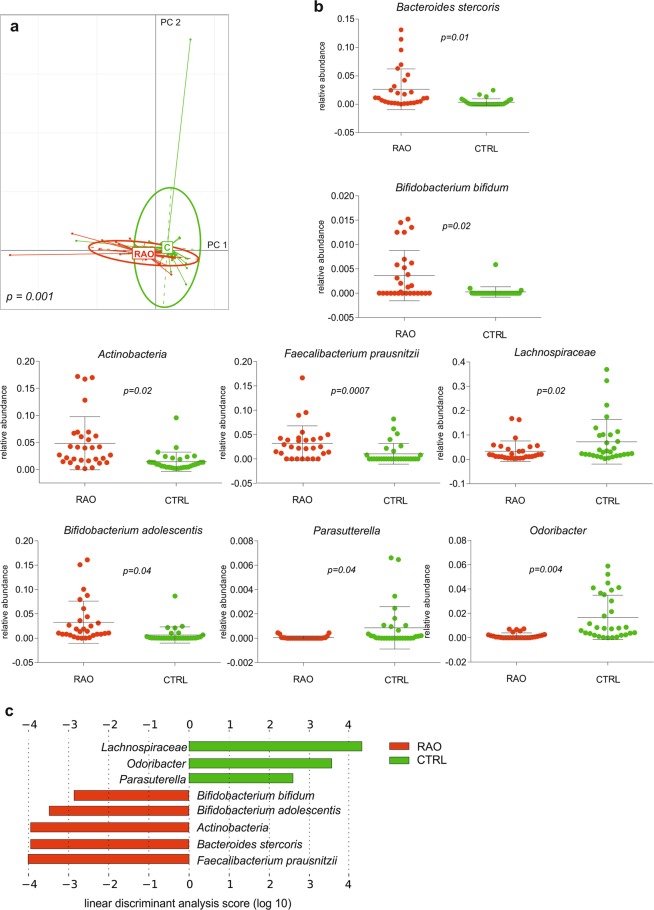
Retinal artery occlusion (RAO) is a sight threatening complication of cardiovascular disease and commonly occurs due to underlying atherosclerosis. As cardiovascular disease and atherosclerosis in particular has been associated with compositional alterations in the gut microbiome, we investigated this association in patients with clinically confirmed non-arteritic RAO compared to age- and sex-matched controls. On the phylum level, the relative abundance of Bacteroidetes was decreased in patients with RAO compared to controls, whereas the opposite applied for the phylum of Proteobacteria. Several genera and species such as Actinobacter, Bifidobacterium spp., Bacteroides stercoris, Faecalibacterium prausnitzii were relatively enriched in patients with RAO, whereas others such as Odoribacter, Parasutterella or Lachnospiraceae were significantly lower. Patient's gut microbiomes were enriched in genes of the cholesterol metabolism pathway. The gut derived, pro-atherogenic metabolite trimethylamine-N-oxide (TMAO) was significantly higher in patients with RAO compared to controls (p = 0.023) and a negative correlation between relative abundances of genera Parasutterella and Lachnospiraceae and TMAO levels and a positive correlation between relative abundance of genus Akkermansia and TMAO levels was found in study subjects. Our findings proposes that RAO is associated with alterations in the gut microbiome and with elevated TMAO levels, suggesting that RAO could be targeted by microbiome-altering interventions.
视网膜动脉阻塞 (RAO) 是心血管疾病的一种威胁视力的并发症,通常由于潜在的动脉粥样硬化引起。由于心血管疾病特别是动脉粥样硬化与肠道微生物组的组成改变有关,我们在患有临床确诊的非动脉炎性 RAO 的患者与年龄和性别匹配的对照组中调查了这种关联。在门水平上,RAO 患者的拟杆菌门的相对丰度低于对照组,而变形菌门的相对丰度则相反。一些属和种,如放线菌、双歧杆菌属、粪拟杆菌、普拉梭菌,在 RAO 患者中相对丰富,而其他属,如恶臭菌属、Parasutterella 或lachnospiraceae,则明显减少。患者的肠道微生物组富含胆固醇代谢途径的基因。源自肠道的促动脉粥样硬化代谢物三甲胺 N-氧化物 (TMAO) 在 RAO 患者中明显高于对照组(p = 0.023),并且在研究对象中发现 Parasutterella 和lachnospiraceae 属的相对丰度与 TMAO 水平呈负相关,阿克曼氏菌属的相对丰度与 TMAO 水平呈正相关。我们的研究结果表明,RAO 与肠道微生物组的改变和 TMAO 水平升高有关,这表明 RAO 可能成为微生物组改变干预的目标。