Centre for Molecular and Structural Biochemistry, School of Biological Sciences and School of Chemistry, University of East Anglia, Norwich, UK.
Instituto de Tecnologia Química e Biológica António Xavier, Universidade NOVA de Lisboa, Oeiras, Portugal.
Protein Sci. 2020 Apr;29(4):830-842. doi: 10.1002/pro.3787. Epub 2019 Nov 28.
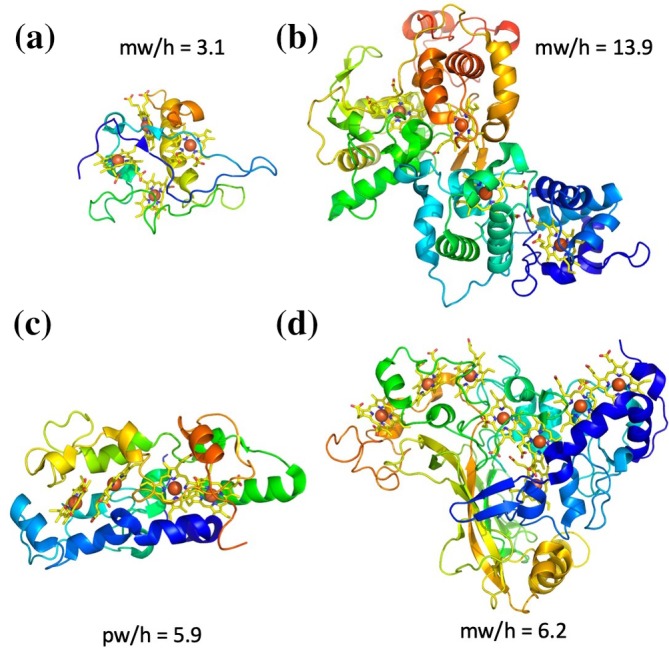
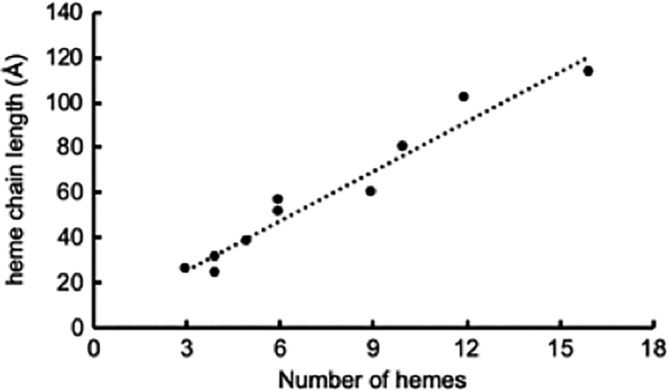
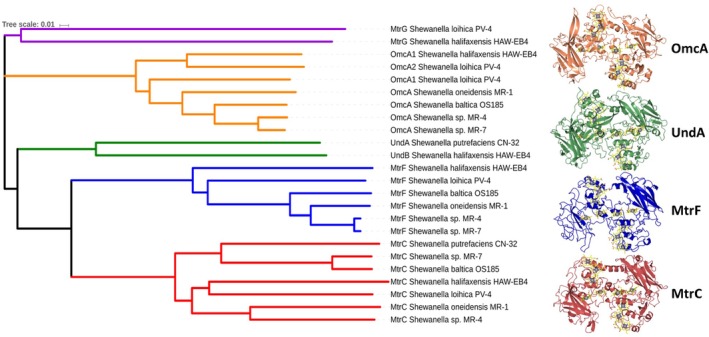
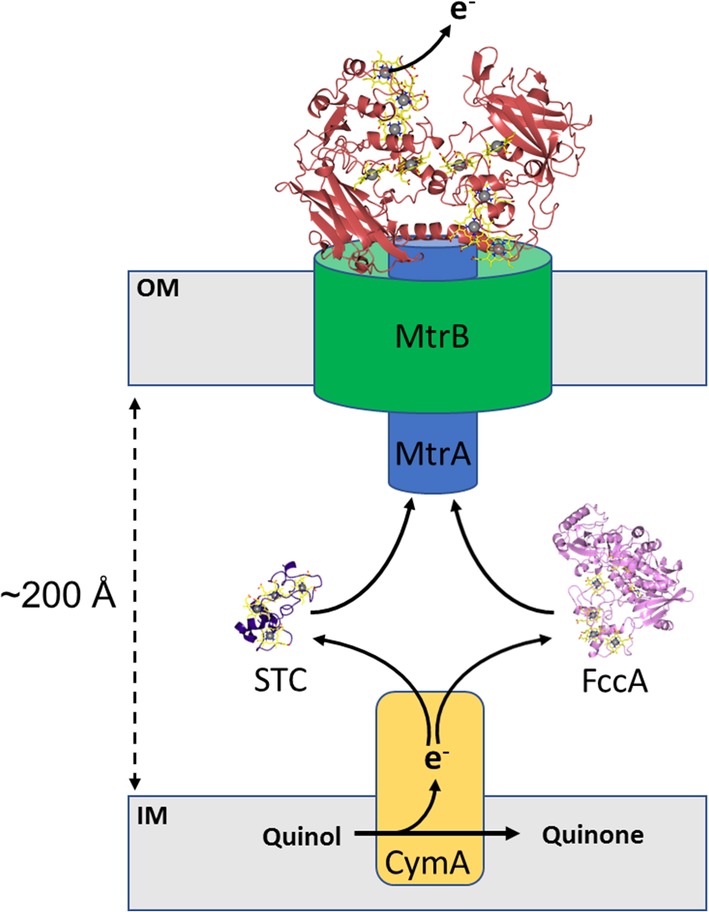
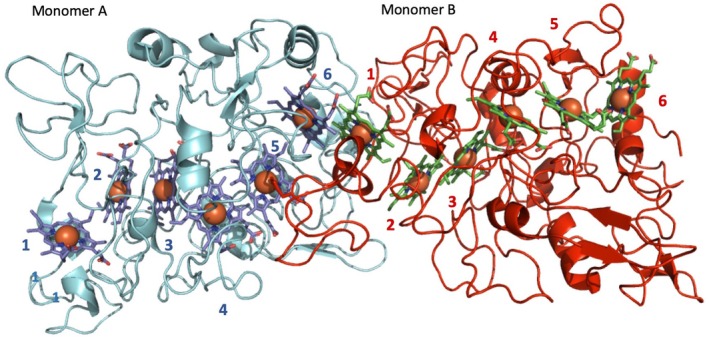
Heme containing proteins are involved in a broad range of cellular functions, from oxygen sensing and transport to catalyzing oxidoreductive reactions. The two major types of cytochrome (b-type and c-type) only differ in their mechanism of heme attachment, but this has major implications for their cellular roles in both localization and mechanism. The b-type cytochromes are commonly cytoplasmic, or are within the cytoplasmic membrane, while c-type cytochromes are always found outside of the cytoplasm. The mechanism of heme attachment allows for complex c-type multiheme complexes, having the capacity to hold multiple electrons, to be assembled. These are increasingly being identified as secreted into the extracellular environment. For organisms that respire using extracellular substrates, these large multiheme cytochromes allow for electron transfer networks from the cytoplasmic membrane to the cell exterior for the reduction of extracellular electron acceptors. In this review the structures and functions of these networks and the mechanisms by which electrons are transferred to extracellular substrates is described.
含血红素的蛋白质参与广泛的细胞功能,从氧感应和运输到催化氧化还原反应。两种主要类型的细胞色素(b 型和 c 型)仅在血红素附着的机制上有所不同,但这对它们在定位和机制方面的细胞作用有重大影响。b 型细胞色素通常存在于细胞质中,或者位于细胞质膜内,而 c 型细胞色素总是位于细胞质之外。血红素附着的机制允许复杂的 c 型多血红素复合物组装,这些复合物具有容纳多个电子的能力。这些复合物越来越多地被鉴定为分泌到细胞外环境中。对于使用细胞外底物进行呼吸的生物体来说,这些大型多血红素细胞色素允许电子从细胞质膜转移到细胞外部,以还原细胞外电子受体。在这篇综述中,描述了这些网络的结构和功能,以及电子向细胞外底物转移的机制。