Institute of Animal Sciences, Chinese Academy of Agricultural Sciences, Beijing, 100193, China.
State Key Laboratory of Animal Nutrition, Beijing, 100193, China.
BMC Genomics. 2019 Nov 15;20(1):863. doi: 10.1186/s12864-019-6221-0.
Intramuscular fat (IMF) is one of the most important factors positively associated with meat quality. Triglycerides (TGs), as the main component of IMF, play an essential role in muscle lipid metabolism. This transcriptome analysis of pectoralis muscle tissue aimed to identify functional genes and biological pathways likely contributing to the extreme differences in the TG content of broiler chickens.
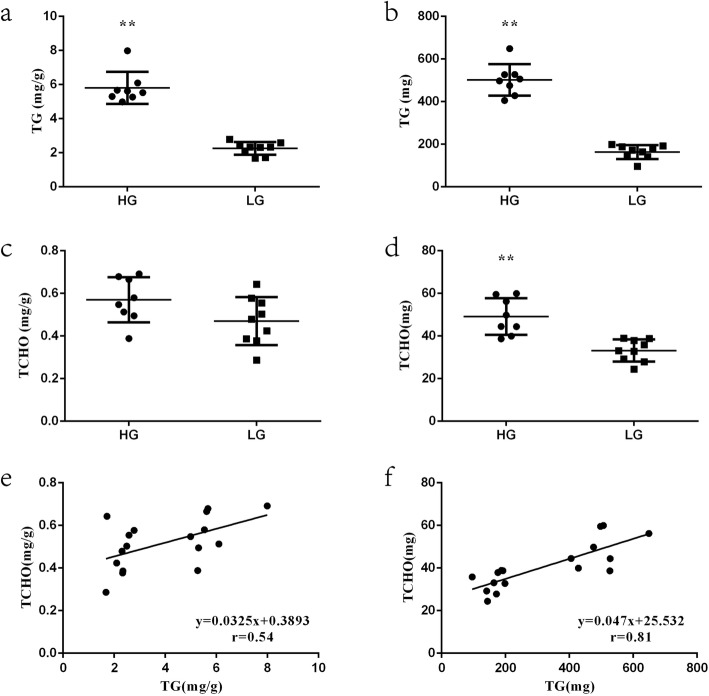
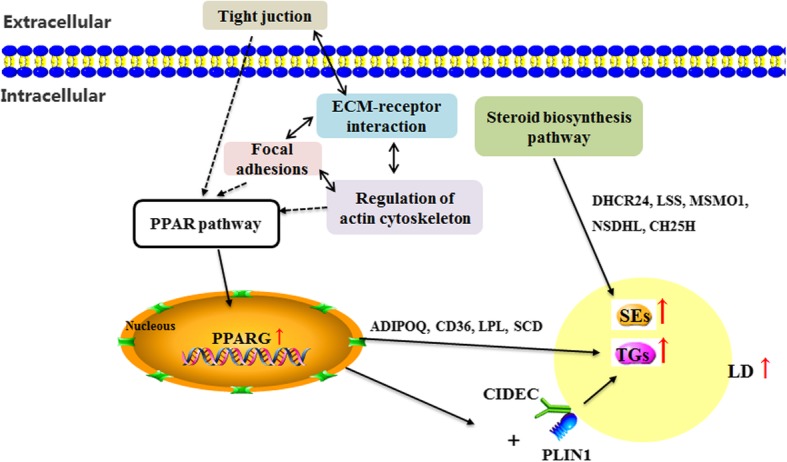
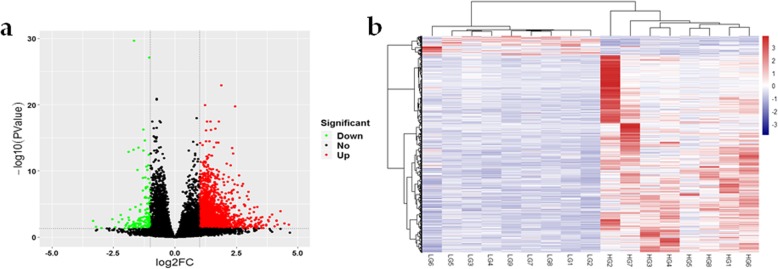
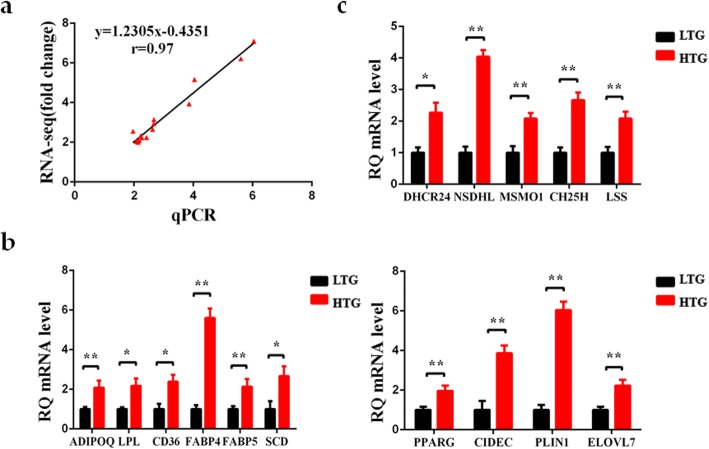
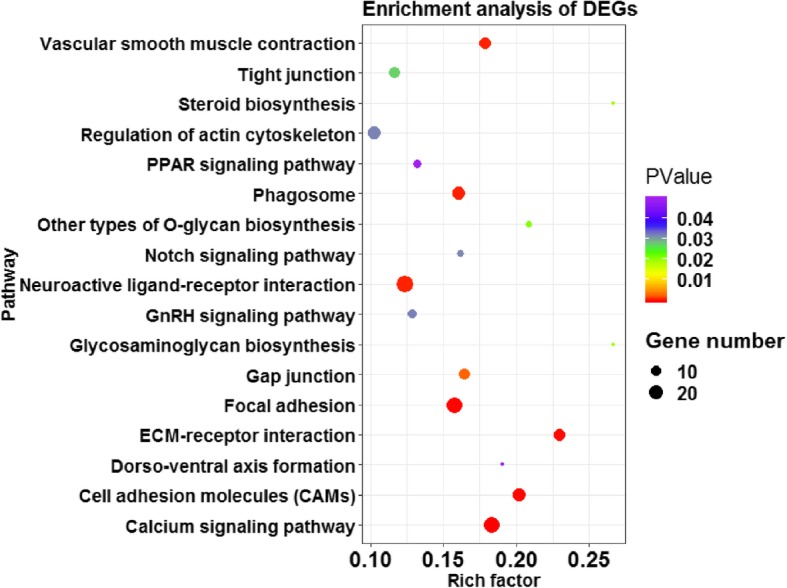
The study included Jingxing-Huang broilers that were significantly different in TG content (5.81 mg/g and 2.26 mg/g, p < 0.01) and deposition of cholesterol also showed the same trend. This RNA sequencing analysis was performed on pectoralis muscle samples from the higher TG content group (HTG) and the lower TG content group (LTG) chickens. A total of 1200 differentially expressed genes (DEGs) were identified between two groups, of which 59 DEGs were related to TG and steroid metabolism. The HTG chickens overexpressed numerous genes related to adipogenesis and lipogenesis in pectoralis muscle tissue, including the key genes ADIPOQ, CD36, FABP4, FABP5, LPL, SCD, PLIN1, CIDEC and PPARG, as well as genes related to steroid biosynthesis (DHCR24, LSS, MSMO1, NSDHL and CH25H). Additionally, key pathways related to lipid storage and metabolism (the steroid biosynthesis and peroxisome proliferator activated receptor (PPAR) signaling pathway) may be the key pathways regulating differential lipid deposition between HTG group and LTG group.
This study showed that increased TG deposition accompanying an increase in steroid synthesis in pectoralis muscle tissue. Our findings of changes in gene expression of steroid biosynthesis and PPAR signaling pathway in HTG and LTG chickens provide insight into genetic mechanisms involved in different lipid deposition patterns in pectoralis muscle tissue.
肌内脂肪(IMF)是与肉质呈正相关的最重要因素之一。甘油三酯(TGs)作为 IMF 的主要成分,在肌肉脂质代谢中起着至关重要的作用。本研究对胸肌组织进行了转录组分析,旨在鉴定可能导致肉鸡 TG 含量差异的功能基因和生物学途径。
本研究包括肌内脂肪含量(5.81mg/g 和 2.26mg/g,p<0.01)和胆固醇沉积差异显著的京星黄肉鸡。对 TG 含量较高组(HTG)和 TG 含量较低组(LTG)肉鸡的胸肌样本进行了 RNA 测序分析。共鉴定到 1200 个差异表达基因(DEGs),其中 59 个 DEGs 与 TG 和类固醇代谢有关。HTG 肉鸡在胸肌组织中过度表达了许多与脂肪生成和脂生成有关的基因,包括关键基因 ADIPOQ、CD36、FABP4、FABP5、LPL、SCD、PLIN1、CIDEC 和 PPARG,以及与类固醇生物合成有关的基因(DHCR24、LSS、MSMO1、NSDHL 和 CH25H)。此外,与脂质储存和代谢相关的关键途径(类固醇生物合成和过氧化物酶体增殖物激活受体(PPAR)信号通路)可能是调节 HTG 组和 LTG 组之间脂质沉积差异的关键途径。
本研究表明,胸肌组织中 TG 沉积增加伴随着类固醇合成增加。HTG 和 LTG 肉鸡类固醇生物合成和 PPAR 信号通路基因表达变化的发现,为不同胸肌组织脂质沉积模式的遗传机制提供了新的见解。