Department of Pathology, Microbiology and Immunology, School of Veterinary Medicine, University of California, Davis, California, United States of America.
PLoS Negl Trop Dis. 2019 Nov 21;13(11):e0007853. doi: 10.1371/journal.pntd.0007853. eCollection 2019 Nov.
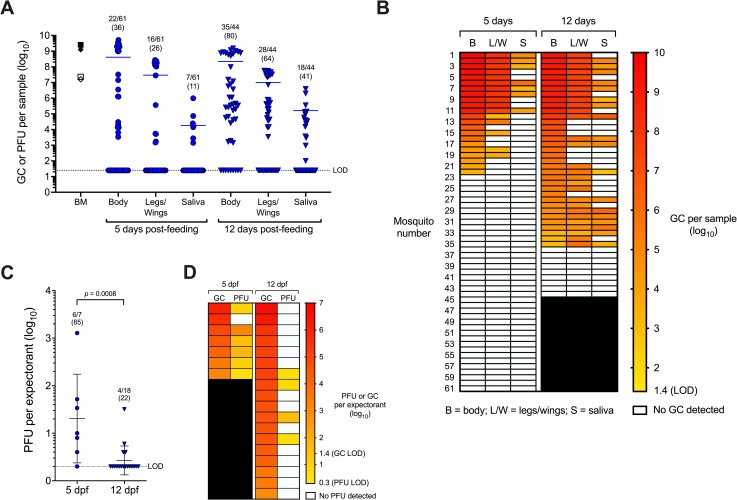
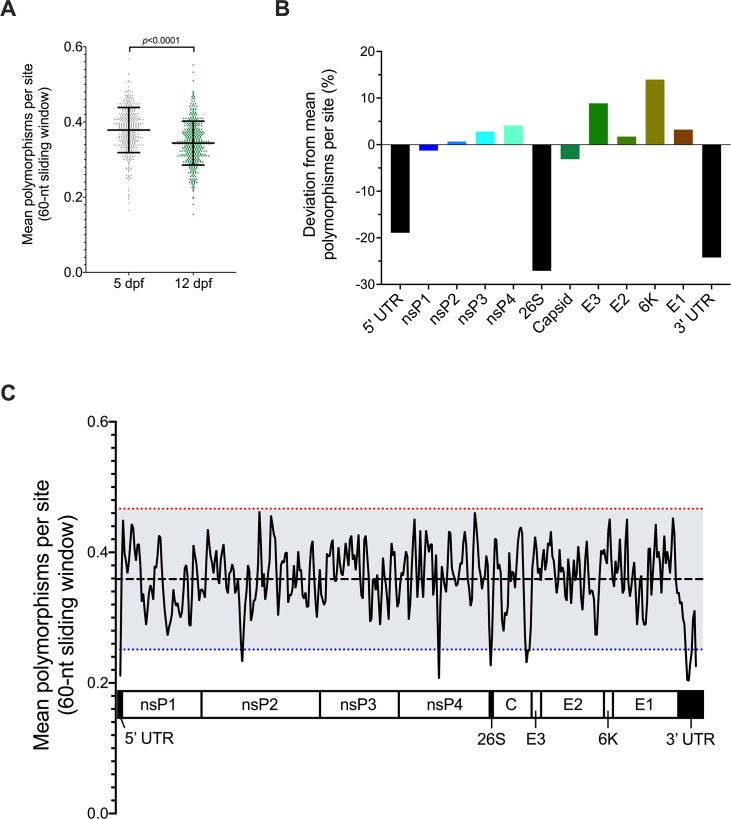
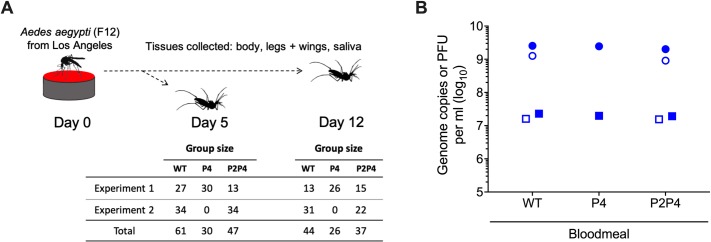
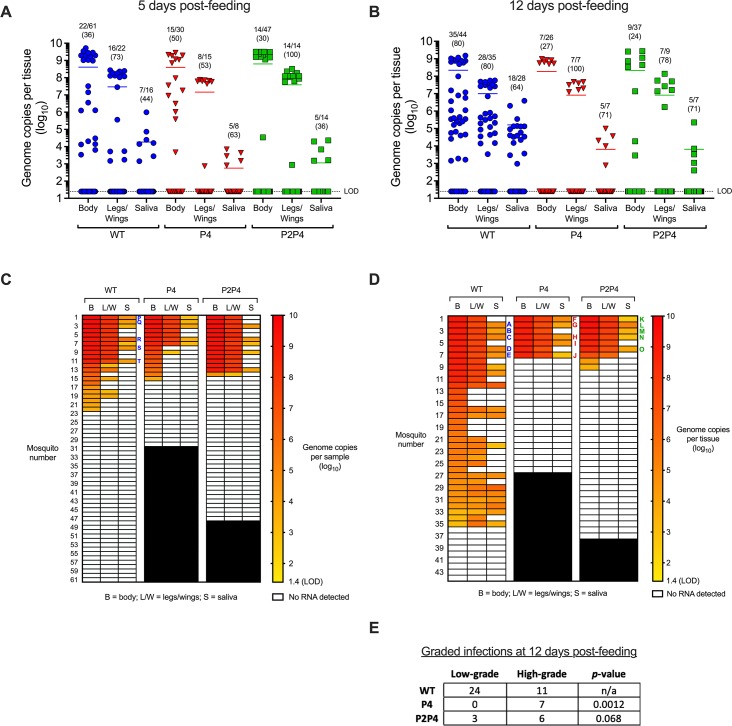
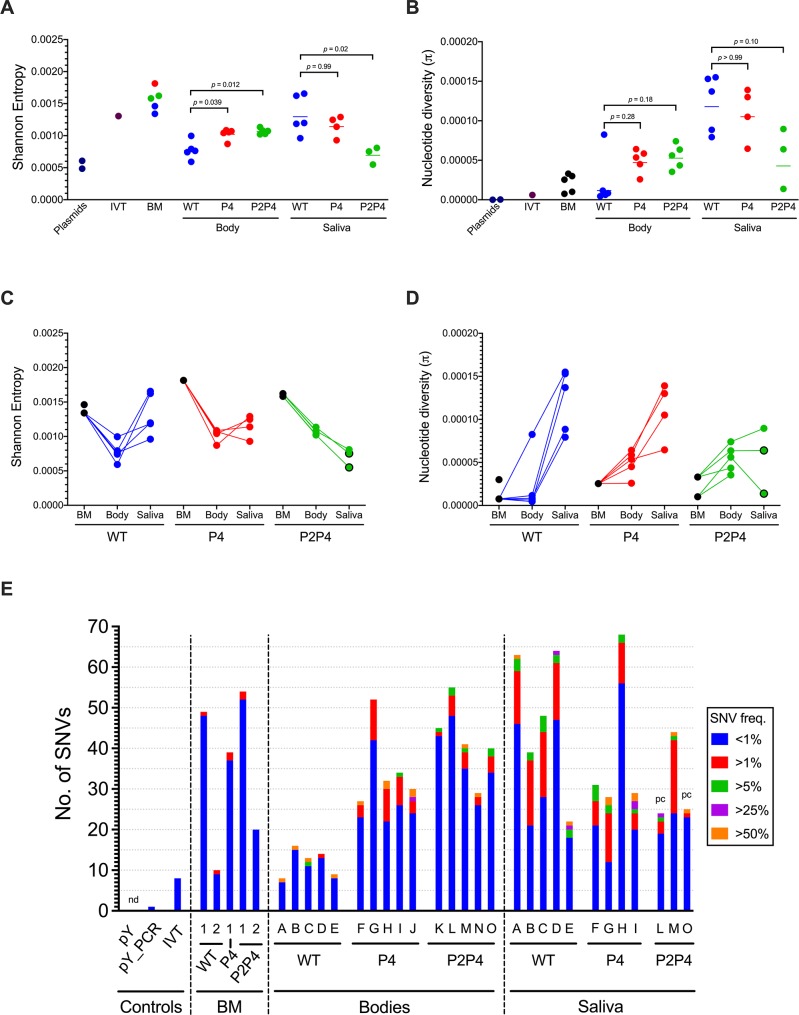
Chikungunya virus (Togaviridae, Alphavirus; CHIKV) is a mosquito-borne global health threat that has been transmitted transiently in the southeastern United States. A primary CHIKV mosquito vector, Aedes aegypti, was recently established in the populous state of California, but the vector competence of Californian mosquitoes is unknown. Explosive CHIKV epidemics since 2004 have been associated with the acquisition of mosquito-adaptive mutations that enhance transmission by Ae. aegypti or Ae. albopictus. As a highly mutable RNA virus, CHIKV has the potential for extensive and rapid genetic diversification in vertebrate hosts and mosquito vectors. We previously demonstrated that expansion of CHIKV diversity in cell culture allows for greater adaptability to novel selection pressures, and that CHIKV fidelity variants are able to diversify more than wildtype (WT) CHIKV in mice. The evolution of intra-vector CHIKV populations and the correlation between CHIKV population diversity and infectivity and transmissibility in mosquitoes has not yet been studied. Here, we address these gaps in knowledge via experimental infection of Ae. aegypti from California with WT and fidelity variant CHIKV. We show that Ae. aegypti from California are highly competent vectors for CHIKV. We also report that CHIKV fidelity variants diversify more than WT in mosquitoes and exhibit attenuated infectivity at the level of the midgut. Furthermore, we demonstrate that intra-vector populations of CHIKV are subjected to purifying selection in mosquito bodies, and sequences of non-coding CHIKV regions are highly conserved. These findings will inform public health risk assessment for CHIKV in California and improve our understanding of constraints to CHIKV evolution in mosquitoes.
基孔肯雅热病毒(Togaviridae,Alphavirus;CHIKV)是一种通过蚊子传播的全球性健康威胁,曾在美国东南部短暂传播。埃及伊蚊(Aedes aegypti)是基孔肯雅热病毒的主要蚊子传播媒介,最近在人口众多的加利福尼亚州建立起来,但加利福尼亚州蚊子的媒介能力尚不清楚。自 2004 年以来,基孔肯雅热病毒的爆发与蚊子适应性突变的获得有关,这些突变增强了埃及伊蚊或白纹伊蚊的传播能力。作为一种高度易变的 RNA 病毒,基孔肯雅热病毒在脊椎动物宿主和蚊子媒介中有广泛和快速的遗传多样化的潜力。我们之前的研究表明,细胞培养中基孔肯雅热病毒多样性的扩展可以使其更好地适应新的选择压力,并且基孔肯雅热病毒保真度变体在小鼠中的多样化能力超过野生型(WT)基孔肯雅热病毒。蚊子内的基孔肯雅热病毒种群的进化以及基孔肯雅热病毒种群多样性与蚊子感染性和传播性之间的相关性尚未得到研究。在这里,我们通过用 WT 和保真度变体 CHIKV 感染来自加利福尼亚州的埃及伊蚊来解决这些知识空白。我们表明,来自加利福尼亚州的埃及伊蚊是基孔肯雅热病毒的高效传播媒介。我们还报告说,在蚊子中,基孔肯雅热病毒保真度变体比 WT 多样化更多,并且在中肠水平表现出较弱的感染力。此外,我们证明了蚊子体内的基孔肯雅热病毒种群受到纯化选择的影响,并且非编码 CHIKV 区域的序列高度保守。这些发现将为加利福尼亚州的基孔肯雅热病毒的公共卫生风险评估提供信息,并提高我们对蚊子中基孔肯雅热病毒进化的限制的理解。