Department of Psychiatry and Psychotherapy, Medical Center - University of Freiburg, Faculty of Medicine, University of Freiburg, Freiburg, Germany.
Institute of Genetic Epidemiology, Faculty of Medicine and Medical Center - University of Freiburg, Freiburg, Germany.
Transl Psychiatry. 2019 Nov 21;9(1):314. doi: 10.1038/s41398-019-0648-6.
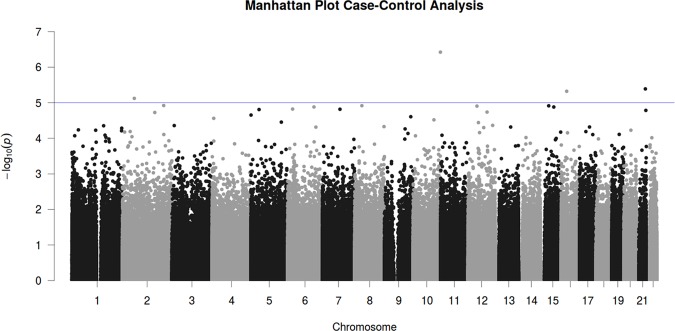
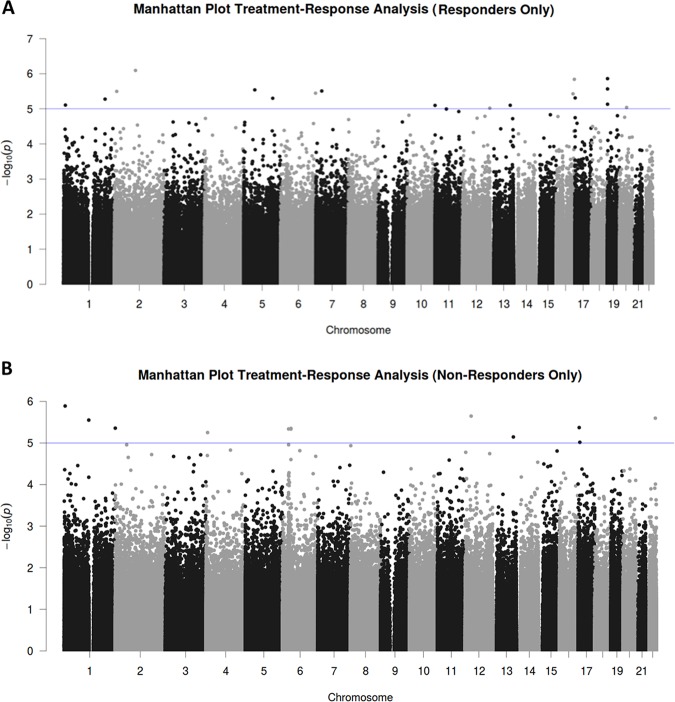
In panic disorder (PD), epigenetic mechanisms such as DNA methylation of candidate genes have been suggested to play a key role at the intersection of genetic and environmental factors. On an epigenome-wide level, however, only two studies in PD patients have been published so far, while to date no study has intra-individually analyzed dynamic epigenetic correlates of treatment-response in PD on a DNA methylome level. Here, an epigenome-wide association study (EWAS) was performed in a sample of 57 PD patients and matched healthy controls using the Illumina MethylationEPIC BeadChip, along with a longitudinal approach assessing changes on the DNA methylome level corresponding to clinical effects of a manualized six-week cognitive-behavioral therapy (CBT) in PD. While no epigenome-wide significant hits could be discerned, top suggestive evidence was observed for decreased methylation in PD at cg19917903 in the Cilia and Flagella Associated Protein 46 (CFAP46) gene, and for an increase in methylation after CBT at cg06943668 in the Interleukin 1 Receptor Type 1 (IL1R1) gene in treatment responders to CBT. Additional exploratory analyses based on biological validity and a combined statistical/biological ranking point to further new potential PD risk genes such as the CCL4L1 or GMNN genes, and suggest dynamic methylation of, e.g., the ZFP622 and the SLC43A2 genes along with response to CBT. These EWAS and first longitudinal epigenome-wide pilot data in PD add to the emerging candidate gene-based body of evidence for epigenetic mechanisms to be involved in PD pathogenesis and to possibly constitute dynamic biological correlates of therapeutic interventions.
在惊恐障碍 (PD) 中,候选基因的表观遗传机制,如 DNA 甲基化,被认为在遗传和环境因素的交汇处起着关键作用。然而,在全基因组表观遗传水平上,目前只有两项关于 PD 患者的研究已经发表,而迄今为止,尚无研究在个体水平上分析 PD 治疗反应的动态表观遗传相关性。在此,我们对 57 名 PD 患者和匹配的健康对照者进行了全基因组关联研究 (EWAS),使用了 Illumina MethylationEPIC BeadChip,同时采用纵向方法评估了与 PD 患者手动六周认知行为治疗 (CBT) 临床效果相对应的 DNA 甲基化组水平的变化。虽然没有发现全基因组显著的关联,但在 PD 患者中观察到 CFAP46 基因中的 cg19917903 处的甲基化减少和 CBT 后 IL1R1 基因中的 cg06943668 处的甲基化增加,这表明 CFAP46 基因和 IL1R1 基因中的 CBT 治疗有反应者存在更高的 DNA 甲基化。基于生物学有效性和综合统计/生物学排名的额外探索性分析,进一步指向了新的潜在 PD 风险基因,如 CCL4L1 或 GMNN 基因,并表明 ZFP622 和 SLC43A2 等基因的动态甲基化以及对 CBT 的反应。这些在 PD 中进行的 EWAS 和首次纵向全基因组启动子数据,为参与 PD 发病机制的表观遗传机制提供了新兴的候选基因证据,并可能构成治疗干预的动态生物学相关性。