Yi Jinghai, Duling Matthew G, Bowers Lauren N, Knepp Alycia K, LeBouf Ryan F, Nurkiewicz Timothy R, Ranpara Anand, Luxton Todd, Martin Stephen B, Burns Dru A, Peloquin Derek M, Baumann Eric J, Virji M Abbas, Stefaniak Aleksandr B
Department of Physiology and Pharmacology, and the Center for Inhalation Toxicology, West Virginia University School of Medicine, Morgantown, WV, USA.
Respiratory Health Division, National Institute for Occupational Safety and Health, Morgantown, WV, USA.
Inhal Toxicol. 2019 Nov-Dec;31(13-14):432-445. doi: 10.1080/08958378.2019.1705441. Epub 2019 Dec 24.
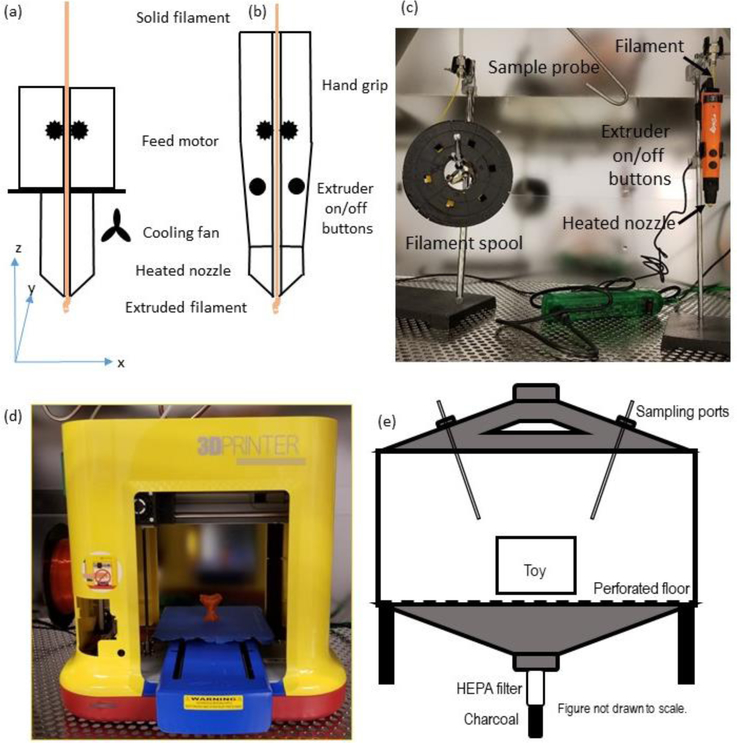
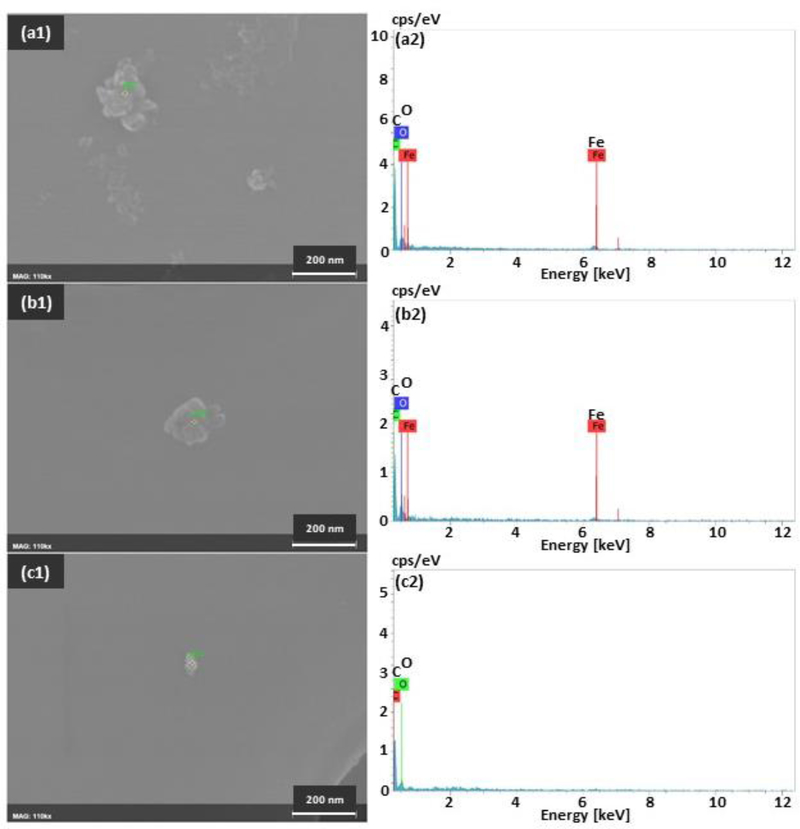
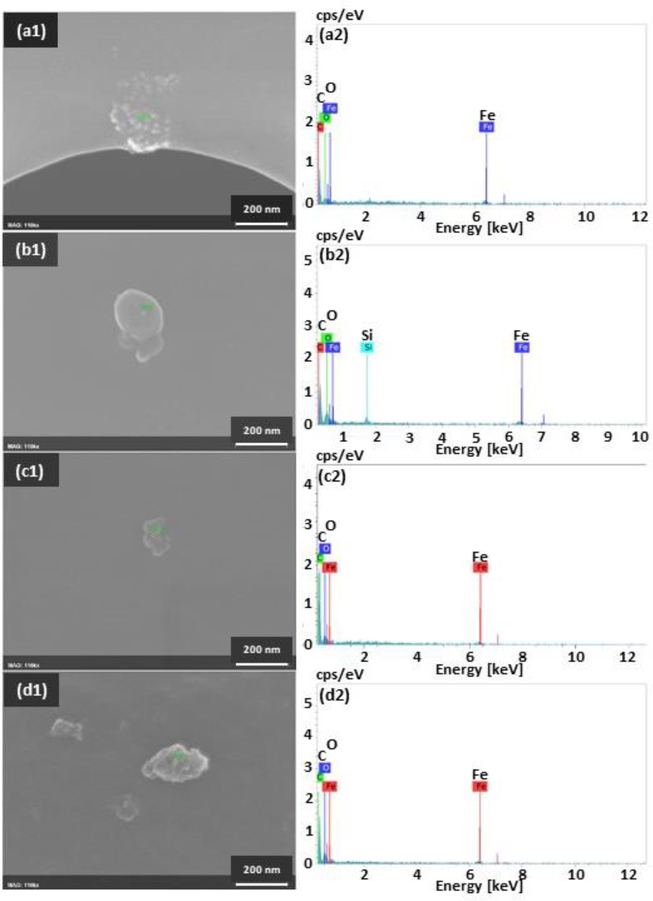
Fused filament fabrication "3-dimensional (3-D)" printing has expanded beyond the workplace to 3-D printers and pens for use by children as toys to create objects. Emissions from two brands of toy 3-D pens and one brand of toy 3-D printer were characterized in a 0.6 m chamber (particle number, size, elemental composition; concentrations of individual and total volatile organic compounds (TVOC)). The effects of print parameters on these emission metrics were evaluated using mixed-effects models. Emissions data were used to model particle lung deposition and TVOC exposure potential. Geometric mean particle yields (10-10 particles/g printed) and sizes (30-300 nm) and TVOC yields (<detectable to 590 µg TVOC/g printed) for the toys were similar to those from 3-D printers used in workplaces. Metal emissions included manganese (1.6-92.3 ng/g printed) and lead (0.13-1.2 ng/g printed). Among toys, extruder nozzle conditions (diameter, temperature) and filament (type, color, and extrusion speed) significantly influenced particle and TVOC emissions. Dose modeling indicated that emitted particles would deposit in the lung alveoli of children. Exposure modeling indicated that TVOC concentration from use of a single toy would be 1-31 µg/m in a classroom and 3-154 µg/m in a residential living room. Potential exists for inhalation of organic vapors and metal-containing particles during use of these toys. If deemed appropriate, e.g. where multiple toys are used in a poorly ventilated area or a toy is positioned near a child's breathing zone, control technologies should be implemented to reduce emissions and exposure risk.
熔融沉积成型“三维(3-D)”打印已从工作场所扩展到供儿童作为玩具使用的3-D打印机和3-D笔,用于制作物品。在一个0.6米的测试舱中对两个品牌的玩具3-D笔和一个品牌的玩具3-D打印机的排放物进行了表征(颗粒数量、尺寸、元素组成;单个挥发性有机化合物和总挥发性有机化合物(TVOC)的浓度)。使用混合效应模型评估了打印参数对这些排放指标的影响。排放数据用于模拟颗粒在肺部的沉积和TVOC的暴露潜力。玩具的几何平均颗粒产量(每克打印材料产生10-10个颗粒)、尺寸(30-300纳米)和TVOC产量(低于可检测水平至每克打印材料590微克TVOC)与工作场所使用的3-D打印机相似。金属排放包括锰(每克打印材料1.6-92.3纳克)和铅(每克打印材料0.13-1.2纳克)。在玩具中,挤出机喷嘴条件(直径、温度)和细丝(类型、颜色和挤出速度)对颗粒和TVOC排放有显著影响。剂量模型表明排放的颗粒会沉积在儿童的肺泡中。暴露模型表明,在教室中使用单个玩具时TVOC浓度为1-31微克/立方米,在住宅客厅中为3-154微克/立方米。在使用这些玩具期间,存在吸入有机蒸汽和含金属颗粒的可能性。如果认为合适,例如在通风不良的区域使用多个玩具或玩具靠近儿童呼吸区域的情况下,应实施控制技术以减少排放和暴露风险。