Wang Tianbing, Wang Yanhua, Xu Tingmin, Li Libing, Huo Mingli, Li Xian, He Yingdong, Lin Qiushi, Mei Bingsong, Zhou Xiaohua, Jiang Baoguo
Trauma Medicine Center.
Department of Trauma and Orthopedics, Peking University People's Hospital.
Medicine (Baltimore). 2020 Jan;99(1):e18567. doi: 10.1097/MD.0000000000018567.
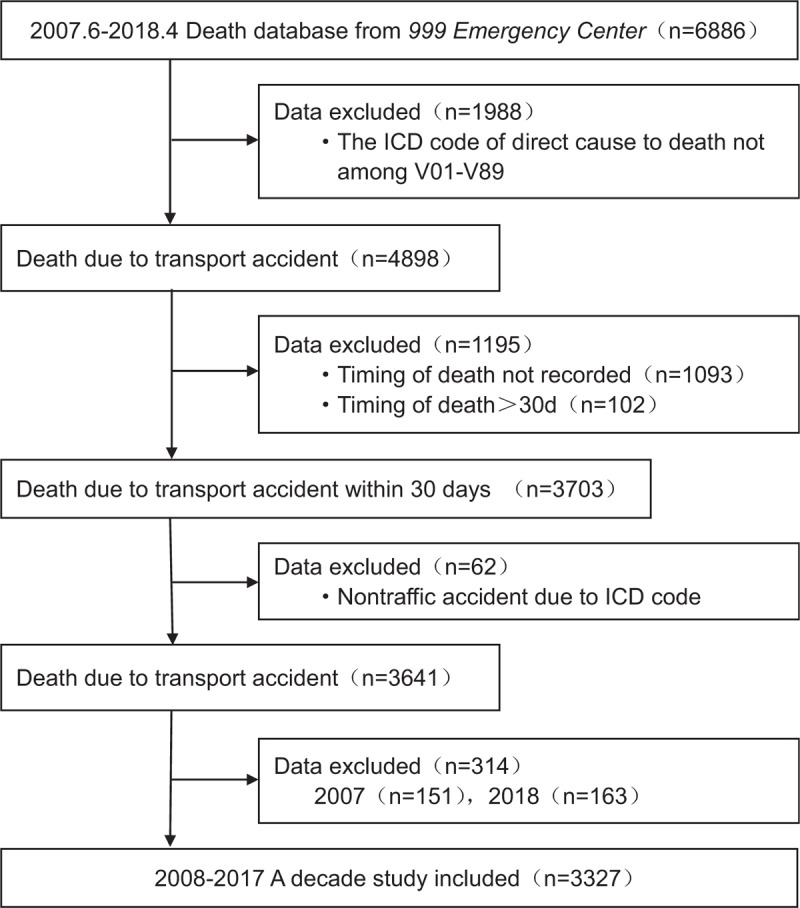
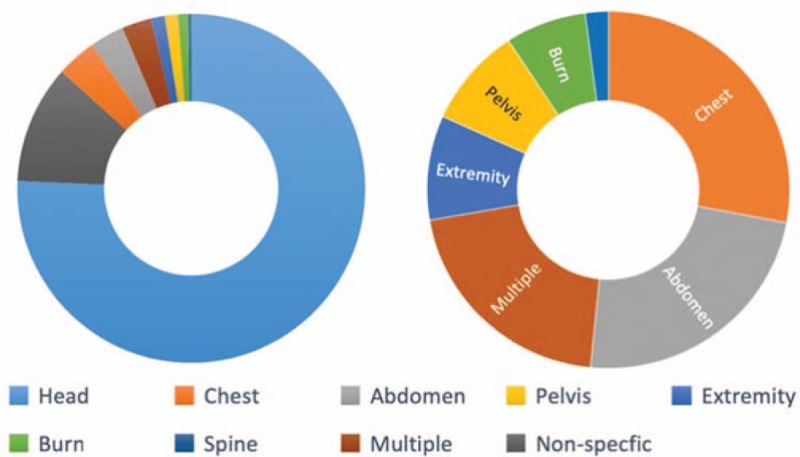
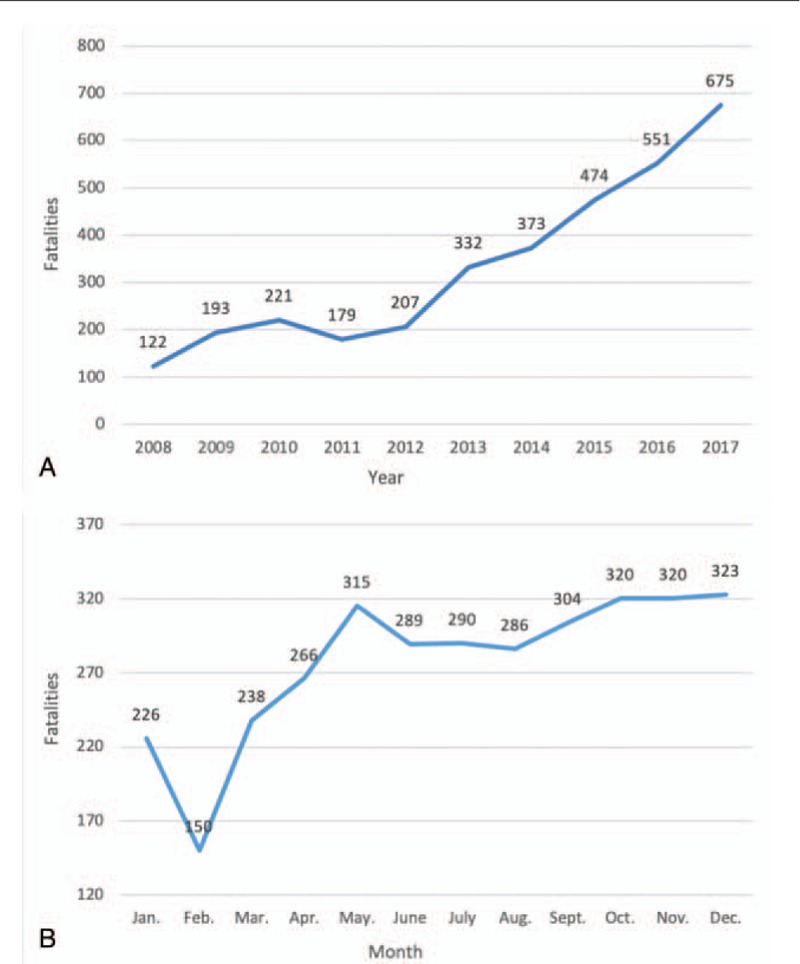
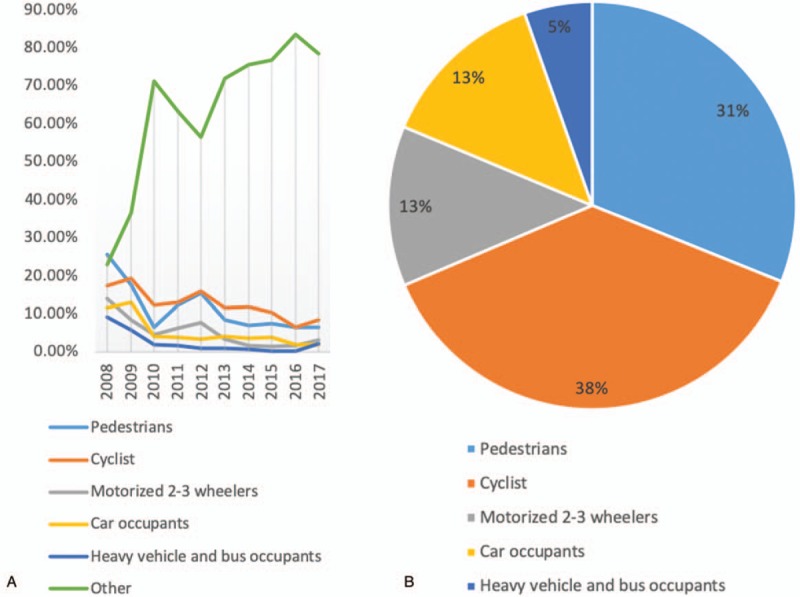
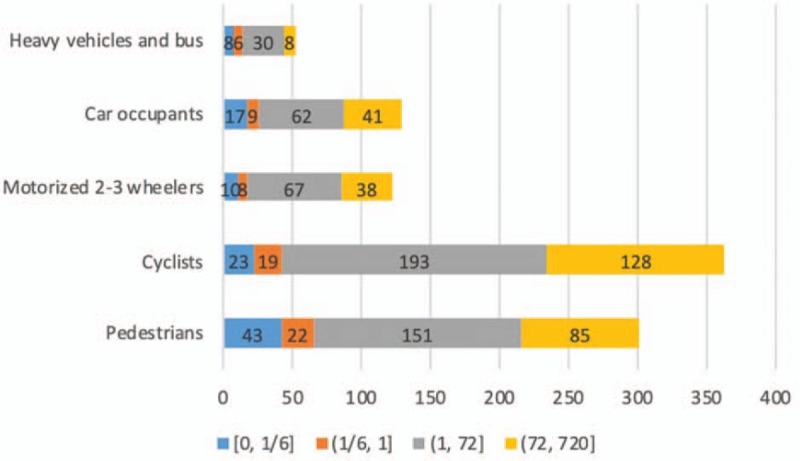
We investigated the epidemiological and clinical characteristics deaths from road traffic injury (RTI) in Beijing, and provided evidence useful for the prevention of fatal traffic trauma and for the treatment of traffic-related injuries.We retrospectively reviewed death cases provided by the Beijing Red Cross Emergency Center on road traffic injury deaths from 2008 to 2017. We analyzed population characteristics, time distribution, distribution of transportation modes, intervals to death, locations and injured body parts.From 2008 to 2017, there were 3327 deaths from RTI recorded by the Beijing Red Cross Emergency Center, with mainly males among these deaths. The average age at death was 46.19 ± 17.43 years old (46.19, 0.43-100.24). In accidents with more detail recorded, pedestrians and people using nonmotorized transportation modes suffered the most fatalities (664/968, 68.60%). The most commonly injured body parts were the head (2569/3327, 77.22%), followed by the chest (180/3327, 5.41%), abdomen (130/3327, 3.91%), lower extremities (68/3327, 2.04%), pelvis (67/3327, 2.01%), spinal cord (31/3327, 0.93%), and upper extremities (26/3327, 0.78%). Burns accounted for 0.96% (32/3327), and unknown body parts were affected in 11.28% (365/3327). The average time interval from injury to death was 36.90 ± 89.57 h (36.90, 0-720); 46.7% (1554/3327) died within 10 minutes after injury; 9.02% (300/3327) died between 10 min and 1 hour; 30.33% (1009/3327) died between 1 hour and 3 days; 13.95% (464/3327) died between 3 and 30 days.In Beijing, RTI is a significant cause of preventable death, particularly among pedestrians and users of non-motorized vehicles. Head trauma was the most lethal cause of RTI deaths. Our findings suggested that interventions to prevent collisions and reduce injuries, and improved trauma treatment process and trauma rescue system could address a certain proportion of avoidable RTI deaths.
我们调查了北京道路交通伤害(RTI)死亡的流行病学和临床特征,为预防致命交通创伤及治疗交通相关损伤提供有用依据。我们回顾性分析了北京红十字会急救中心提供的2008年至2017年道路交通伤害死亡病例。我们分析了人群特征、时间分布、交通方式分布、死亡间隔、地点及受伤身体部位。2008年至2017年,北京红十字会急救中心记录了3327例道路交通伤害死亡病例,其中男性居多。平均死亡年龄为46.19±17.43岁(46.19,0.43 - 100.24)。在记录更详细的事故中,行人及使用非机动车交通方式的人死亡最多(664/968,68.60%)。最常受伤的身体部位是头部(2569/3327,77.22%),其次是胸部(180/3327,5.41%)、腹部(130/3327,3.91%)、下肢(68/3327,2.04%)、骨盆(67/3327,2.01%)、脊髓(31/3327,0.93%)和上肢(26/3327,0.78%)。烧伤占0.96%(32/3327),身体部位不明的占11.28%(365/3327)。受伤至死亡的平均时间间隔为36.90±89.57小时(36.90,0 - 720);46.7%(1554/3327)在受伤后10分钟内死亡;9.02%(300/3327)在10分钟至1小时之间死亡;30.33%(1009/3327)在1小时至3天之间死亡;13.95%(464/3327)在3天至30天之间死亡。在北京,道路交通伤害是可预防死亡的重要原因,尤其是在行人及非机动车使用者中。头部创伤是道路交通伤害死亡最致命的原因。我们的研究结果表明,预防碰撞和减少伤害的干预措施,以及改进创伤治疗流程和创伤救援系统,可以减少一定比例的可避免道路交通伤害死亡。