Department of Sports Medicine and Exercise Physiology, Institute of Sports Sciences, Goethe University Frankfurt, Frankfurt am Main, Germany.
Department of Computer Science / Therapy Sciences, Professorship for Physiotherapy: Exercise Science and Applied Biomechanics, Trier University of Applied Sciences, Trier, Germany.
PLoS One. 2020 Jan 15;15(1):e0227423. doi: 10.1371/journal.pone.0227423. eCollection 2020.
Systematic review with meta-analysis and meta-regression.
We systematically reviewed and delineated the existing evidence on sustainability effects of motor control exercises on pain intensity and disability in chronic low back pain patients when compared with an inactive or passive control group or with other exercises. Secondary aims were to reveal whether moderating factors like the time after intervention completion, the study quality, and the training characteristics affect the potential sustainability effects.
Relevant scientific databases (Medline, Web of Knowledge, Cochrane) were screened. Eligibility criteria for selecting studies: All RCTs und CTs on chronic (≥ 12/13 weeks) nonspecific low back pain, written in English or German and adopting a longitudinal core-specific/stabilizing sensorimotor control exercise intervention with at least one pain intensity and disability outcome assessment at a follow-up (sustainability) timepoint of ≥ 4 weeks after exercise intervention completion.
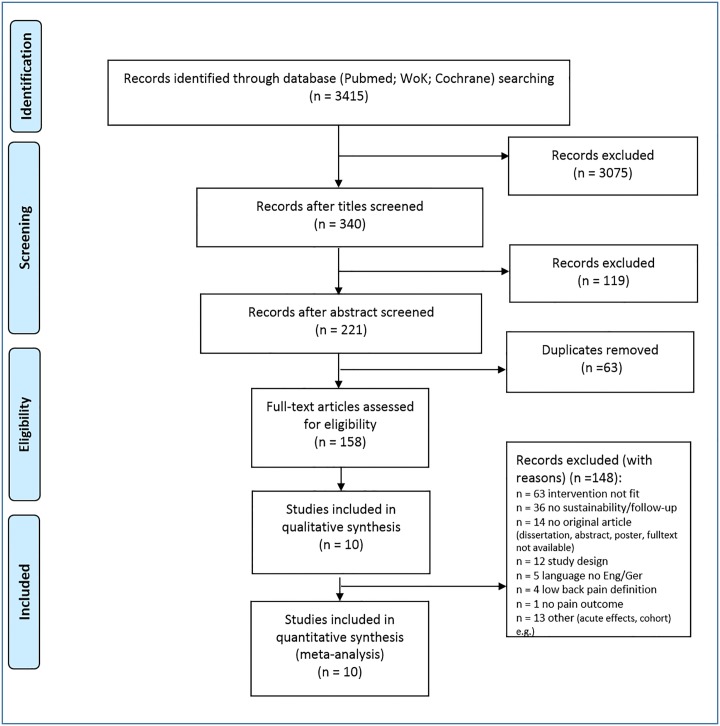
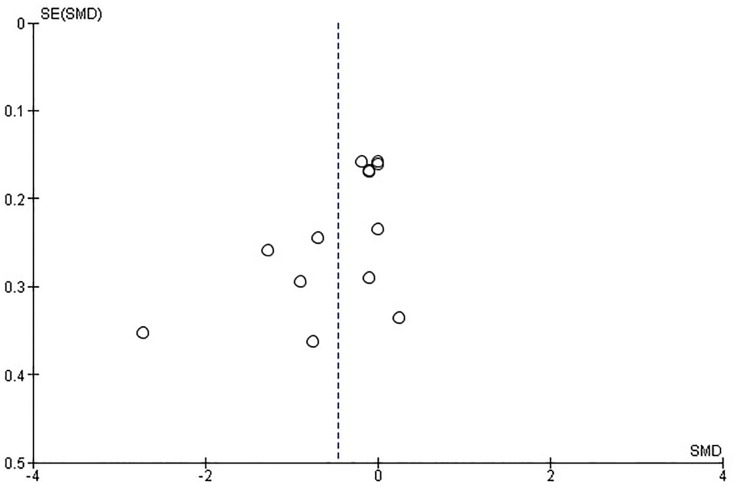
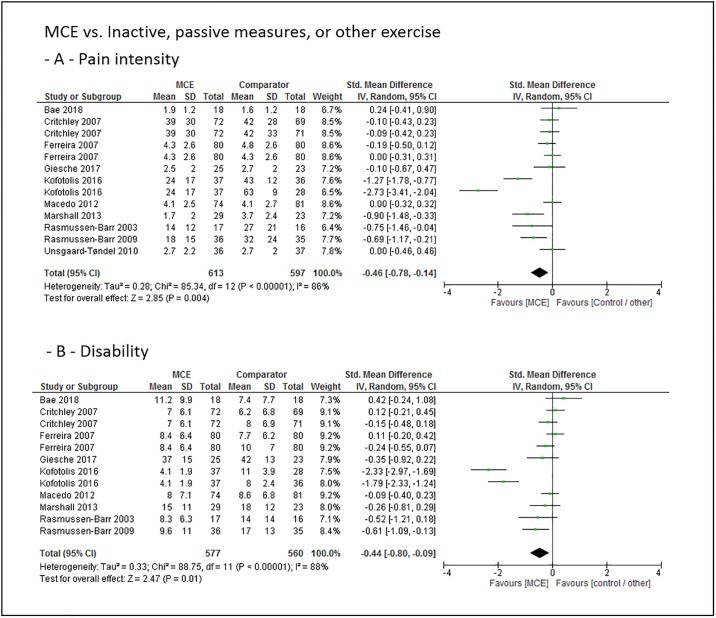
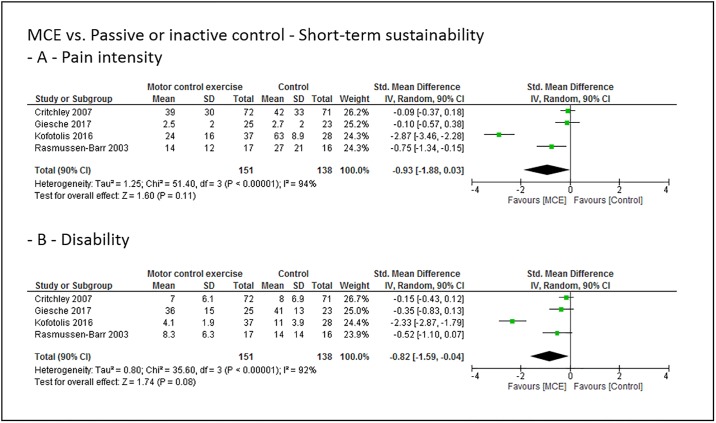
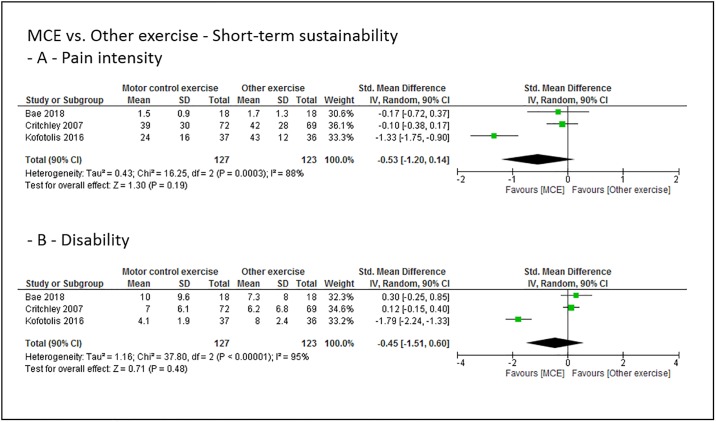
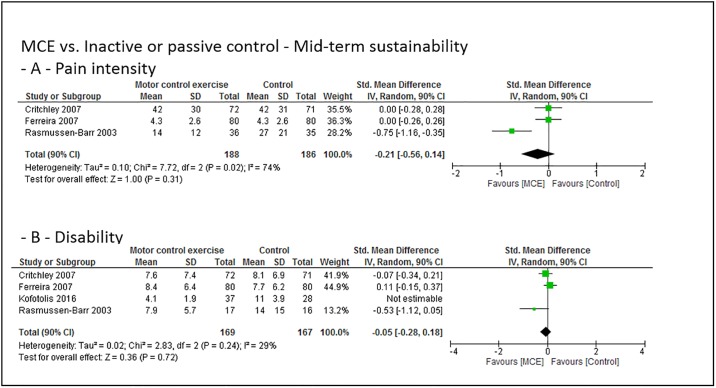
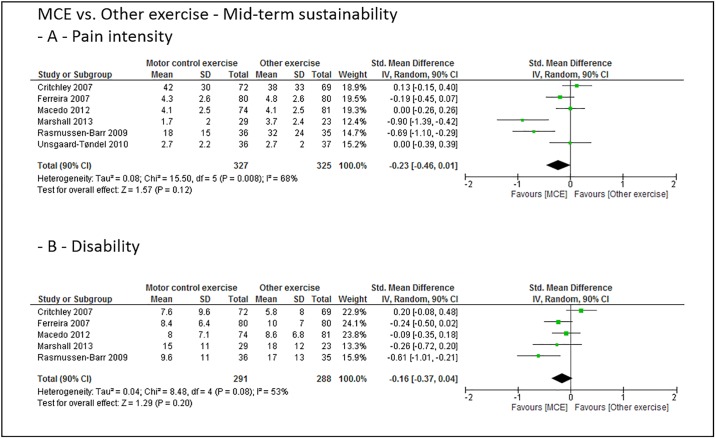
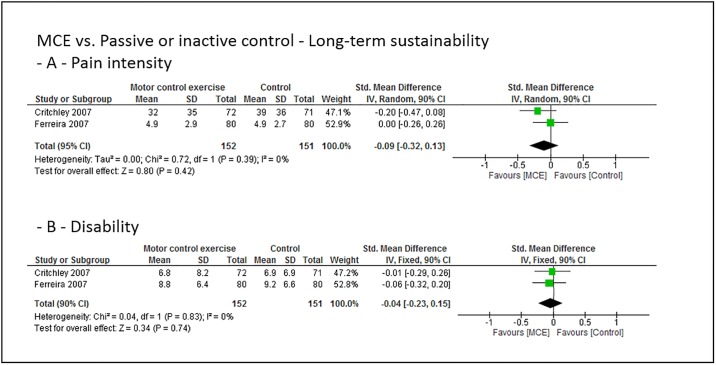
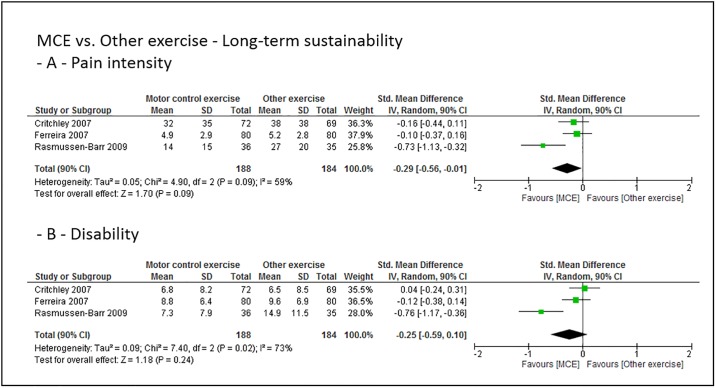
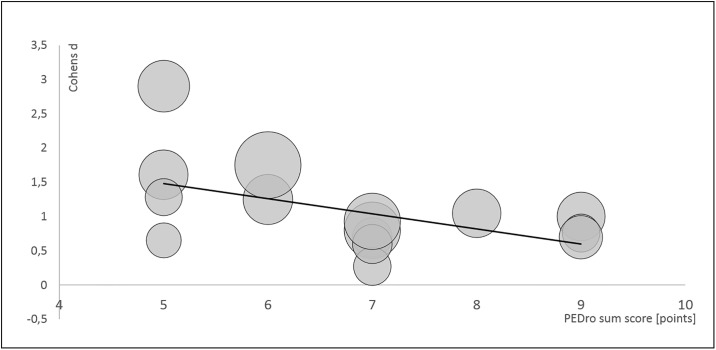
From the 3,415 studies that were initially retrieved, 10 (2 CTs & 8 RCTs) on N = 1081 patients were included in the review and analyses. Low to moderate quality evidence shows a sustainable positive effect of motor control exercise on pain (SMD = -.46, Z = 2.9, p < .001) and disability (SMD = -.44, Z = 2.5, p < .001) in low back pain patients when compared to any control. The subgroups' effects are less conclusive and no clear direction of the sustainability effect at short versus mid versus long-term, of the type of the comparator, or of the dose of the training is given. Low quality studies overestimated the effect of motor control exercises.
系统评价与荟萃分析和荟萃回归。
我们系统地回顾和阐述了现有的关于运动控制练习对慢性下腰痛患者疼痛强度和残疾的可持续效果的证据,与非活动或被动对照组或其他运动相比。次要目的是揭示是否存在调节因素,如干预完成后时间、研究质量和训练特征,会影响潜在的可持续效果。
筛选相关科学数据库(Medline、Web of Knowledge、Cochrane)。选择研究的资格标准:所有关于慢性(≥ 12/13 周)非特异性下腰痛的 RCT 和 CT,用英语或德语撰写,并采用纵向核心特定/稳定的感觉运动控制练习干预,至少有一次疼痛强度和残疾结果评估,在运动干预完成后≥ 4 周的随访(可持续性)时间点。
从最初检索到的 3415 项研究中,有 10 项(2 项 CT 和 8 项 RCT)纳入了 N = 1081 名患者的综述和分析。低到中等质量的证据表明,与任何对照组相比,运动控制练习对慢性腰痛患者的疼痛(SMD = -.46,Z = 2.9,p <.001)和残疾(SMD = -.44,Z = 2.5,p <.001)有可持续的积极效果。亚组的效果不太确定,在短期、中期和长期、比较类型或训练剂量方面,都没有可持续效果的明确方向。低质量的研究高估了运动控制练习的效果。