Luziatelli Francesca, Ficca Anna Grazia, Cardarelli Mariateresa, Melini Francesca, Cavalieri Andrea, Ruzzi Maurizio
Department for Innovation in Biological, Agrofood and Forest systems (DIBAF), University of Tuscia, via C. de Lellis, snc, I-01100 Viterbo, Italy.
CREA Research Centre for Vegetable and Ornamental Crops, I-84098 Pontecagnano, Italy.
Microorganisms. 2020 Jan 22;8(2):153. doi: 10.3390/microorganisms8020153.
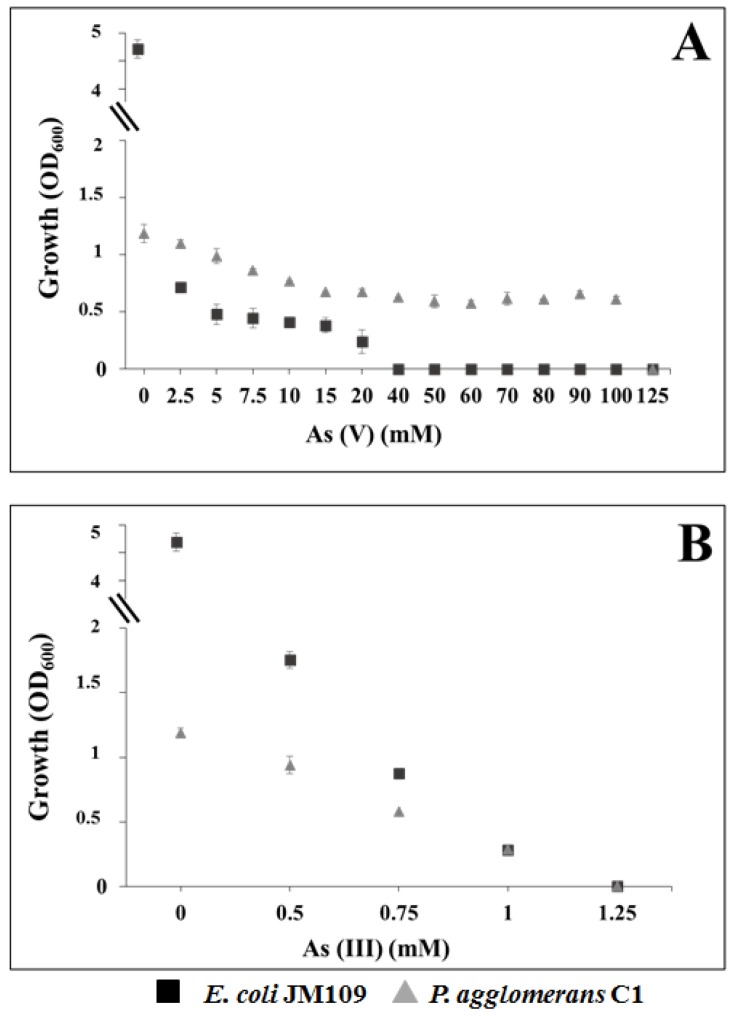
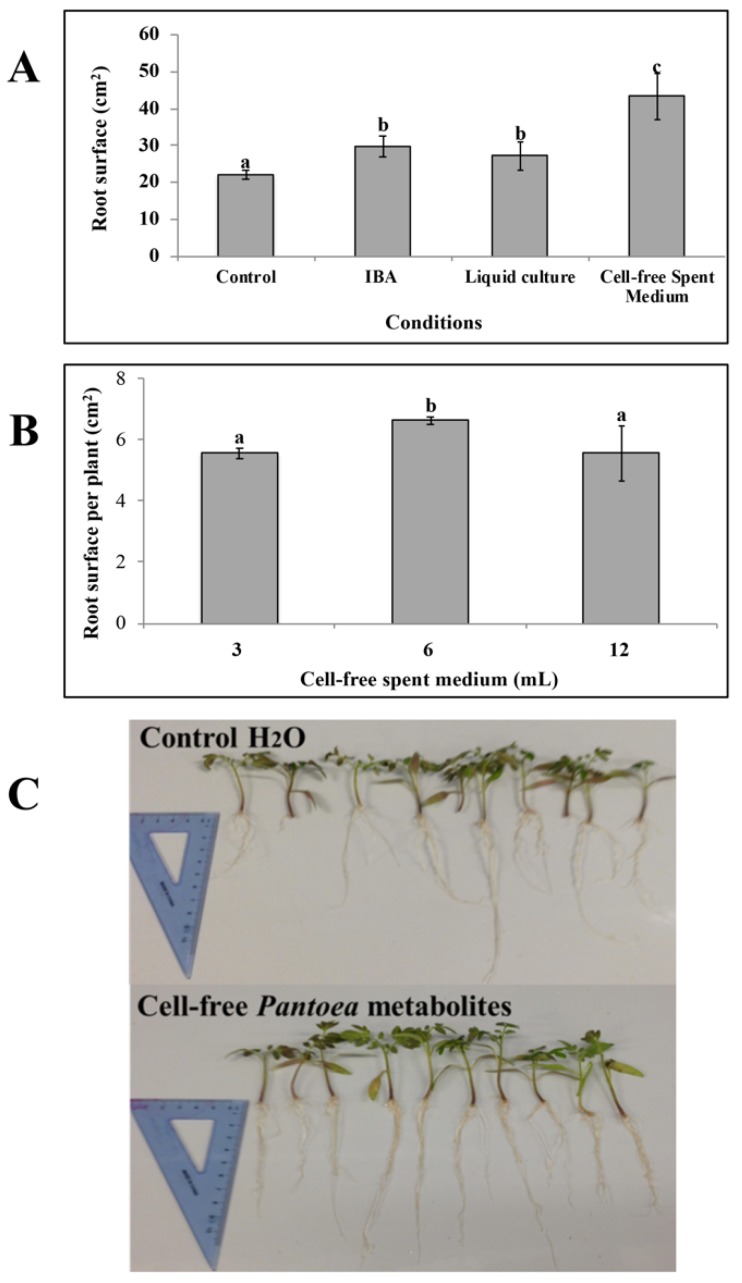
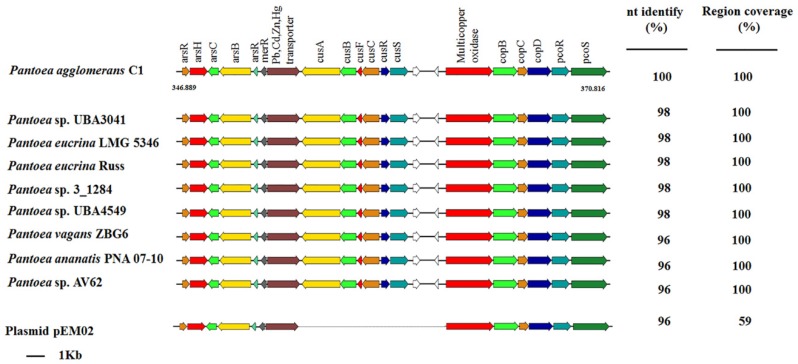
Distinctive strains of are used as soil inoculants for their ability to promote plant growth. strain C1, previously isolated from the phyllosphere of lettuce, can produce indole-3-acetic acid (IAA), solubilize phosphate, and inhibit plant pathogens, such as . In this paper, the complete genome sequence of strain C1 is reported. In addition, experimental evidence is provided on how the strain tolerates arsenate As (V) up to 100 mM, and on how secreted metabolites like IAA and siderophores act as biostimulants in tomato cuttings. The strain has a circular chromosome and two prophages for a total genome of 4,846,925-bp, with a DNA G+C content of 55.2%. Genes related to plant growth promotion and biocontrol activity, such as those associated with IAA and spermidine synthesis, solubilization of inorganic phosphate, acquisition of ferrous iron, and production of volatile organic compounds, siderophores and GABA, were found in the genome of strain C1. Genome analysis also provided better understanding of the mechanisms underlying strain resistance to multiple toxic heavy metals and transmission of these genes by horizontal gene transfer. Findings suggested that strain C1 exhibits high biotechnological potential as plant growth-promoting bacterium in heavy metal polluted soils.
某些独特的菌株因其促进植物生长的能力而被用作土壤接种剂。菌株C1先前从生菜叶际分离得到,它能够产生吲哚 - 3 - 乙酸(IAA)、溶解磷酸盐并抑制植物病原体,如[具体病原体未提及]。本文报道了菌株C1的完整基因组序列。此外,还提供了关于该菌株如何耐受高达100 mM砷酸盐As(V)以及诸如IAA和铁载体等分泌代谢产物如何在番茄插条中作为生物刺激剂发挥作用的实验证据。该菌株有一个环状染色体和两个原噬菌体,基因组全长4,846,925 bp,DNA G + C含量为55.2%。在菌株C1的基因组中发现了与植物生长促进和生物防治活性相关的基因,例如那些与IAA和亚精胺合成、无机磷酸盐溶解、亚铁获取以及挥发性有机化合物、铁载体和γ-氨基丁酸产生相关的基因。基因组分析还更好地理解了该菌株对多种有毒重金属的抗性机制以及这些基因通过水平基因转移的传递情况。研究结果表明,菌株C1作为重金属污染土壤中促进植物生长的细菌具有很高的生物技术潜力。