Man Jarrett, Gallagher Joseph P, Bartlett Madelaine
Biology Department, University of Massachusetts Amherst, 611 North Pleasant Street, 221 Morrill 3, Amherst, MA, 01003, USA.
New Phytol. 2020 Jun;226(5):1492-1505. doi: 10.1111/nph.16455. Epub 2020 Feb 29.
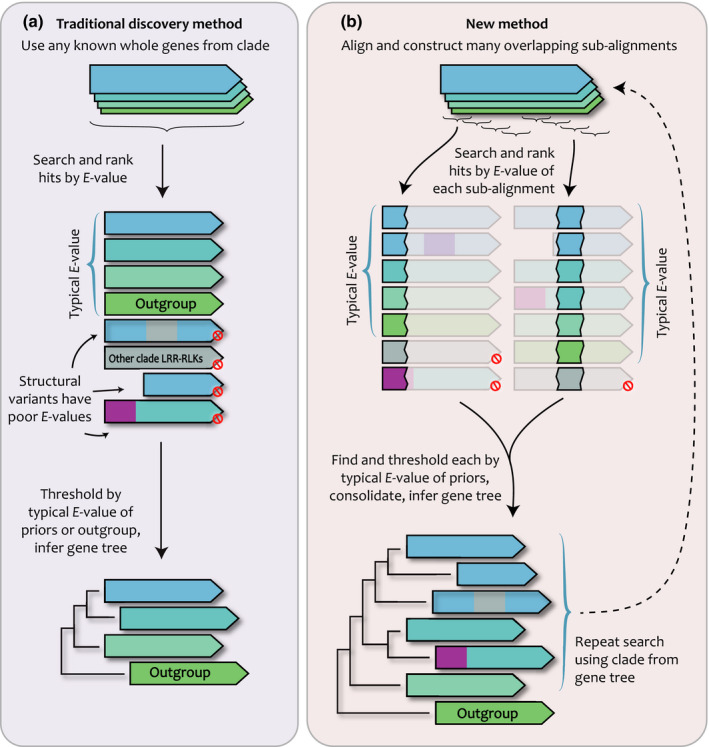
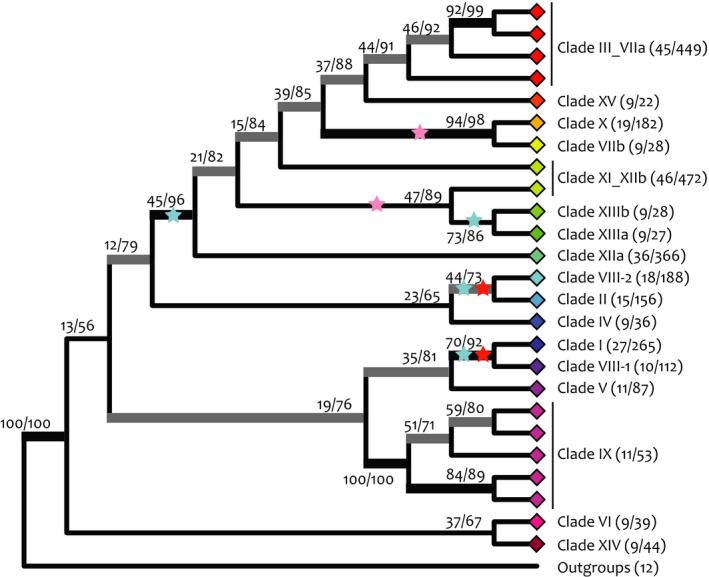
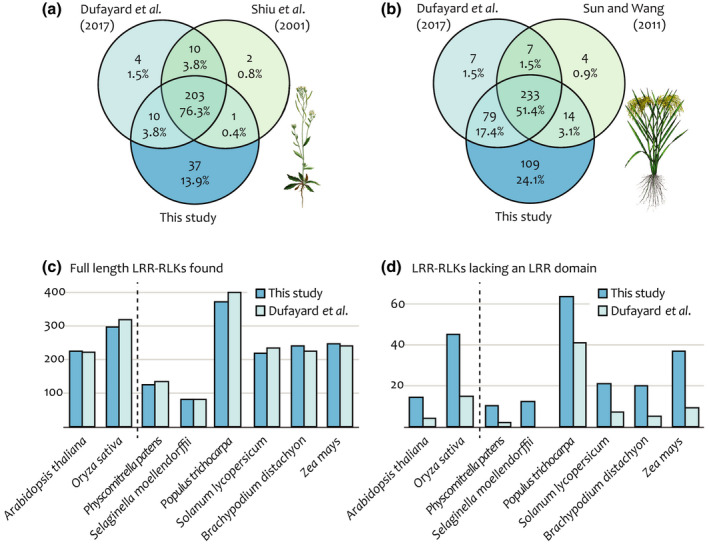
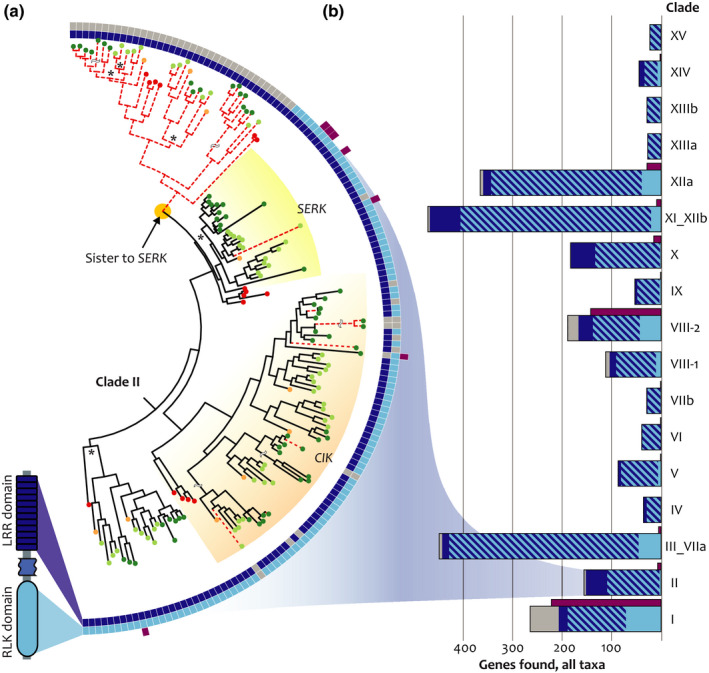
●Cells are continuously exposed to chemical signals that they must discriminate between and respond to appropriately. In embryophytes, the leucine-rich repeat receptor-like kinases (LRR-RLKs) are signal receptors critical in development and defense. LRR-RLKs have diversified to hundreds of genes in many plant genomes. Although intensively studied, a well-resolved LRR-RLK gene tree has remained elusive. ●To resolve the LRR-RLK gene tree, we developed an improved gene discovery method based on iterative hidden Markov model searching and phylogenetic inference. We used this method to infer complete gene trees for each of the LRR-RLK subclades and reconstructed the deepest nodes of the full gene family. ●We discovered that the LRR-RLK gene family is even larger than previously thought, and that protein domain gains and losses are prevalent. These structural modifications, some of which likely predate embryophyte diversification, led to misclassification of some LRR-RLK variants as members of other gene families. Our work corrects this misclassification. ●Our results reveal ongoing structural evolution generating novel LRR-RLK genes. These new genes are raw material for the diversification of signaling in development and defense. Our methods also enable phylogenetic reconstruction in any large gene family.
●细胞不断地接触化学信号,它们必须对这些信号进行区分并做出适当反应。在有胚植物中,富含亮氨酸重复序列的类受体激酶(LRR-RLKs)是发育和防御过程中的关键信号受体。在许多植物基因组中,LRR-RLKs已经多样化成数百个基因。尽管经过了深入研究,但一个解析良好的LRR-RLK基因树仍然难以获得。●为了解析LRR-RLK基因树,我们基于迭代隐马尔可夫模型搜索和系统发育推断开发了一种改进的基因发现方法。我们使用这种方法为每个LRR-RLK亚分支推断完整的基因树,并重建了整个基因家族的最深节点。●我们发现LRR-RLK基因家族比之前认为的还要大,并且蛋白质结构域的获得和丢失很普遍。这些结构修饰,其中一些可能早于有胚植物的多样化,导致一些LRR-RLK变体被错误分类为其他基因家族的成员。我们的工作纠正了这种错误分类。●我们的结果揭示了正在进行的结构进化产生了新的LRR-RLK基因。这些新基因是发育和防御信号多样化的原材料。我们的方法也能够在任何大型基因家族中进行系统发育重建。