Siddiqi Arjumand, Sod-Erdene Odmaa, Hamilton Darrick, Cottom Tressie McMillan, Darity William
Division of Epidemiology, Dalla Lana School of Public Health, University of Toronto, 155 College Street, Room 566, Toronto, Ontario, M5T 3M7, Canada.
Department of Health Behavior, Gillings School of Global Public Health, University of North Carolina - Chapel Hill, 302 Rosenau Hall, CB #7440, Chapel Hill, NC, 27599-7440, United States.
SSM Popul Health. 2019 Nov 20;9:100449. doi: 10.1016/j.ssmph.2019.100449. eCollection 2019 Dec.
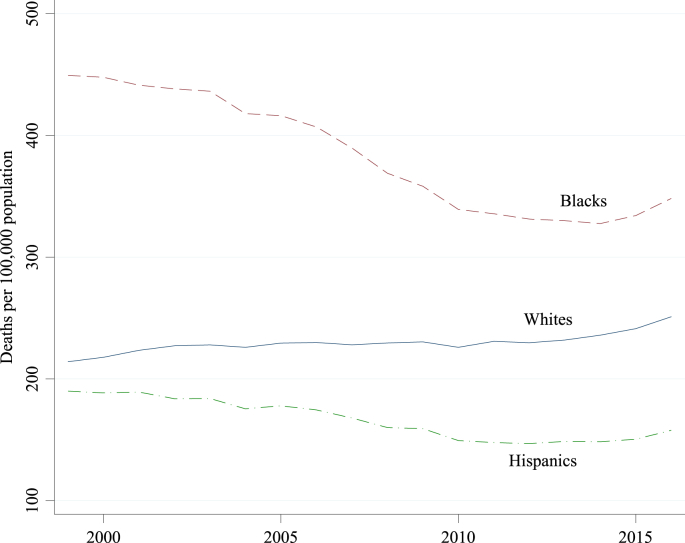
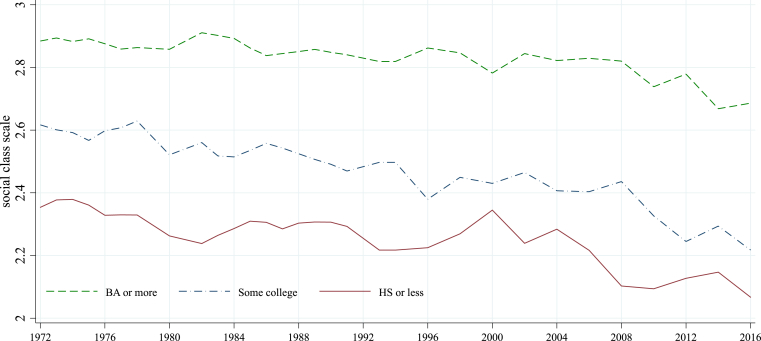
A startling population health phenomenon has been unfolding since the turn of the 21st century. Whites in the United States, who customarily have the most favorable mortality profile of all racial groups, have experienced rising mortality rates, without a commensurate rise in other racial groups. The two leading hypotheses to date are that either contemporaneous economic conditions or longer-term (post-1970s) economic transformations have led to declining economic and social prospects of low-educated whites, culminating in "deaths of despair." We re-examine these hypotheses and investigate a third hypothesis: mortality increases are attributable to (false) perceptions of whites that they are losing social status.
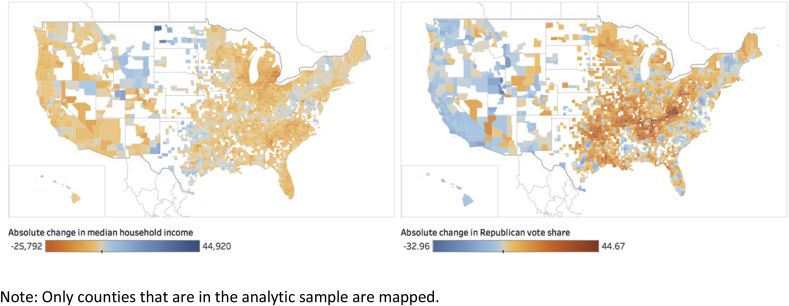
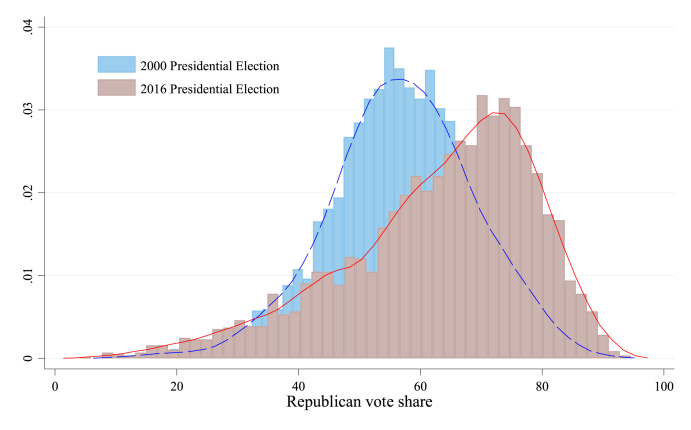
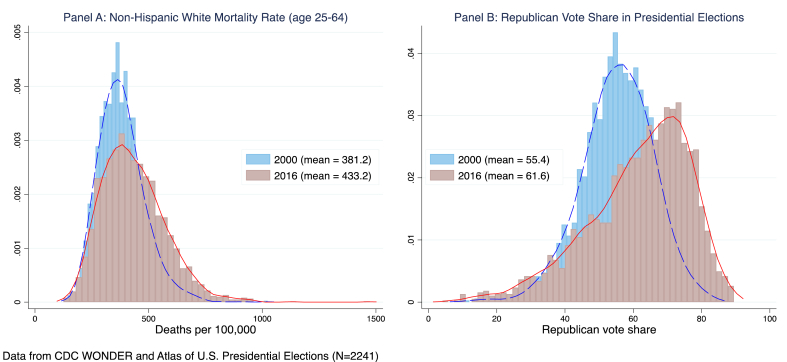
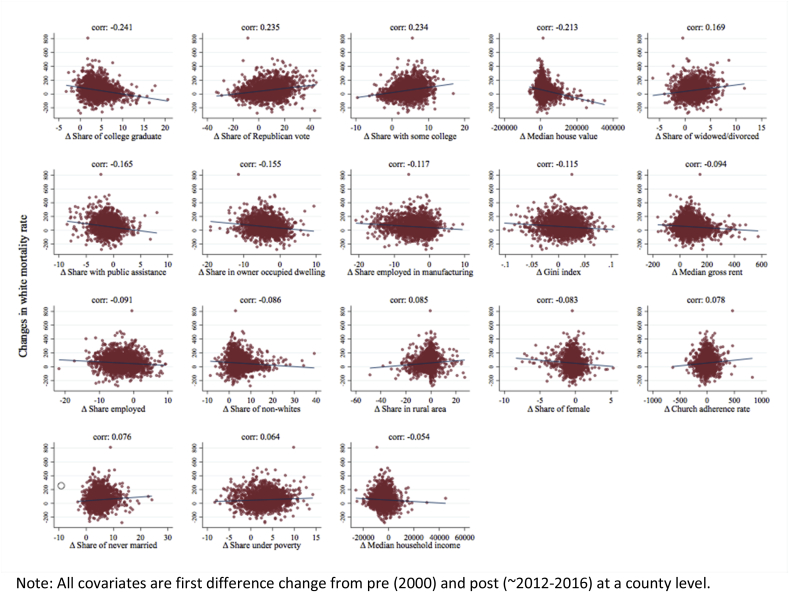
Using administrative and survey data, we examined trends and correlations between race-, age- and, education-specific mortality and a range of economic and social indicators. We also conducted a county-level fixed effects model to determine whether changes in the Republican share of voters during presidential elections, as a marker of growing perceptions of social status threat, was associated with changes in working-age white mortality from 2000 to 2016, adjusting for demographic and economic covariates.
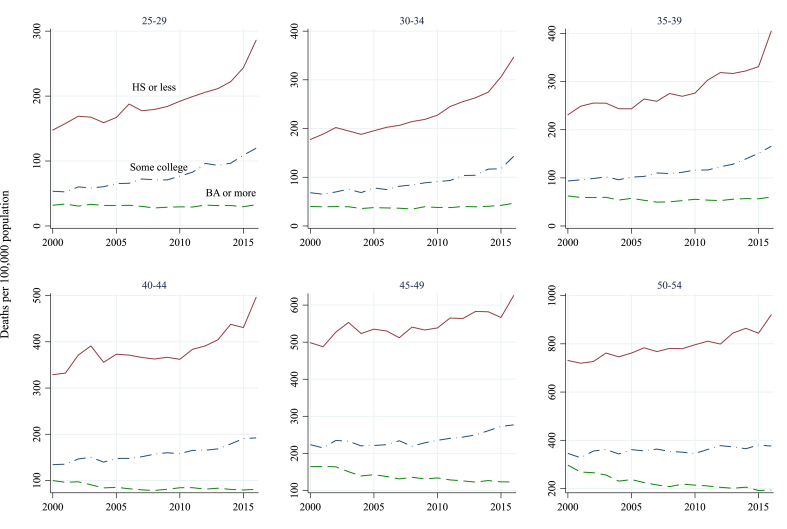
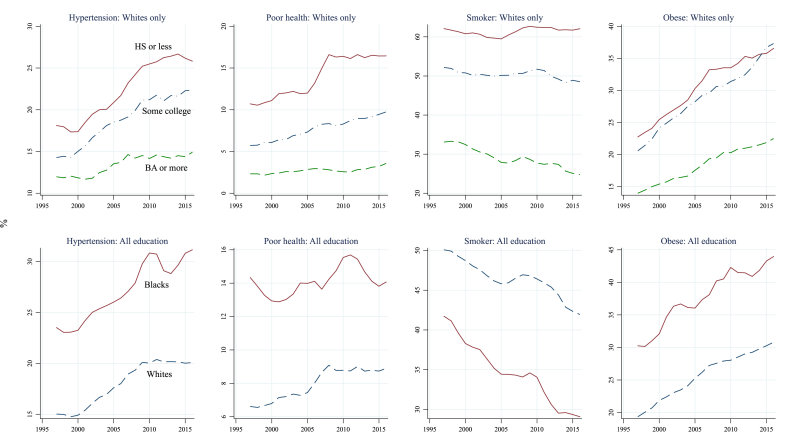
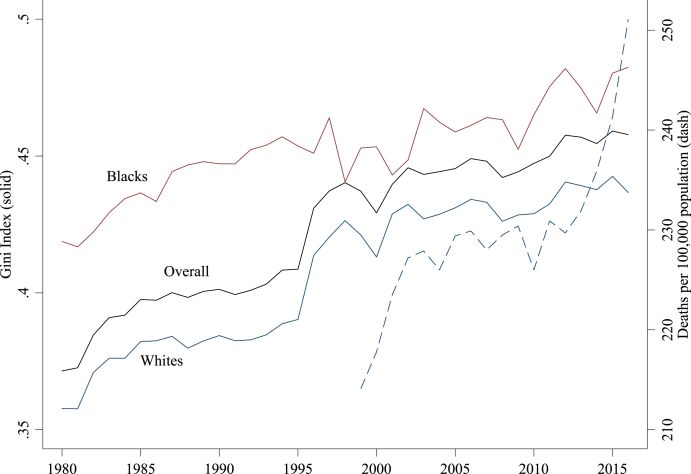
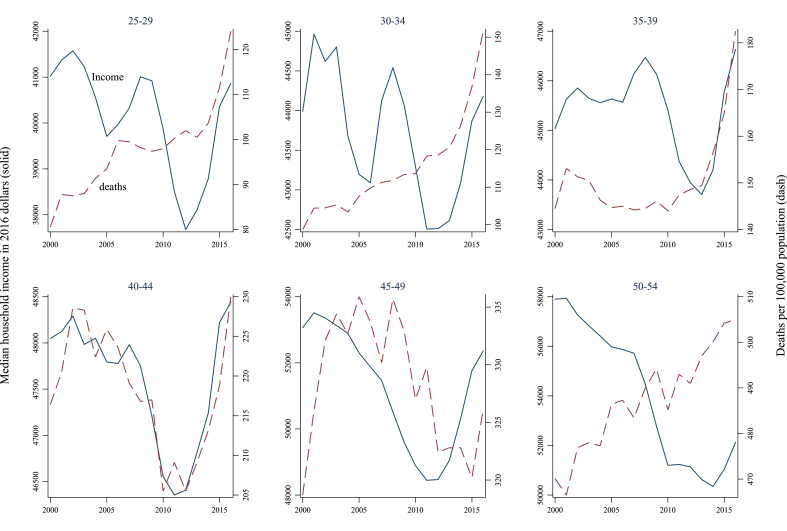
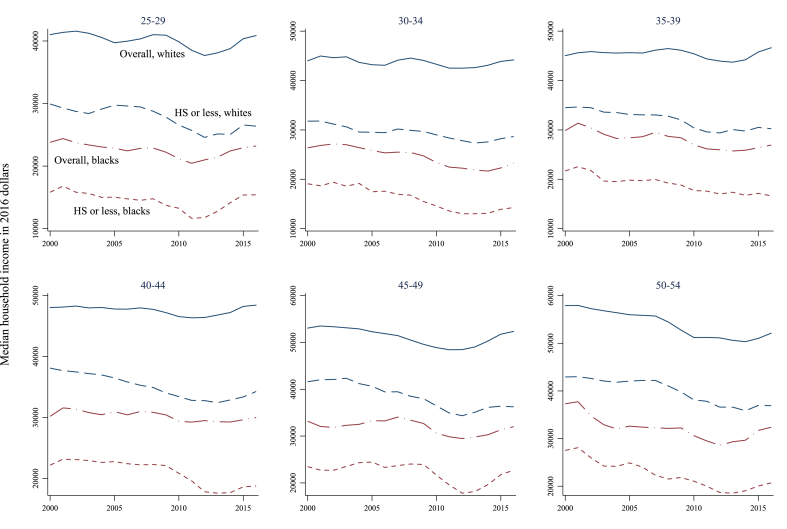
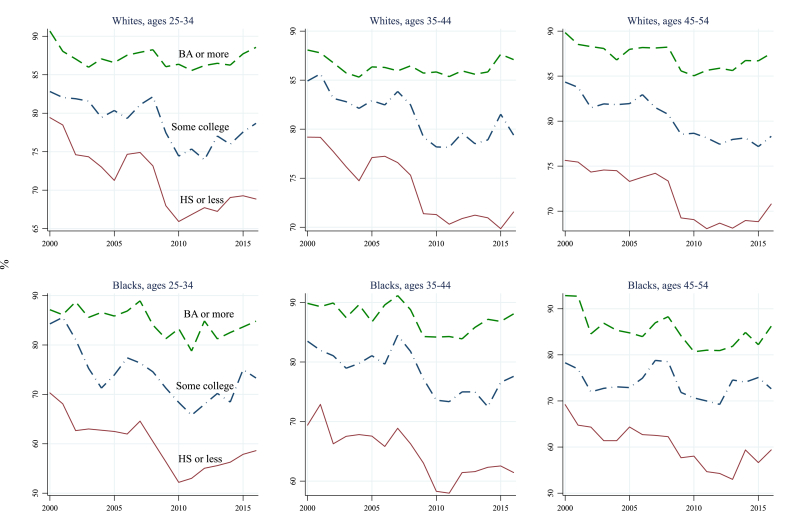
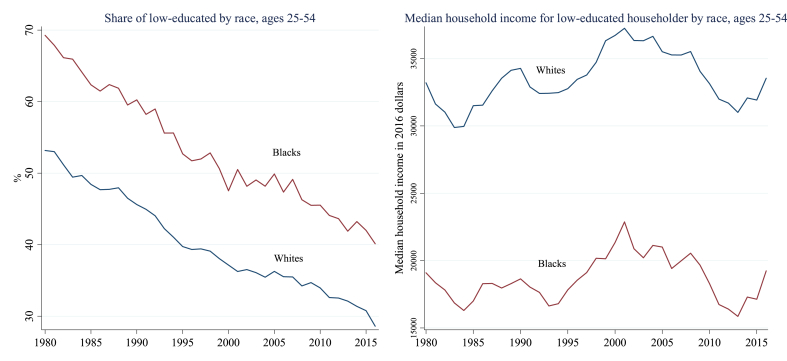
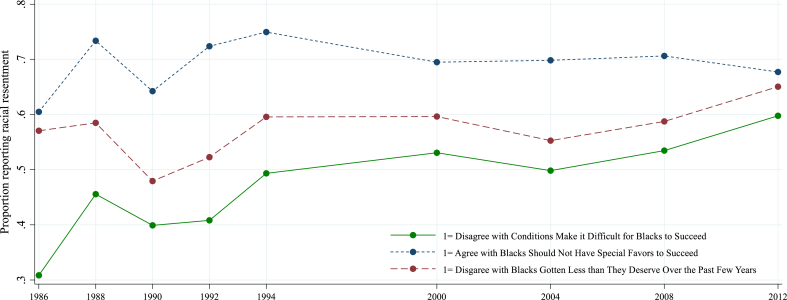
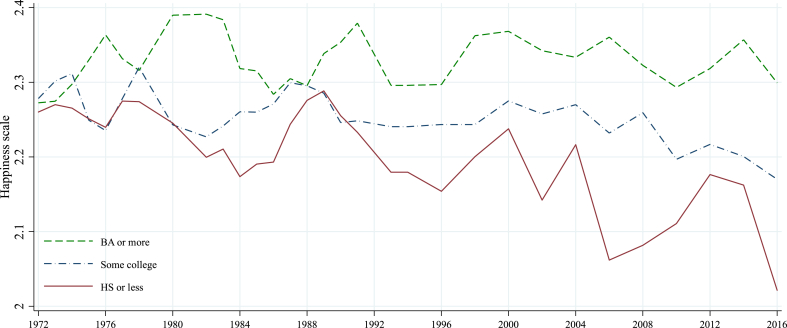
Rising white mortality is not restricted to the lowest education bracket and is occurring deeper into the educational distribution. Neither short-term nor long-term economic factors can themselves account for rising white mortality, because parallel trends (and more adverse levels) of these factors were being experienced by blacks, whose mortality rates are rising. Instead, perceptions - misperceptions - of whites that their social status is being threatened by their declining economic circumstances seems best able to reconcile the observed population health patterns.
Rising white mortality in the United States is not explained by traditional social and economic population health indicators, but instead by a decline in relative group status on the part of whites - despite no actual loss in relative group position.
自21世纪之交以来,一个惊人的人口健康现象一直在显现。在美国,白人通常在所有种族群体中死亡率情况最为有利,但他们的死亡率却在上升,而其他种族群体的死亡率并没有相应上升。迄今为止,两个主要假说是,要么是当前的经济状况,要么是长期(20世纪70年代后)的经济转型导致了低教育程度白人的经济和社会前景下降,最终导致“绝望死亡”。我们重新审视这些假说,并研究第三个假说:死亡率上升归因于白人(错误)认为他们正在失去社会地位。
利用行政和调查数据,我们研究了按种族、年龄和教育程度划分的死亡率与一系列经济和社会指标之间的趋势和相关性。我们还进行了县级固定效应模型分析,以确定总统选举期间共和党选民份额的变化(作为社会地位威胁感增强的一个标志)是否与2000年至2016年劳动年龄白人死亡率的变化相关,并对人口和经济协变量进行了调整。
白人死亡率上升并不局限于最低教育水平群体,而是在教育分布中更深入地出现。短期和长期经济因素本身都无法解释白人死亡率上升的现象,因为黑人也经历了这些因素的平行趋势(且更为不利的水平),而黑人的死亡率正在上升。相反,白人认为其社会地位受到经济状况下降威胁的看法——误解——似乎最能解释观察到的人口健康模式。
美国白人死亡率上升并非由传统的社会和经济人口健康指标所解释,而是由白人相对群体地位的下降所导致——尽管其相对群体地位实际上并未丧失。