Pizarro Enrique, Navarrete Maritza, Mendez Carolina, Zaror Luis, Mansilla Carlos, Tapia Mauricio, Carrasco Cristian, Salazar Paula, Murua Roberto, Padula Paula, Otth Carola, Rodríguez Esteban Martin
Instituto de Anatomía, Histología y Patología, Facultad de Medicina, Universidad Austral de Chile, Valdivia, Chile.
Instituto de Microbiología Clínica, Facultad de Medicina, Universidad Austral de Chile, Valdivia, Chile.
Front Microbiol. 2020 Jan 10;10:2992. doi: 10.3389/fmicb.2019.02992. eCollection 2019.
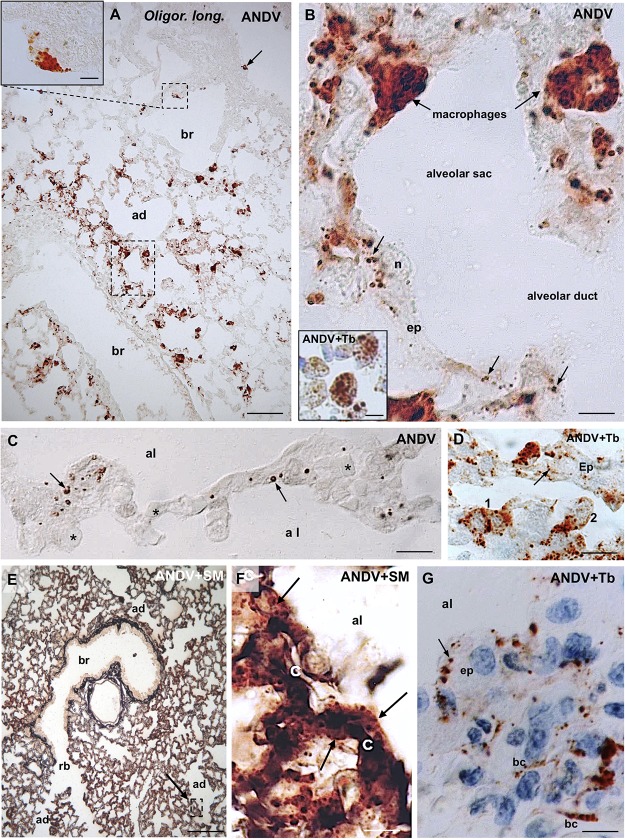
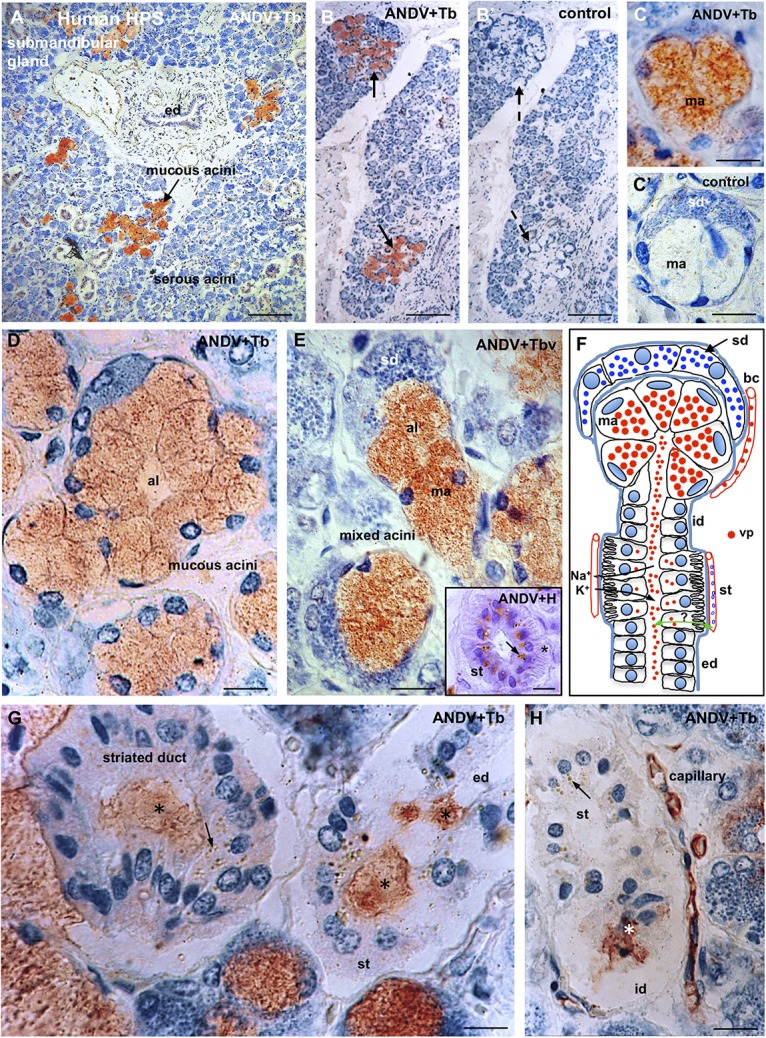
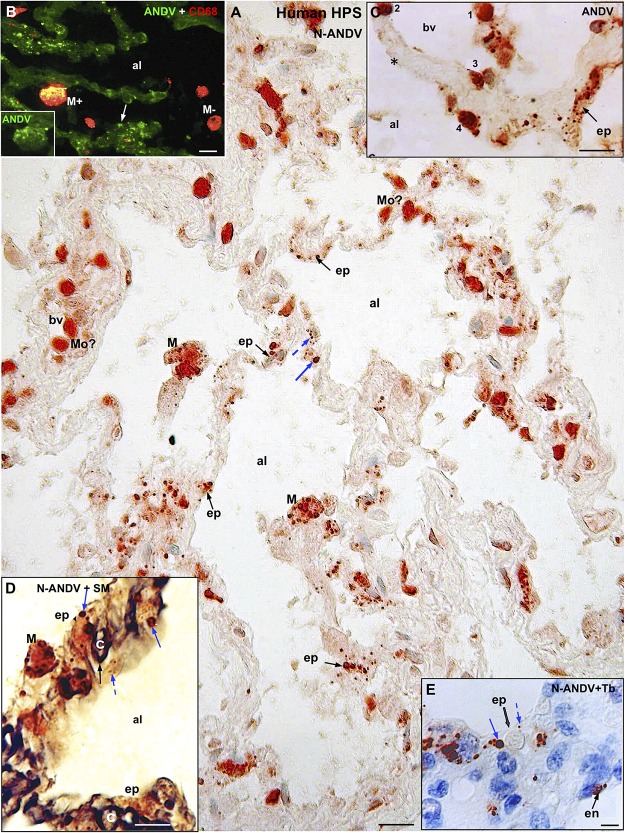
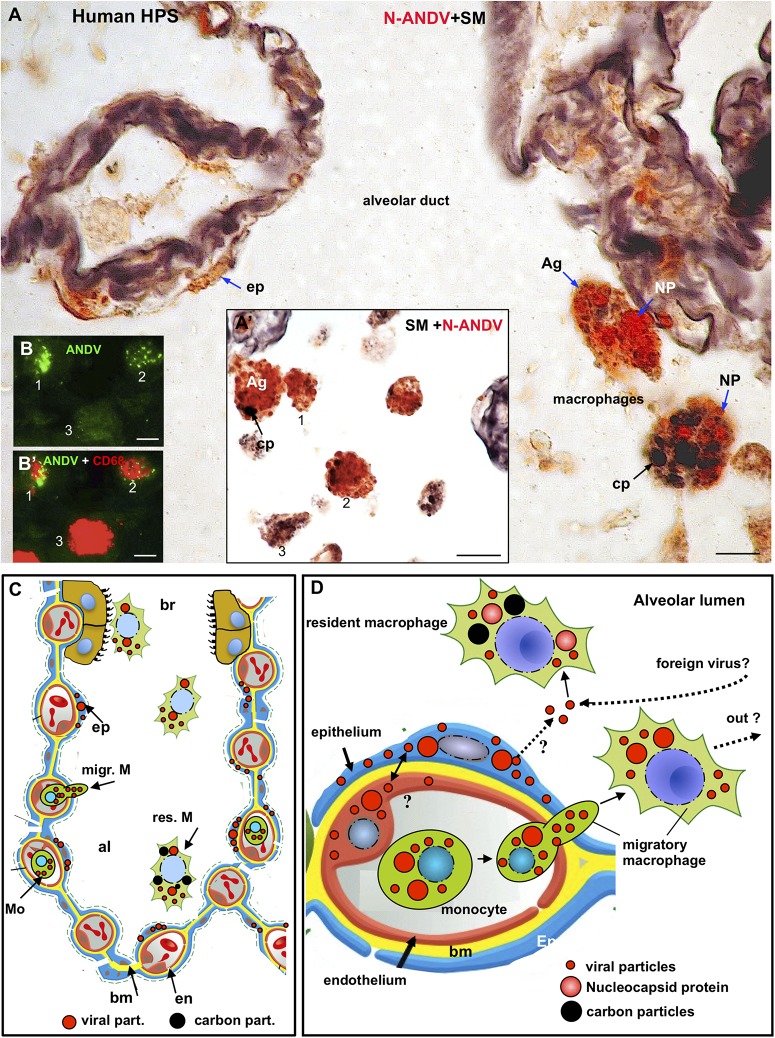
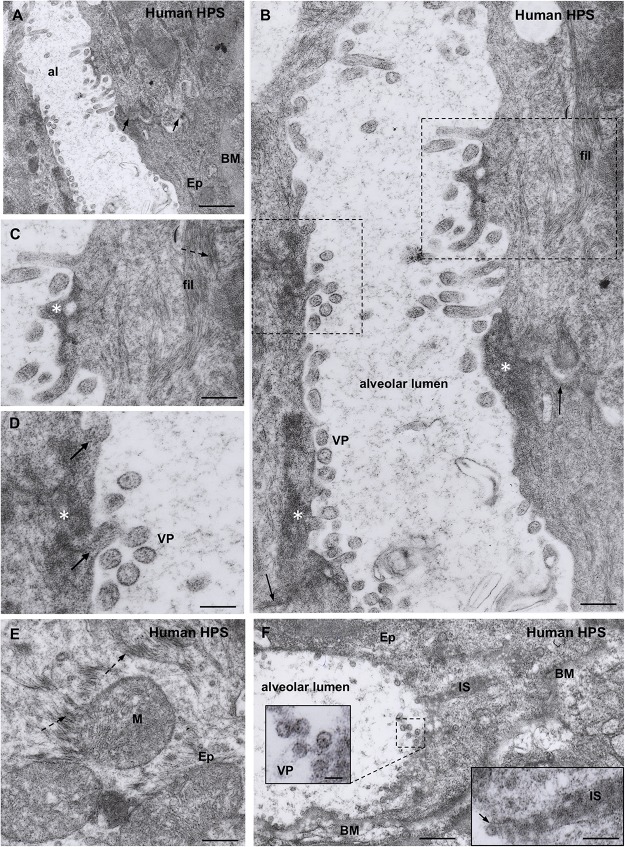
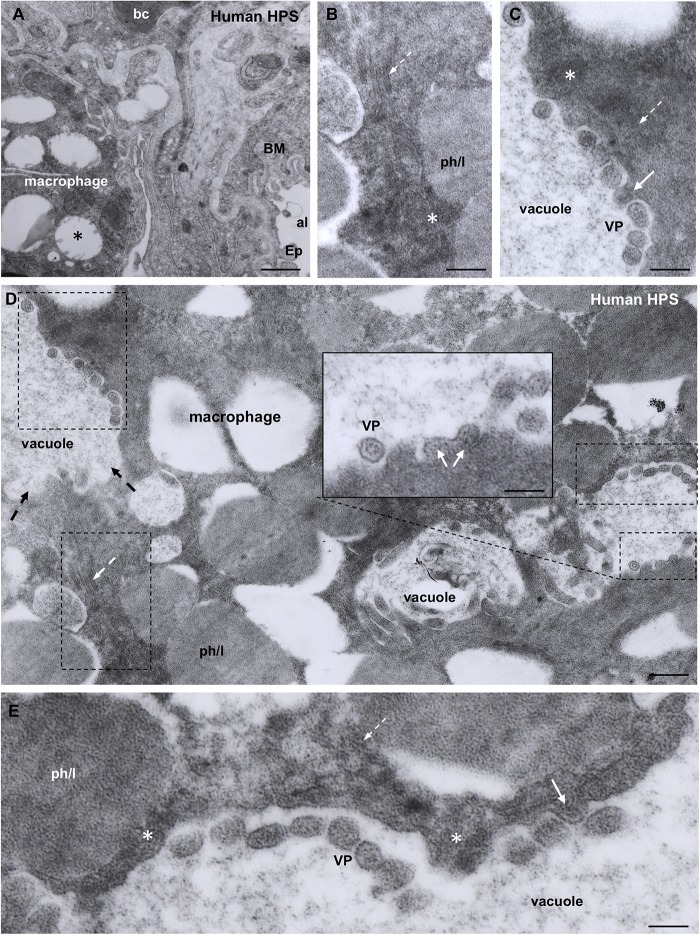
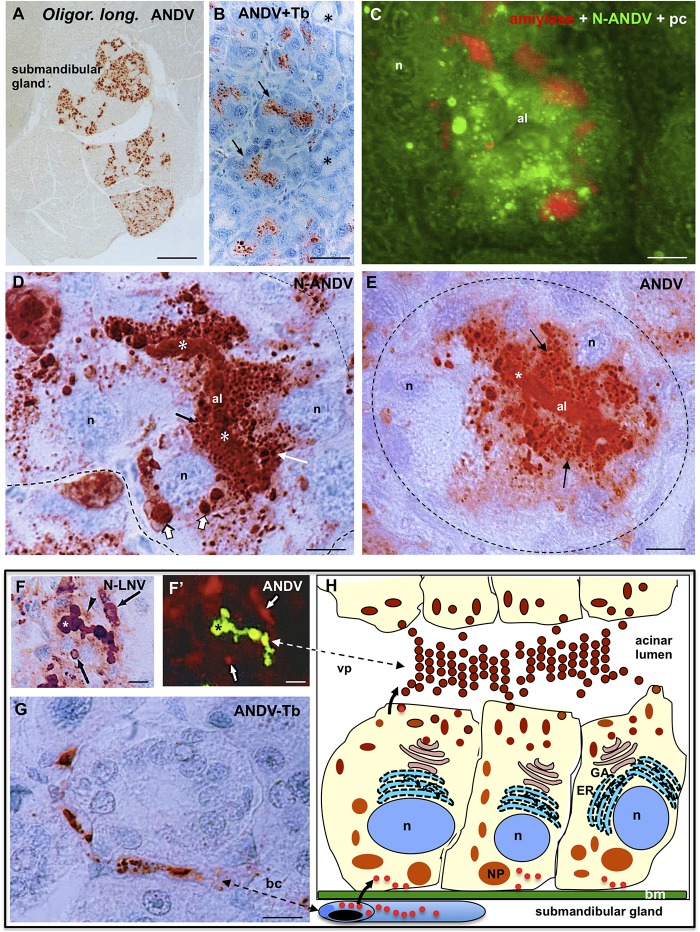
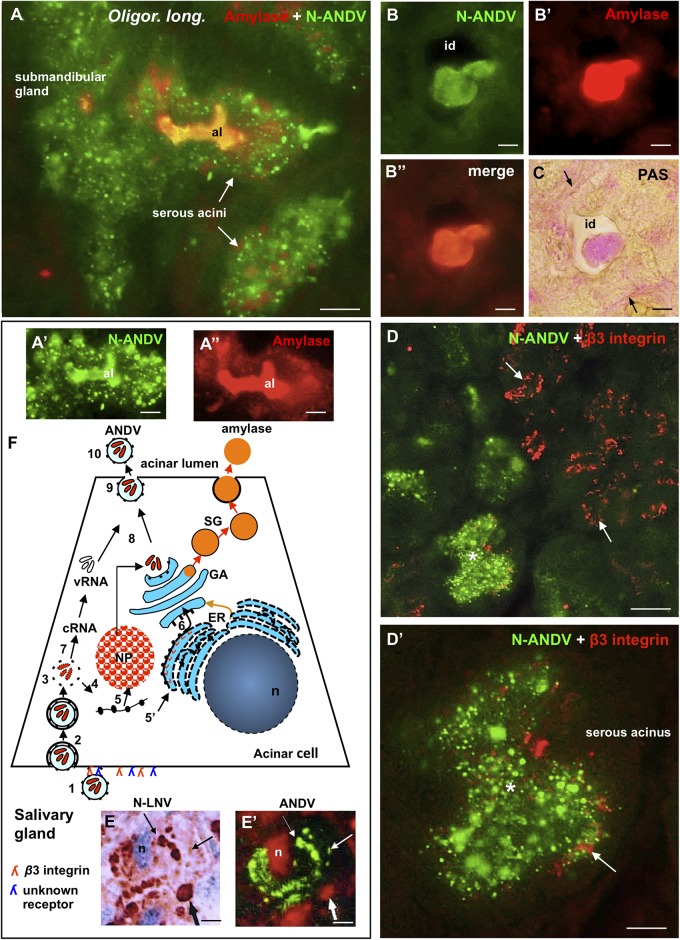
In South America Andes hantavirus (ANDV) is hosted by the rodent (also known as pygmy rice rat). In humans, ANDV causes Hantavirus Pulmonary Syndrome (HPS), with a fatality rate of about 40%. Epidemiologic and molecular evidence has shown that ANDV can be transmitted from person to person. Sin Nombre hantavirus, occurring in North America, and ANDV are genetically related, and both cause HPS with similar clinical evolution and mortality rate. However, only ANDV is transmitted from person to person. A recent hantavirus outbreak in a small village in Southern Argentine, with 29 HPS cases and 11 deaths has brought to mind that person-to-person transmission continues to be a public health emergency. The present investigation was aimed to understand how does ANDV actually spread between persons. Tissue samples of lung and salivary glands from infected and lethal cases of human HPS were investigated by bright field immunocytochemistry, multichannel immunofluorescence, and transmission electron microscopy. The findings are consistent with ANDV infection and replication in the lung alveolar epithelium and macrophages, and in the secretory cells of the submandibular salivary glands. In the lung of infected and human cases HPS, the bulk of immunoreactive hantavirus antigens was localized in epithelial cells of the alveolar walls and macrophages. The ultrastructural study supports that in the lung of HPS patients the virus replicates in the alveolar epithelial cells with virus particles being discharged into the alveolar lumen. Virus-like particles were seen within vacuoles of the lung macrophages. Considering that these macrophages can reach the conductive segments of the airways, their expectoration becomes a deadly bullet for ANDV transmission. In the submandibular glands of infected rodents and HPS cases, ANDV antigens were in capillary endothelium, the secretory cells and filling the lumen of the excretory pathway. It is proposed that in patients with HPS caused by ANDV the alveolar epithelium and macrophages would be the gate for the airway spreading of the virus, while the salivary glands are a target for virus replication and an exit pathway through saliva.
在南美洲,安第斯汉坦病毒(ANDV)由啮齿动物(也称为侏儒稻鼠)携带。在人类中,ANDV会引发汉坦病毒肺综合征(HPS),病死率约为40%。流行病学和分子学证据表明,ANDV可在人与人之间传播。出现在北美的辛诺柏病毒与ANDV在基因上相关,二者都会引发具有相似临床病程和死亡率的HPS。然而,只有ANDV会在人与人之间传播。阿根廷南部一个小村庄最近爆发的汉坦病毒疫情,有29例HPS病例和11人死亡,这让人想到人与人之间的传播仍是一个公共卫生紧急事件。本研究旨在了解ANDV实际上是如何在人与人之间传播的。通过明场免疫细胞化学、多通道免疫荧光和透射电子显微镜对人类HPS感染及致死病例的肺和唾液腺组织样本进行了研究。研究结果与ANDV在肺泡上皮细胞和巨噬细胞以及下颌下唾液腺分泌细胞中的感染和复制情况一致。在感染及人类HPS病例的肺中,大部分免疫反应性汉坦病毒抗原定位于肺泡壁上皮细胞和巨噬细胞中。超微结构研究表明,在HPS患者的肺中,病毒在肺泡上皮细胞中复制,病毒颗粒被排放到肺泡腔中。在肺巨噬细胞的液泡内可见病毒样颗粒。鉴于这些巨噬细胞可到达气道的传导段,它们咳出的物质成为ANDV传播的致命“子弹”。在受感染啮齿动物和HPS病例的下颌下腺中,ANDV抗原存在于毛细血管内皮、分泌细胞中,并充满排泄途径的管腔。有人提出,在由ANDV引起的HPS患者中,肺泡上皮细胞和巨噬细胞将成为病毒通过气道传播的门户,而唾液腺则是病毒复制的靶标以及通过唾液的排出途径。