Shao Tsuimy, Falcone Natashya, Kraatz Heinz-Bernhard
Department of Chemistry, University of Toronto, 80 St. George Street, M5S 3H6 Toronto, Canada.
Department of Physical and Environmental Sciences, University of Toronto Scarborough, 1065 Military Trail, M1C 1A4 Scarborough, Canada.
ACS Omega. 2020 Jan 13;5(3):1312-1317. doi: 10.1021/acsomega.9b03939. eCollection 2020 Jan 28.
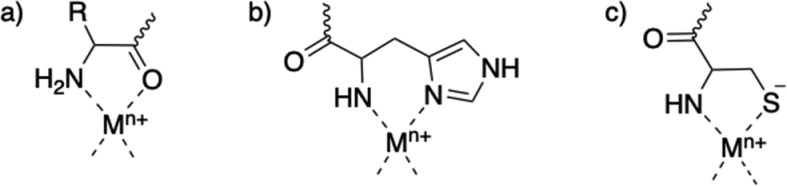
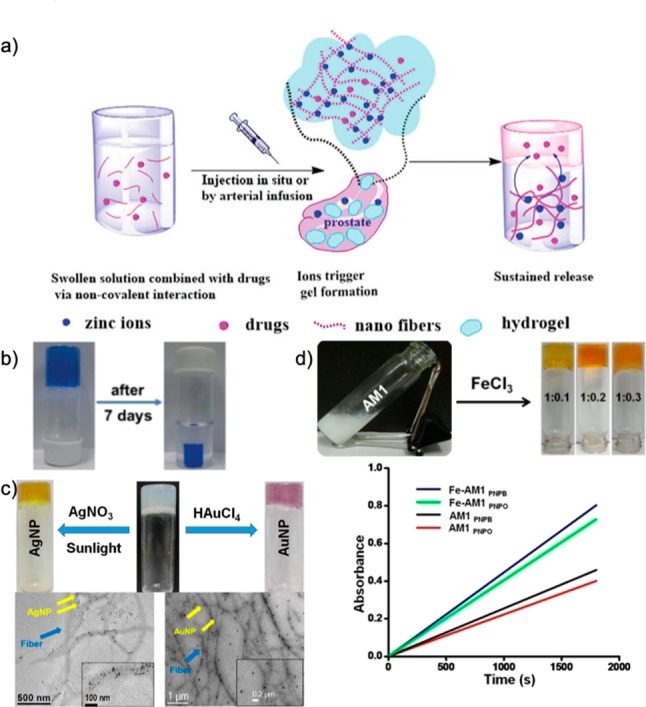
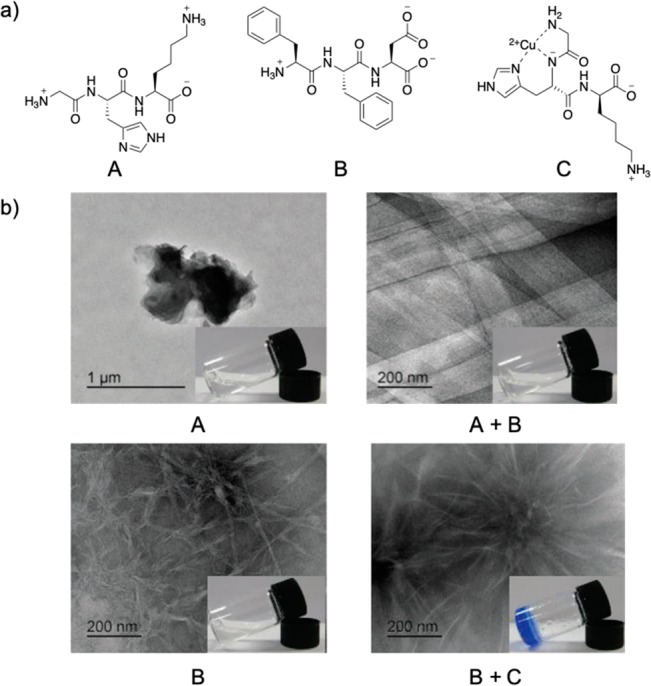
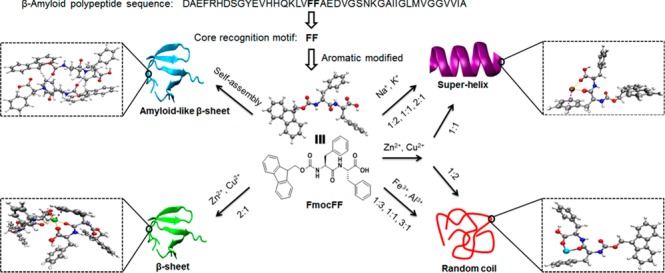
Supramolecular gels have been an area of interest in many research fields. They provide a means to understand assembly of nanostructures, and through the use of amino acid- and peptide-based gelators they can give insights into the similar assembly pathways of their more complex structural counterparts. Bio-inspired metal coordination, such as histidine-copper coordination, in the supramolecular assembly of these gelators is one method for furthering our understanding and development of these materials. Metal-gelator coordination mimics biologically relevant metal-peptide coordination, thus influencing hydrogel self-assembly and mechanical properties, including biodegradability, biocompatibility, tunability, and recyclablity, while the metal coordination can functionalize the gels to allow for widespread applications in biomedical industries (e.g., drug delivery), waste management, and catalysis. This review aims to discuss recent insights into the supramolecular assembly of gels involving metal ions, as well as a few key areas of application using metal interactions and incorporation.
超分子凝胶一直是许多研究领域的关注焦点。它们为理解纳米结构的组装提供了一种手段,并且通过使用基于氨基酸和肽的凝胶因子,能够深入了解与其更复杂结构对应物相似的组装途径。在这些凝胶因子的超分子组装中,受生物启发的金属配位,如组氨酸 - 铜配位,是增进我们对这些材料的理解和开发的一种方法。金属 - 凝胶因子配位模拟了生物学上相关的金属 - 肽配位,从而影响水凝胶的自组装和机械性能,包括生物降解性、生物相容性、可调性和可回收性,同时金属配位可以使凝胶功能化,以便在生物医学行业(如药物递送)、废物管理和催化等领域广泛应用。本综述旨在讨论近期对涉及金属离子的凝胶超分子组装的见解,以及一些利用金属相互作用和引入的关键应用领域。