Department of Molecular Science and Technology and Department of Applied Chemistry and Biological Engineering, Ajou University, Woncheon-dong, Yeongtong-gu, Suwon, 16499, South Korea.
Microb Cell Fact. 2020 Feb 3;19(1):20. doi: 10.1186/s12934-020-1291-x.
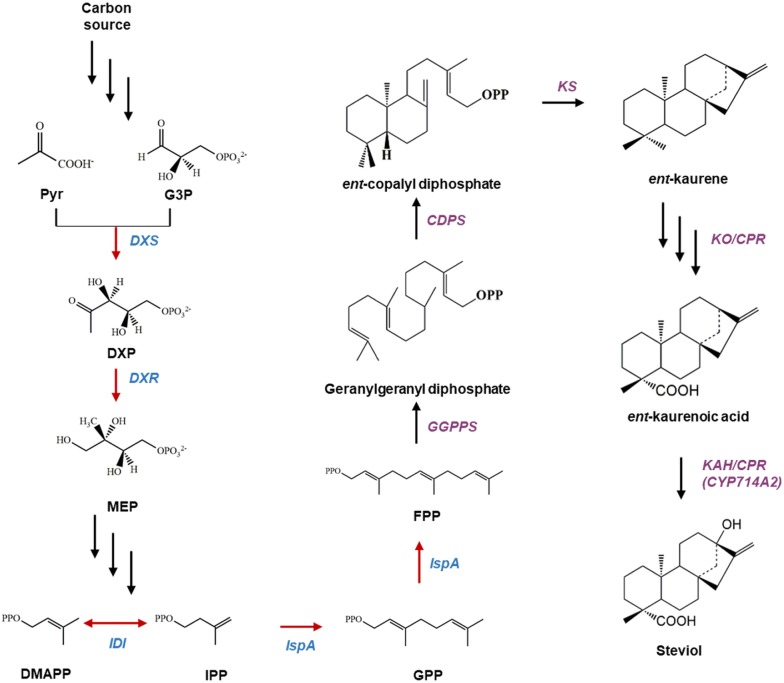
Steviol glycosides such as stevioside have attracted the attention of the food and beverage industry. Recently, efforts were made to produce these natural sweeteners in microorganisms using metabolic engineering. Nonetheless, the steviol titer is relatively low in metabolically engineered microorganisms, and therefore a steviol-biosynthetic pathway in heterologous microorganisms needs to be metabolically optimized. The purpose of this study was to redesign and reconstruct a steviol-biosynthetic pathway via synthetic-biology approaches in order to overproduce steviol in Escherichia coli.
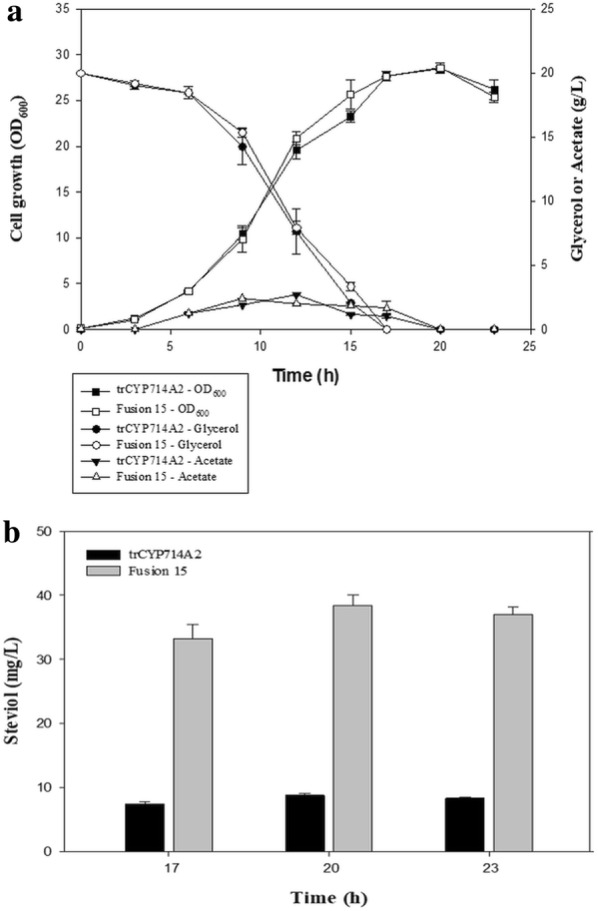
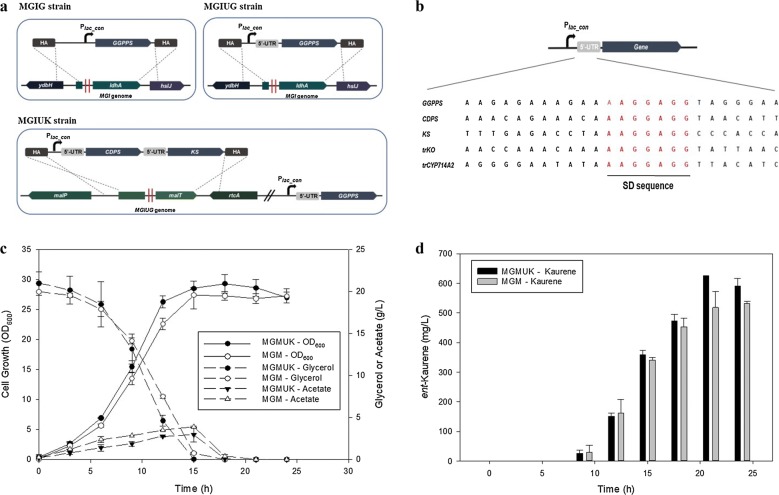
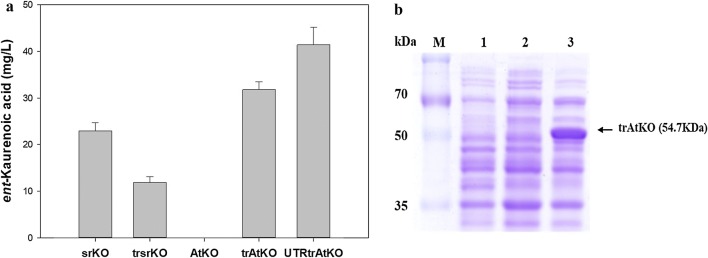
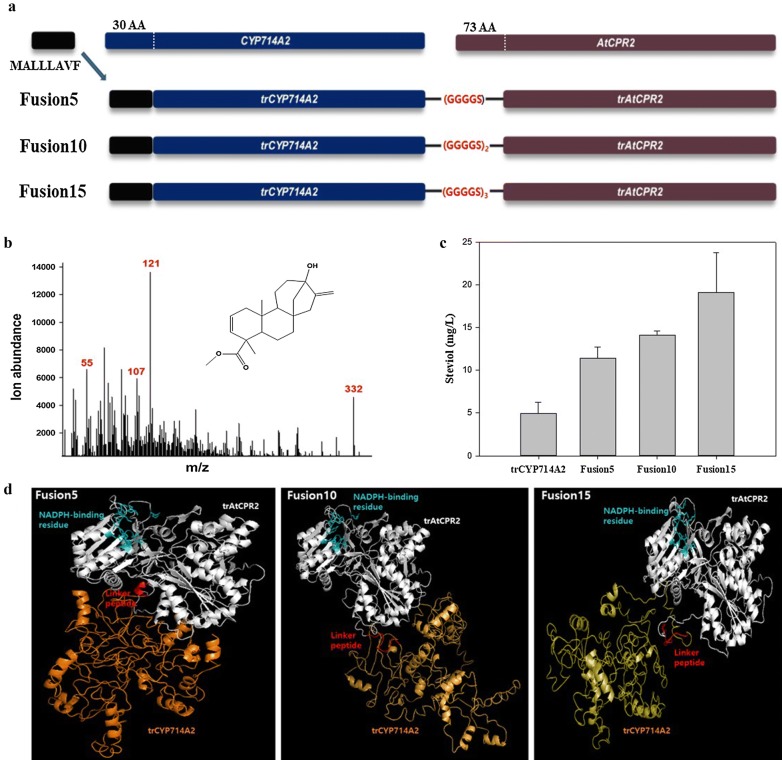
A genome-engineered E. coli strain, which coexpressed 5' untranslated region (UTR)-engineered geranylgeranyl diphosphate synthase, copalyl diphosphate synthase, and kaurene synthase, produced 623.6 ± 3.0 mg/L ent-kaurene in batch fermentation. Overexpression of 5'-UTR-engineered, N-terminally modified kaurene oxidase of Arabidopsis thaliana yielded 41.4 ± 5 mg/L ent-kaurenoic acid. Enhanced ent-kaurenoic acid production (50.7 ± 9.8 mg/L) was achieved by increasing the cellular NADPH/NADP ratio. The expression of a fusion protein, UtrCYP714A2-AtCPR2 derived from A. thaliana, where trCYP714A2 was 5'-UTR-engineered and N-terminally modified, gave 38.4 ± 1.7 mg/L steviol in batch fermentation.
5'-UTR engineering, the fusion protein approach, and redox balancing improved the steviol titer in flask fermentation and bioreactor fermentation. The expression engineering of steviol-biosynthetic enzymes and the genome engineering described here can serve as the basis for producing terpenoids-including steviol glycosides and carotenoids-in microorganisms.
甜菊苷等甜菊糖苷引起了食品和饮料行业的关注。最近,人们努力通过代谢工程在微生物中生产这些天然甜味剂。然而,代谢工程微生物中甜菊醇的产量相对较低,因此需要对异源微生物中的甜菊醇生物合成途径进行代谢优化。本研究旨在通过合成生物学方法重新设计和重建甜菊醇生物合成途径,以在大肠杆菌中过量生产甜菊醇。
共表达 5'非翻译区(UTR)工程化香叶基香叶基二磷酸合酶、紫穗槐二磷酸合酶和贝壳杉烯合酶的基因组工程大肠杆菌菌株在分批发酵中产生 623.6±3.0 mg/L 表-贝壳杉烯。过量表达拟南芥 5'-UTR 工程化、N 端修饰的贝壳杉烯氧化酶可得到 41.4±5 mg/L 的表-贝壳杉烯酸。通过增加细胞 NADPH/NADP 比,可以提高增强型表-贝壳杉烯酸的产量(50.7±9.8 mg/L)。来自拟南芥的融合蛋白 UtrCYP714A2-AtCPR2 的表达,其中 trCYP714A2 经过 5'-UTR 工程化和 N 端修饰,在分批发酵中可得到 38.4±1.7 mg/L 的甜菊醇。
5'-UTR 工程化、融合蛋白方法和氧化还原平衡在摇瓶发酵和生物反应器发酵中提高了甜菊醇的产量。本文描述的甜菊醇生物合成酶的表达工程和基因组工程可以为微生物中萜类化合物(包括甜菊糖苷和类胡萝卜素)的生产提供基础。