National Socio-Environmental Synthesis Center (SESYNC), 1 Park Place, Annapolis, MD 21401, USA.
Kansas State University, Department of Civil Engineering, 2118 Fiedler Hall, Manhattan, KS 66506, USA.
Sci Total Environ. 2020 Apr 10;712:136255. doi: 10.1016/j.scitotenv.2019.136255. Epub 2019 Dec 30.
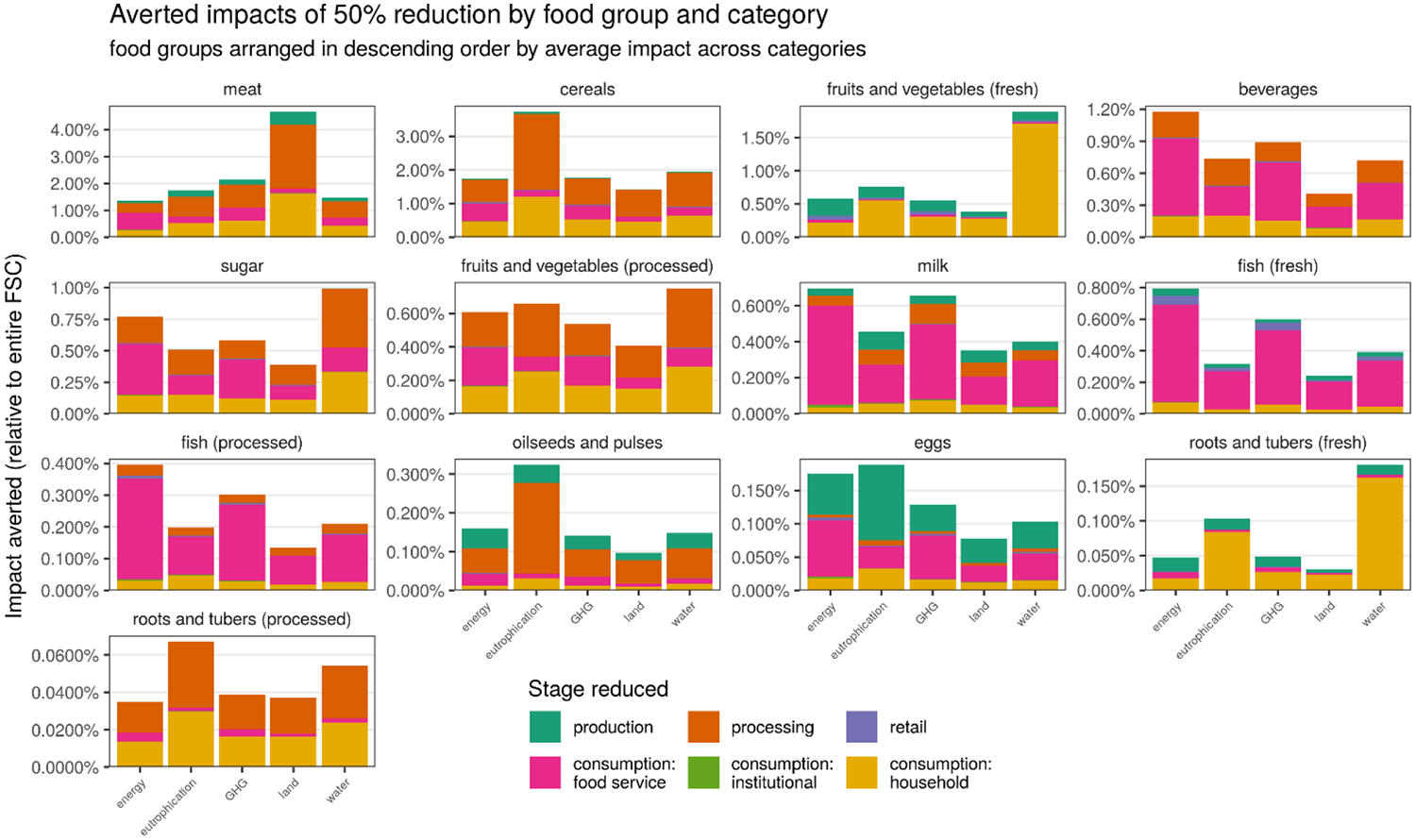
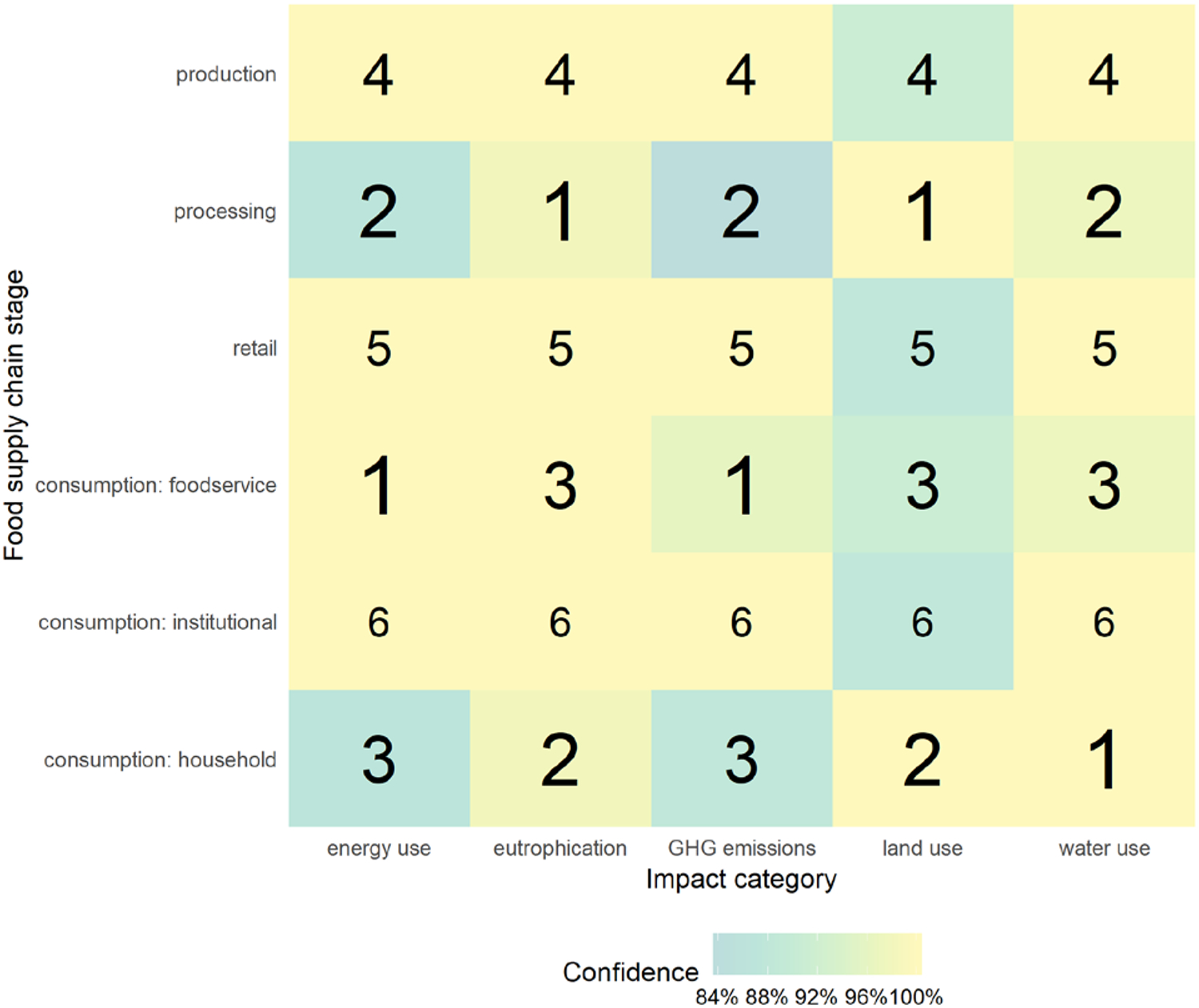
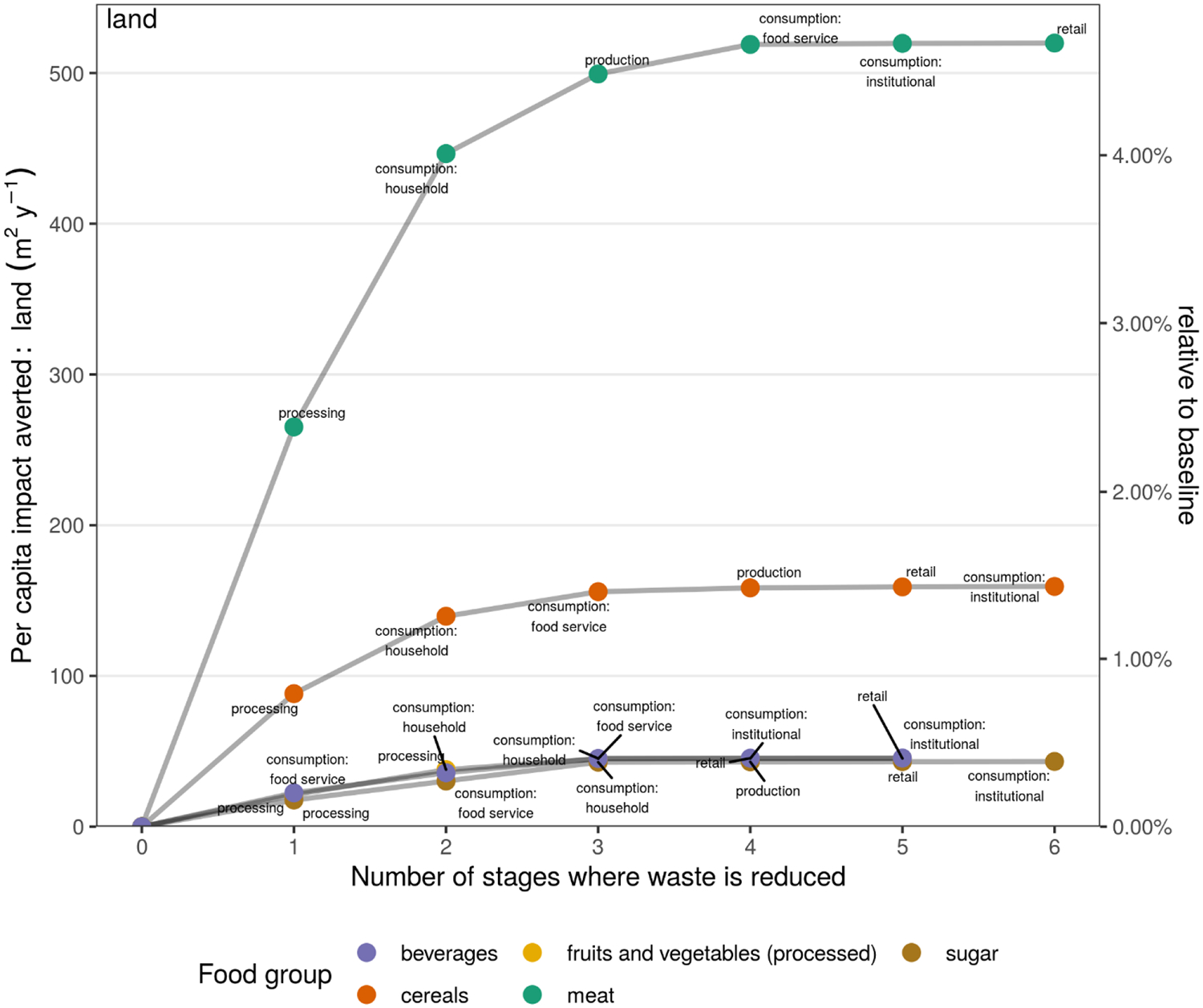
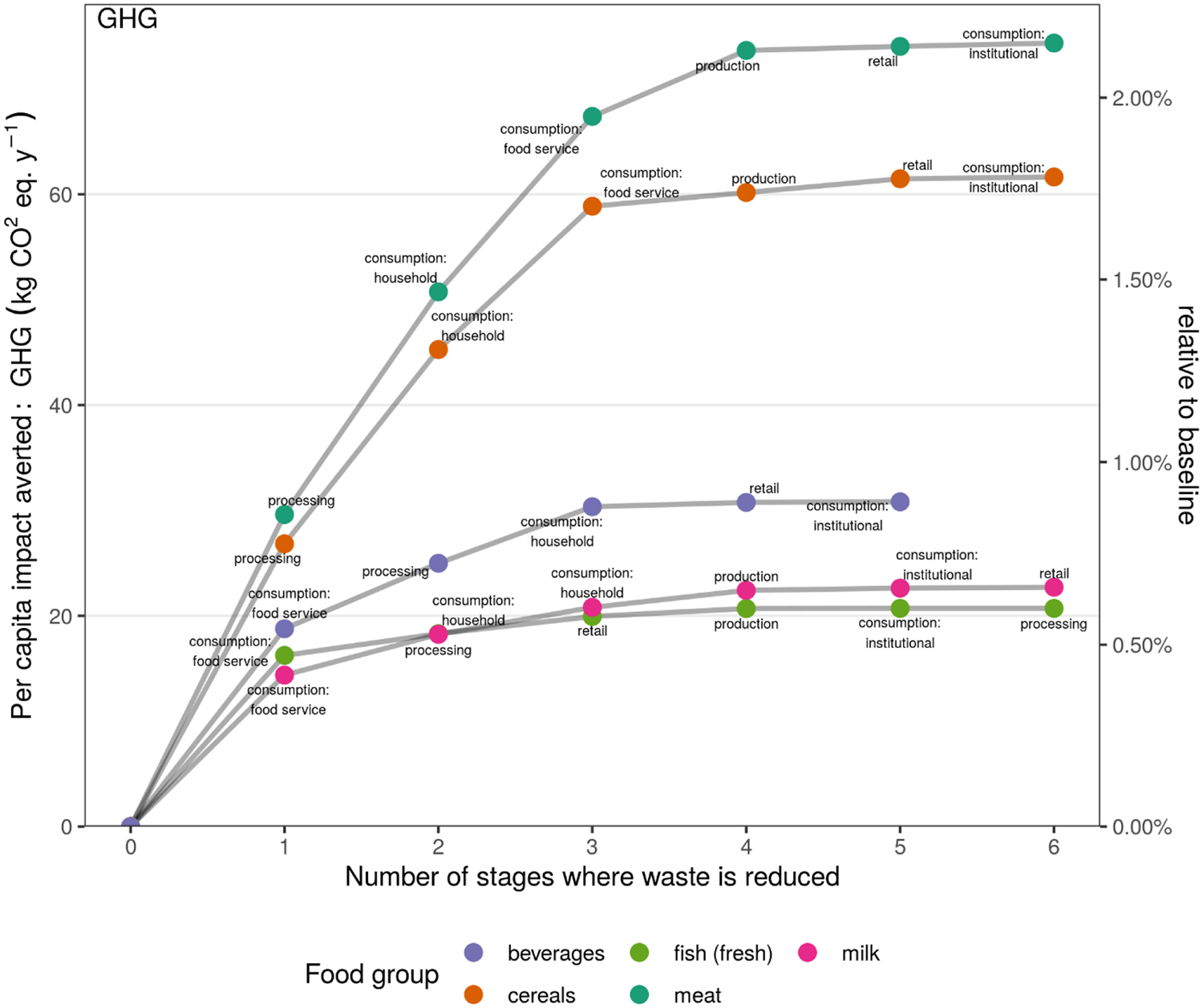
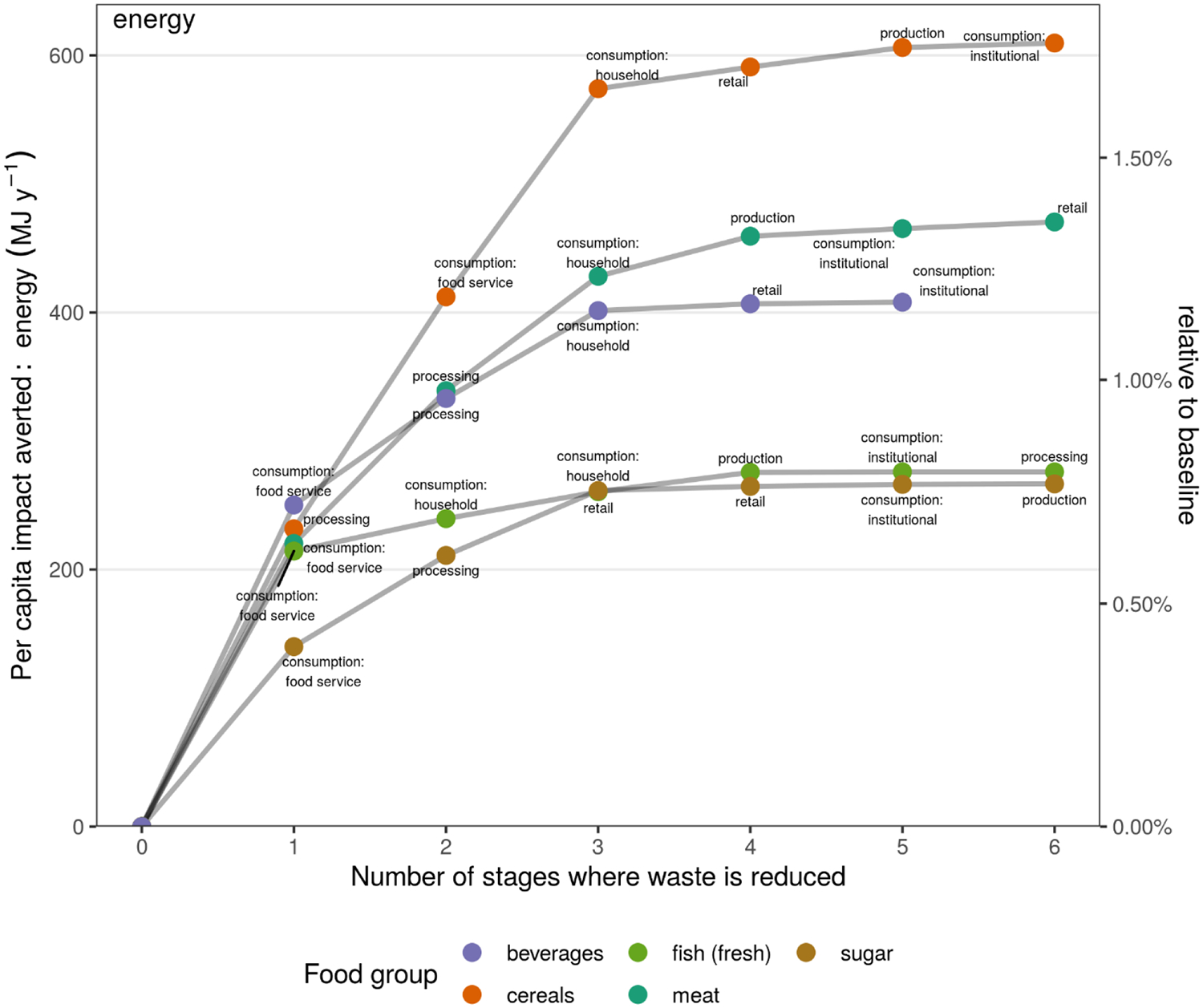
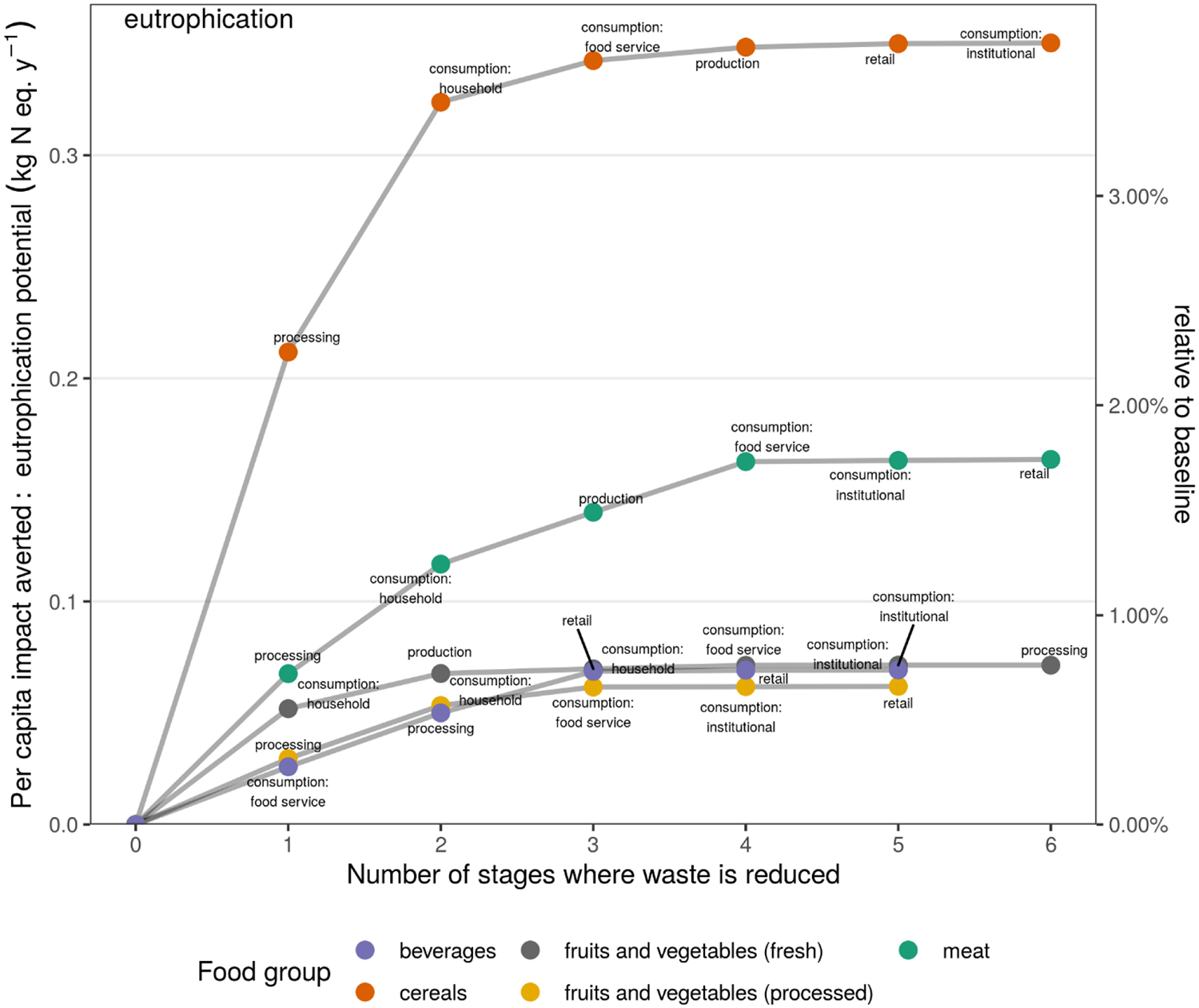
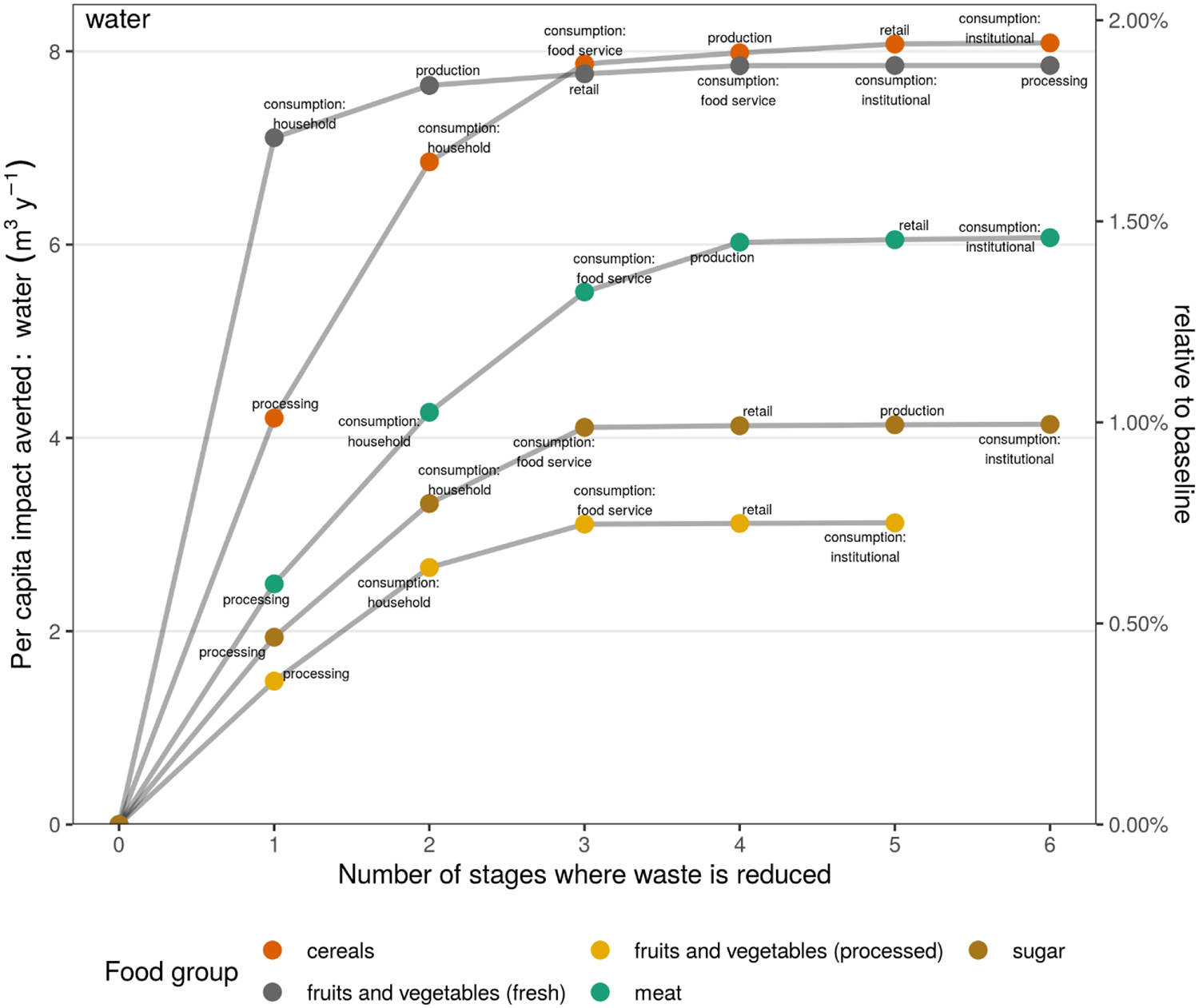
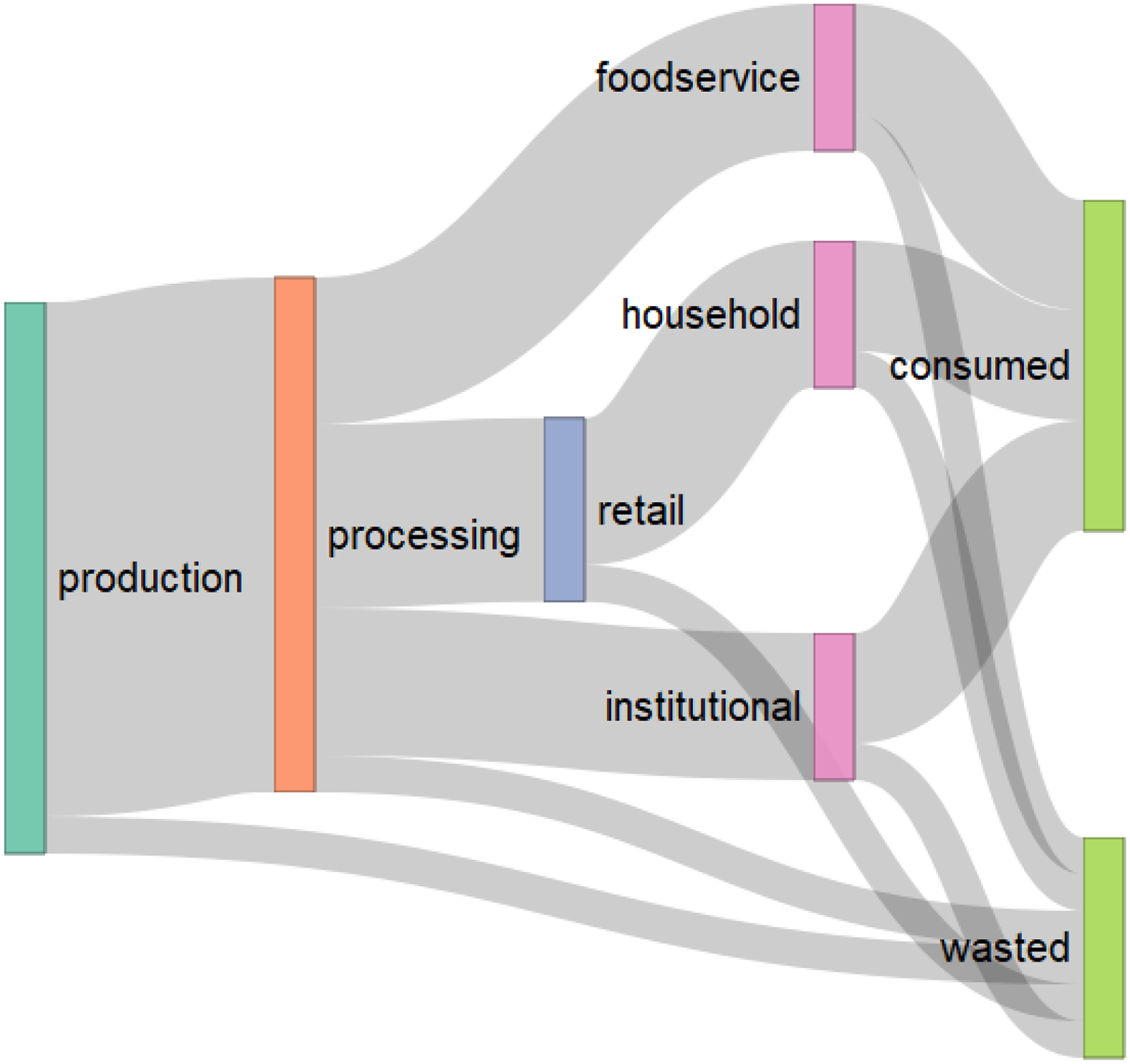
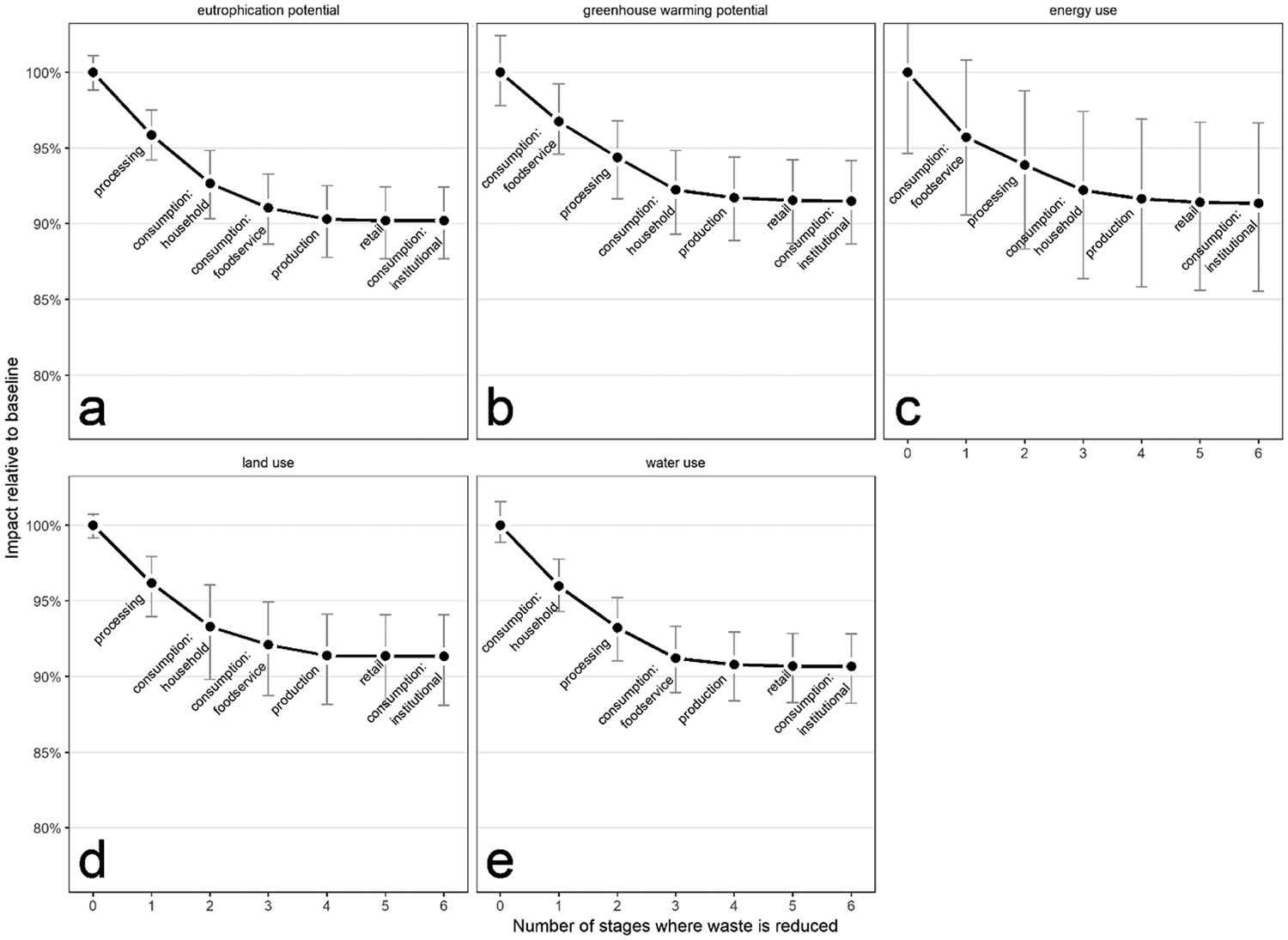
Reducing food loss and waste (FLW) is widely recognized as an important lever for lowering the environmental impacts of food systems. The United Nations Sustainable Development Agenda includes a goal to reduce FLW by 50% by 2030. Given differences in resource inputs along the food supply chain (FSC), the environmental benefits of FLW reduction will vary by stage of the FSC. Here, we identify the points along the supply chain where a 50% FLW reduction could yield the largest potential environmental benefits, assuming that decreases in consumption propagate back up the supply chain to reduce production. We use an environmentally extended input-output (EEIO) model combined with data on rates of FLW to calculate the scale of the total environmental impacts of the U.S. food system resulting from lost or wasted food. We evaluate the maximum potential environmental benefit resulting from 50% FLW reduction at all possible combinations of six supply chain stages (agricultural production, food processing, distribution/retail, restaurant foodservice, institutional foodservice, and households). We find that FLW reduction efforts should target the foodservice (restaurant) sector, food processing sector, and household consumption. Halving FLW in the foodservice sector has the highest potential to reduce greenhouse gas output and energy use. Halving FLW in the food processing sector could reduce the most land use and eutrophication potential, and reducing household consumption waste could avert the most water consumption. In contrast, FLW reduction at the retail, institutional foodservice, and farm level averts less environmental impact. Our findings may help determine optimal investment in FLW reduction strategies.
减少食物损失和浪费(FLW)被广泛认为是降低食品系统环境影响的重要手段。联合国可持续发展议程包括到 2030 年将 FLW 减少 50%的目标。鉴于食品供应链(FSC)各个环节资源投入的差异,FLW 减少带来的环境效益将因 FSC 阶段的不同而有所不同。在这里,我们确定了供应链中可以实现 50%FLW 减少的点,假设消费的减少会沿着供应链向上游传播,以减少生产,从而产生最大的潜在环境效益。我们使用环境扩展投入产出(EEIO)模型结合 FLW 率数据来计算美国食品系统因损失或浪费食物而产生的总环境影响的规模。我们评估了在六个供应链阶段(农业生产、食品加工、分销/零售、餐厅餐饮服务、机构餐饮服务和家庭)的所有可能组合中,50%FLW 减少所能带来的最大潜在环境效益。我们发现,FLW 减少工作应该针对餐饮服务(餐厅)部门、食品加工部门和家庭消费。在餐饮服务部门将 FLW 减少一半,具有最大的潜力来减少温室气体排放和能源使用。在食品加工部门将 FLW 减少一半,可以减少最多的土地使用和富营养化潜力,减少家庭消费浪费可以避免最多的水消耗。相比之下,在零售、机构餐饮服务和农场层面减少 FLW 可以避免较少的环境影响。我们的研究结果可能有助于确定在 FLW 减少策略方面的最佳投资。