Department of Molecular Virology and Microbiology, Baylor College of Medicine, Houston, Texas, USA.
Department of Molecular Virology and Microbiology, Baylor College of Medicine, Houston, Texas, USA
mSphere. 2020 Feb 12;5(1):e00585-19. doi: 10.1128/mSphere.00585-19.
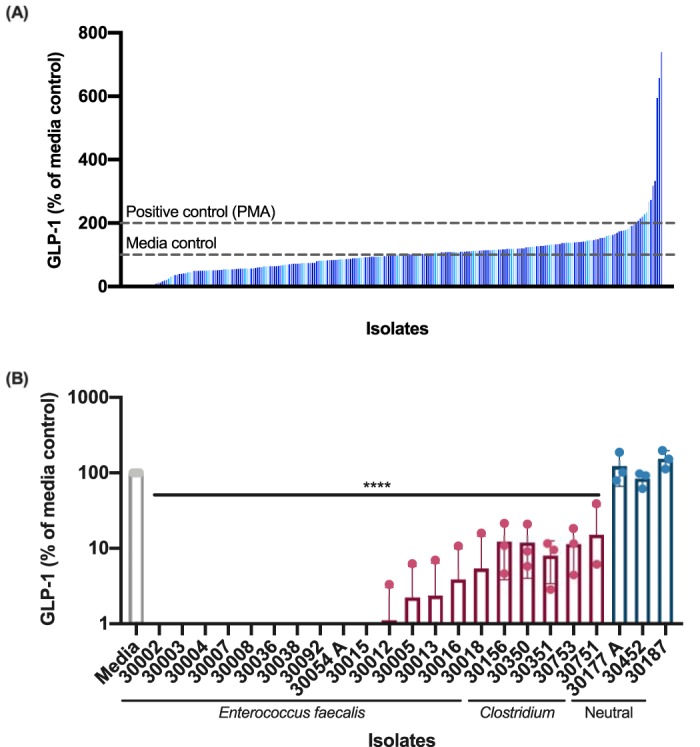
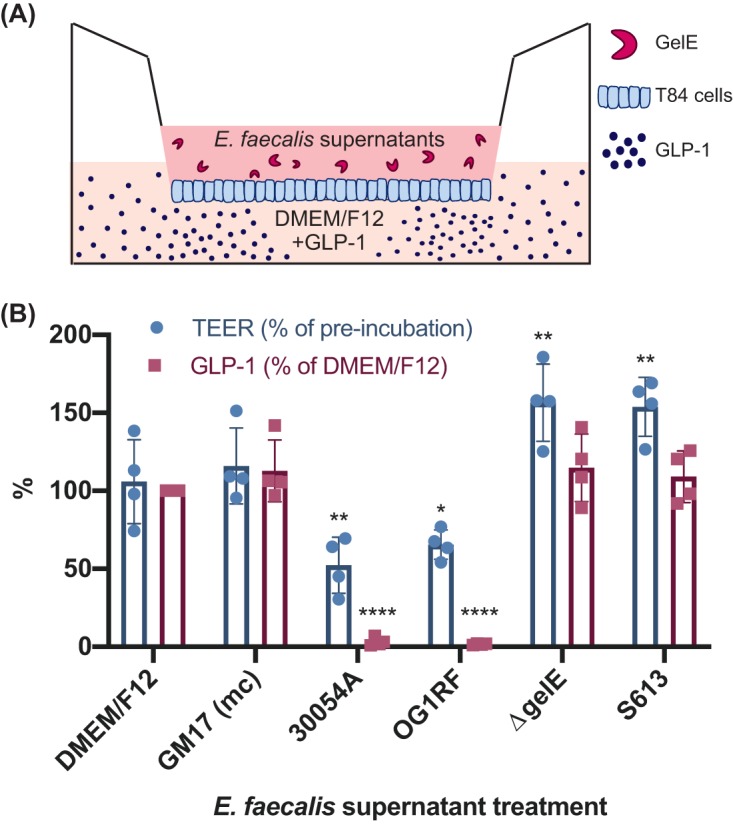
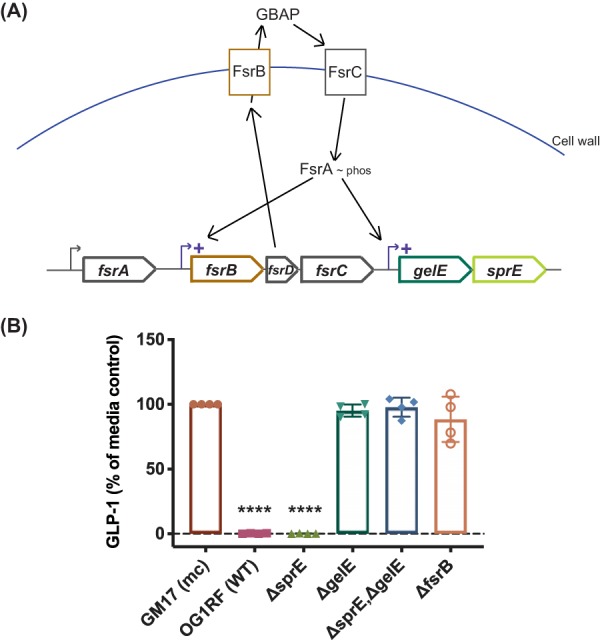
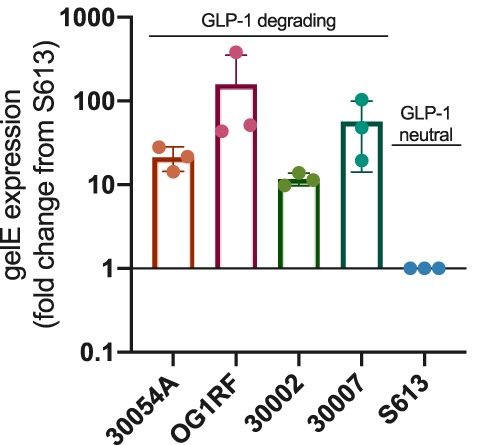
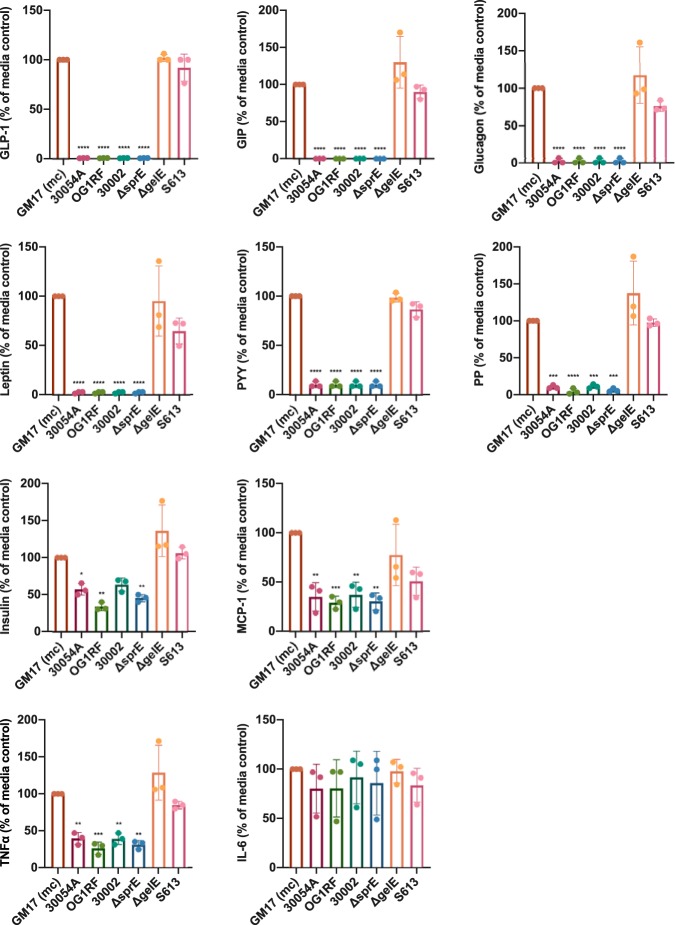
Metabolic diseases, including type 2 diabetes and obesity, have become increasingly prevalent global health concerns. Studies over the past decade have established connections between the gastrointestinal microbiota and host metabolism, but the mechanisms behind these connections are only beginning to be understood. We were interested in identifying microbes that have the ability to modulate the levels of the incretin hormone glucagon-like peptide-1 (GLP-1). Using a human-derived cell line that is capable of secreting GLP-1 in response to stimulatory ligands (NCI-H716), we identified supernatants from several bacterial isolates that were capable of decreasing GLP-1 levels, including several strains of We further identified the secreted protease GelE, an established virulence factor from , as being responsible for GLP-1 inhibition via direct cleavage of GLP-1 by GelE. Finally, we demonstrated that supernatants can disrupt a colonic epithelial monolayer and cleave GLP-1 in a -dependent manner. This work suggests that a secreted factor from an intestinal microbe can traverse the epithelial barrier and impact levels of an important intestinal hormone. Humans have a complex and interconnected relationship with their gastrointestinal microbiomes, yet our interest in the microbiome tends to focus on overt pathogenic or probiotic activities, leaving the roles that commensal species may have on host physiology and metabolic processes largely unexplored. Commensal organisms in the microbiome produce and secrete many factors that have an opportunity to interact with the gastrointestinal tract and host biology. Here, we show that a secreted protease from , GelE, is able to degrade the gastrointestinal hormone GLP-1, which is responsible for regulating glucose homeostasis and appetite in the body. The disruption of natural GLP-1 signaling by GelE may have significant consequences for maintaining healthy blood glucose levels and in the development of metabolic disease. Furthermore, this work deepens our understanding of specific host-microbiome interactions.
代谢疾病,包括 2 型糖尿病和肥胖症,已成为日益严重的全球健康问题。过去十年的研究已经确立了胃肠道微生物群与宿主代谢之间的联系,但这些联系的机制才刚刚开始被理解。我们有兴趣确定具有调节肠促胰岛素激素胰高血糖素样肽-1(GLP-1)水平能力的微生物。使用能够响应刺激配体(NCI-H716)分泌 GLP-1 的人源细胞系,我们鉴定了能够降低 GLP-1 水平的几种细菌分离物的上清液,包括几种 我们进一步鉴定出的分泌蛋白酶 GelE,它是一种来自 的公认的毒力因子,通过 GelE 对 GLP-1 的直接切割来负责 GLP-1 抑制。最后,我们证明 上清液可以破坏结肠上皮单层并以 -依赖性方式切割 GLP-1。这项工作表明,肠道微生物的分泌因子可以穿过上皮屏障并影响重要肠激素的水平。人类与其胃肠道微生物组之间存在复杂且相互关联的关系,但我们对微生物组的兴趣往往集中在明显的致病性或益生菌活性上,而共生物种对宿主生理学和代谢过程的作用在很大程度上仍未得到探索。微生物组中的共生生物会产生和分泌许多有机会与胃肠道和宿主生物学相互作用的因子。在这里,我们表明来自 的分泌蛋白酶 GelE 能够降解胃肠道激素 GLP-1,GLP-1 负责调节体内葡萄糖稳态和食欲。GelE 对天然 GLP-1 信号的破坏可能对维持健康的血糖水平和代谢疾病的发展产生重大影响。此外,这项工作加深了我们对特定宿主-微生物组相互作用的理解。