Centre for Interdisciplinary Research in Basic Sciences, Jamia Millia Islamia, New Delhi, India.
Centre of Excellence in Biotechnology Research, College of Science, King Saud University, Riyadh, Saudi Arabia.
Epidemiol Infect. 2020 Feb 19;148:e63. doi: 10.1017/S0950268820000497.
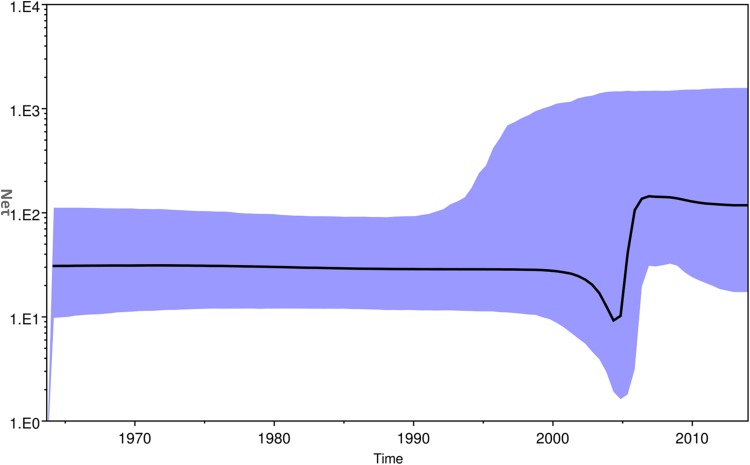
Chikungunya virus (CHIKV) is a re-emerging pathogen of global importance. We attempted to gain an insight into the organisation, distribution and mutational load of the virus strains reported from different parts of the world. We describe transmission dynamics and genetic characterisation of CHIKV across the globe during the last 65 years from 1952 to 2017. The evolutionary pattern of CHIKV was analysed using the E1 protein gene through phylogenetic, Bayesian and Network methods with a dataset of 265 sequences from various countries. The time to most recent common ancestor of the virus was estimated to be 491 years ago with an evolutionary rate of 2.78 × 10⁻⁴ substitutions/site/year. Genetic characterisation of CHIKV strains was carried out in terms of variable sites, selection pressure and epitope mapping. The neutral selection pressure on the E1 gene of the virus suggested a stochastic process of evolution. We identified six potential epitope peptides in the E1 protein showing substantial interaction with human MHC-I and MHC-II alleles. The present study augments global epidemiological and population dynamics of CHIKV warranting undertaking of appropriate control measures. The identification of epitopic peptides can be useful in the development of epitope-based vaccine strategies against this re-emerging viral pathogen.
基孔肯雅病毒(CHIKV)是一种具有全球重要性的重新出现的病原体。我们试图深入了解从世界不同地区报告的病毒株的组织、分布和突变负荷。我们描述了 1952 年至 2017 年 65 年间全球范围内 CHIKV 的传播动态和遗传特征。通过使用来自不同国家的 265 个序列的数据集,通过系统发育、贝叶斯和网络方法分析了 CHIKV 的进化模式。估计病毒的最近共同祖先时间为 491 年前,进化率为 2.78×10⁻⁴ 取代/位点/年。对 CHIKV 株进行了遗传特征分析,包括变异位点、选择压力和表位作图。病毒 E1 基因的中性选择压力表明进化是一种随机过程。我们在 E1 蛋白中鉴定了六个潜在的表位肽,这些肽与人类 MHC-I 和 MHC-II 等位基因有显著相互作用。本研究增加了 CHIKV 的全球流行病学和种群动态,需要采取适当的控制措施。鉴定表位肽可用于开发针对这种重新出现的病毒病原体的基于表位的疫苗策略。