Department of Pathology, Johns Hopkins School of Medicine, Baltimore, MD, 21287, USA.
Department of Epidemiology, Johns Hopkins Bloomberg School of Public Health, 627 North Washington St., Baltimore, MD, 21205, USA.
Nat Commun. 2020 Feb 20;11(1):976. doi: 10.1038/s41467-020-14636-y.
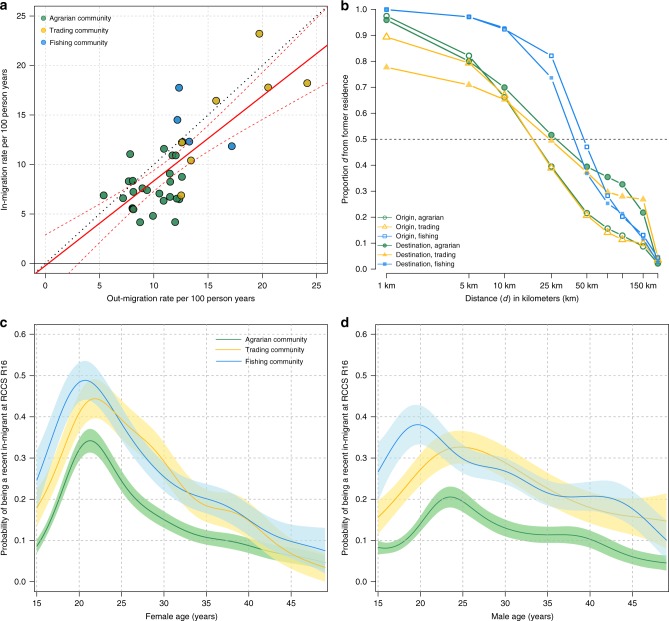
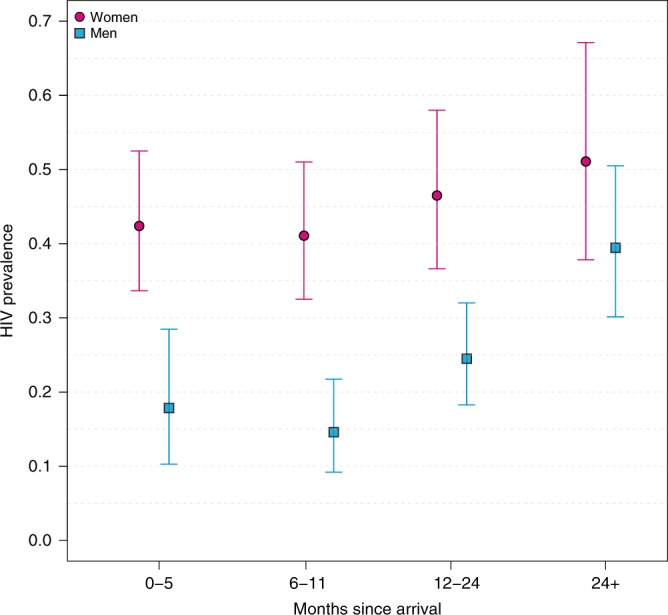
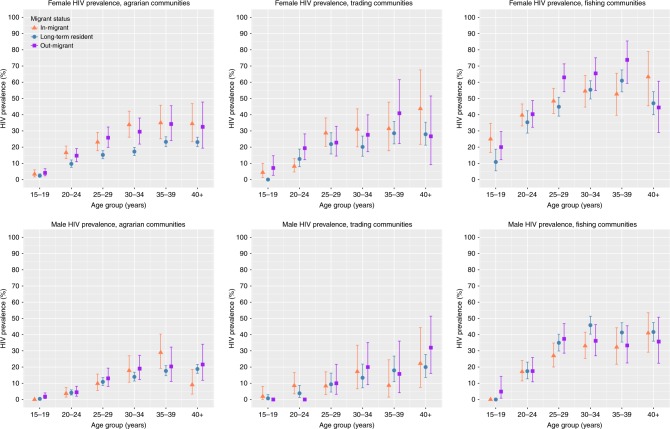
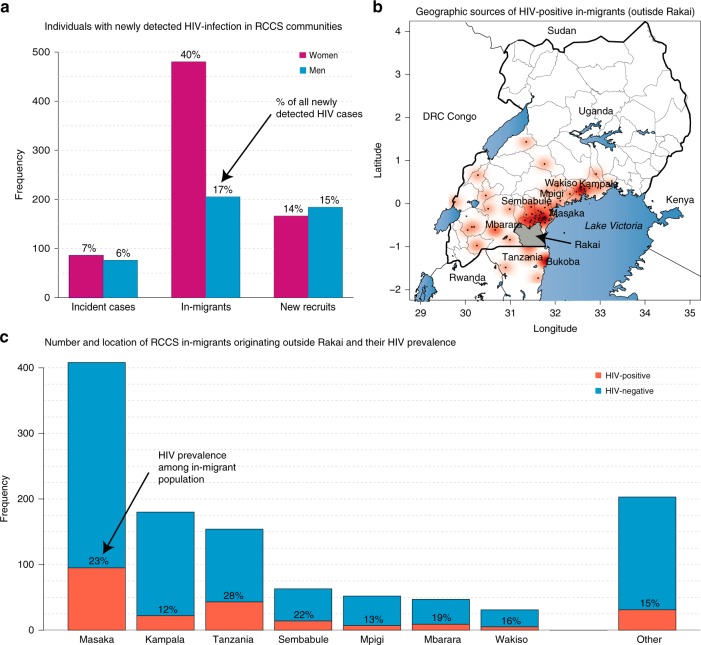
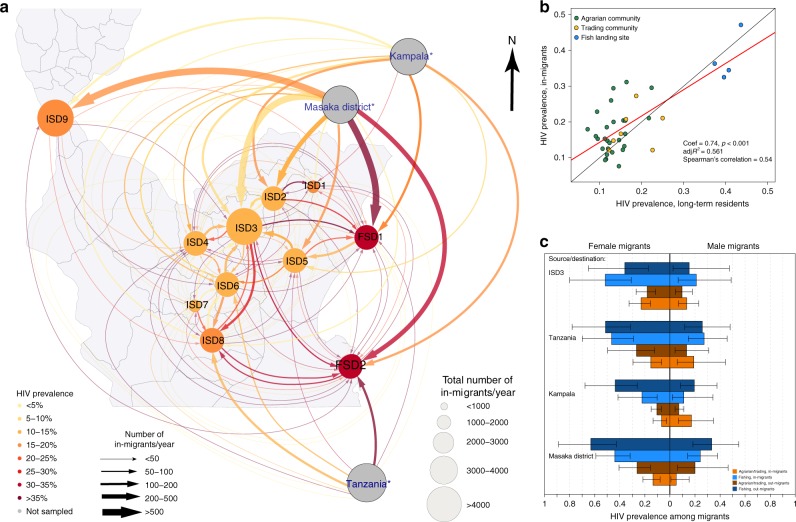
HIV prevalence varies markedly throughout Africa, and it is often presumed areas of higher HIV prevalence (i.e., hotspots) serve as sources of infection to neighboring areas of lower prevalence. However, the small-scale geography of migration networks and movement of HIV-positive individuals between communities is poorly understood. Here, we use population-based data from ~22,000 persons of known HIV status to characterize migratory patterns and their relationship to HIV among 38 communities in Rakai, Uganda with HIV prevalence ranging from 9 to 43%. We find that migrants moving into hotspots had significantly higher HIV prevalence than migrants moving elsewhere, but out-migration from hotspots was geographically dispersed, contributing minimally to HIV burden in destination locations. Our results challenge the assumption that high prevalence hotspots are drivers of transmission in regional epidemics, instead suggesting that migrants with high HIV prevalence, particularly women, selectively migrate to these areas.
艾滋病毒在整个非洲的流行率差异很大,人们通常认为艾滋病毒流行率较高的地区(即热点地区)是向流行率较低的邻近地区传播感染的源头。然而,人们对移民网络的小规模地理范围以及艾滋病毒阳性个体在社区之间的流动情况了解甚少。在这里,我们利用乌干达拉凯 38 个社区中约 22000 名已知艾滋病毒状况的人的基于人群的数据,描述移民模式及其与艾滋病毒之间的关系,这些社区的艾滋病毒流行率从 9%到 43%不等。我们发现,移入热点地区的移民艾滋病毒感染率明显高于迁往其他地区的移民,但从热点地区向外移民的分布范围很广,对目的地的艾滋病毒负担影响极小。我们的研究结果对高流行率热点地区是区域流行中传播驱动因素的假设提出了挑战,反而表明,艾滋病毒感染率较高的移民,特别是妇女,会选择性地迁往这些地区。