Bahr Mohamed M, Amer Mohamed S, Abo-El-Sooud Khaled, Abdallah Ahmed N, El-Tookhy Omar S
Surgery Department, Faculty of Veterinary Medicine, Cairo University, Giza, Egypt.
Pharmacology Department, Faculty of Veterinary Medicine, Cairo University, Giza, Egypt.
Int J Vet Sci Med. 2020 Jan 20;8(1):1-8. doi: 10.1080/23144599.2019.1704992. eCollection 2020.
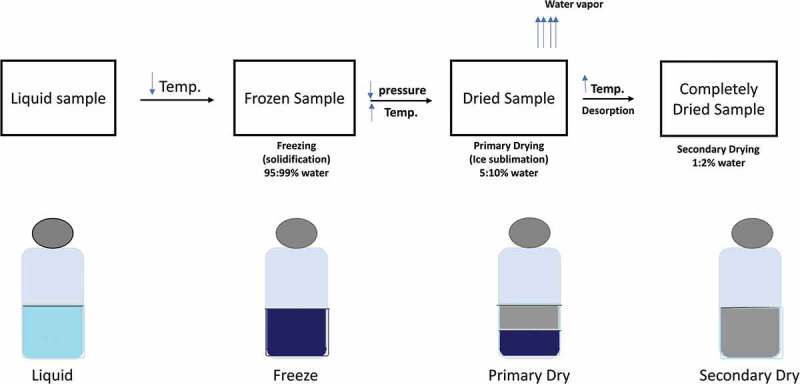
Extracellular vesicles (EVs) are nanosized vesicles released by different cells and have been separated from most of the body fluids. These vesicles play a central role in cell-to-cell communications as carry a distinct cargo including proteins, RNA species, DNAs, and lipids that are meant to be shipped and exchanged between cells at both systemic and paracrine levels. They serve in regulating normal physiological processes. EVs released from stem cells exert similar therapeutic effect to their originating cells. Clinical application of EVs requires the preparation of sufficient and viable active therapeutic EVs as well as implementing suitable methods for long-term preservation to expedite both their clinical and commercial uses. Cryopreservation is the most common method used to preserve decomposable biomaterials. However, cryopreservation causes cryoinjury to cells which therefore necessitate the use of cryoprotectants. Two types of cryoprotectants exist: penetrating and non-penetrating. In freeze drying, the watery content is sublimed from the product after it is frozen. This drying process is pertinent to thermo-liable substances and those unstable in aqueous solutions for prolonged storage periods. In spray drying technique, the solution containing EVs is firstly atomized, then droplets are rapidly converted into a dry powder using heated gas. Even with the exposure to high temperatures of the drying gas, spray drying is considered suitable for heat-sensitive materials. EVs are considered a promising cell-free therapy, but the lack of proper preservation limits its benefits. Preservation of EVs will initiate a vast amount of clinical trials on different species and different clinical problems.
细胞外囊泡(EVs)是由不同细胞释放的纳米级囊泡,已从大多数体液中分离出来。这些囊泡在细胞间通讯中发挥着核心作用,因为它们携带独特的货物,包括蛋白质、RNA种类、DNA和脂质,这些物质旨在在全身和旁分泌水平的细胞之间运输和交换。它们参与调节正常生理过程。干细胞释放的细胞外囊泡与其来源细胞具有相似的治疗效果。细胞外囊泡的临床应用需要制备足够数量且有活力的活性治疗性细胞外囊泡,以及采用合适的长期保存方法,以加速其临床和商业应用。冷冻保存是保存可分解生物材料最常用的方法。然而,冷冻保存会对细胞造成冷冻损伤,因此需要使用冷冻保护剂。冷冻保护剂有两种类型:渗透性和非渗透性。在冷冻干燥过程中,产品冷冻后水分会升华。这种干燥过程适用于热不稳定物质以及在水溶液中长时间储存不稳定的物质。在喷雾干燥技术中,首先将含有细胞外囊泡的溶液雾化,然后使用加热气体将液滴迅速转化为干粉。即使暴露于干燥气体的高温下,喷雾干燥仍被认为适用于热敏材料。细胞外囊泡被认为是一种有前景的无细胞疗法,但缺乏适当的保存方法限制了其优势。细胞外囊泡的保存将引发针对不同物种和不同临床问题的大量临床试验。