Vidal Luciano, Kampleitner Carina, Brennan Meadhbh Á, Hoornaert Alain, Layrolle Pierre
INSERM, UMR 1238, PHY-OS, Bone Sarcomas and Remodeling of Calcified Tissues, Faculty of Medicine, University of Nantes, Nantes, France.
Department of Pharmacology and Toxicology, University of Vienna, Vienna, Austria.
Front Bioeng Biotechnol. 2020 Feb 12;8:61. doi: 10.3389/fbioe.2020.00061. eCollection 2020.
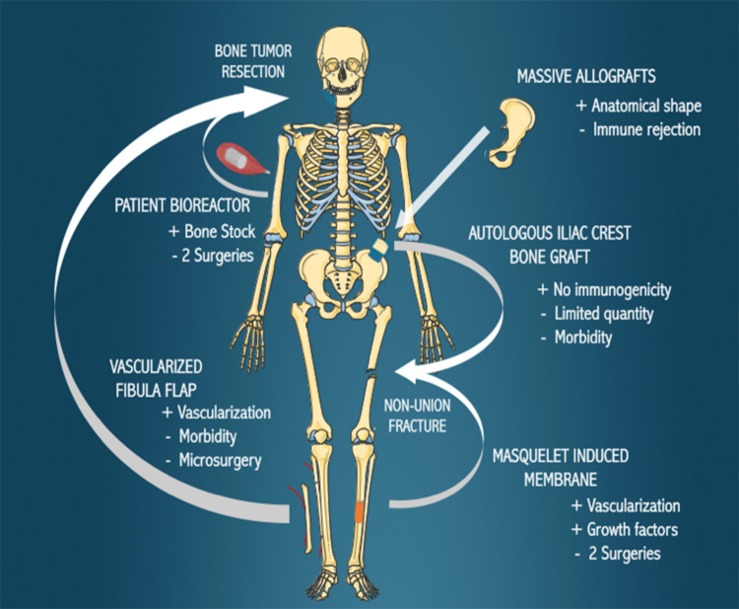
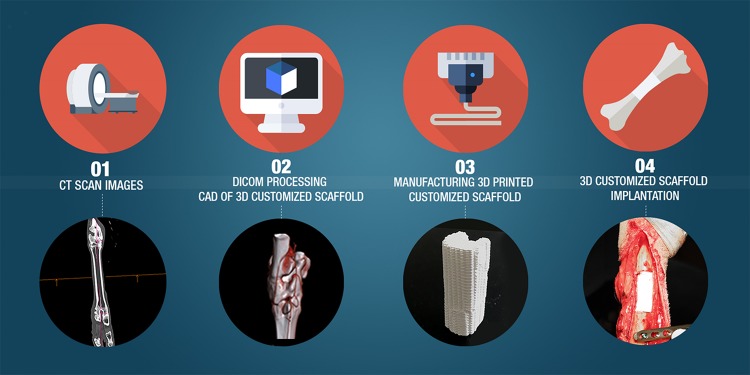
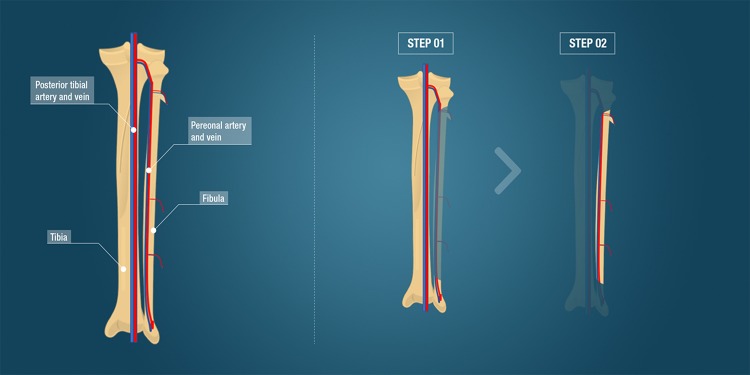
The healing of bone fractures is a well-orchestrated physiological process involving multiple cell types and signaling molecules interacting at the fracture site to replace and repair bone tissue without scar formation. However, when the lesion is too large, normal healing is compromised. These so-called non-union bone fractures, mostly arising due to trauma, tumor resection or disease, represent a major therapeutic challenge for orthopedic and reconstructive surgeons. In this review, we firstly present the current commonly employed surgical strategies comprising auto-, allo-, and xenograft transplantations, as well as synthetic biomaterials. Further to this, we discuss the multiple factors influencing the effectiveness of the reconstructive therapy. One essential parameter is adequate vascularization that ensures the vitality of the bone grafts thereby supporting the regeneration process, however deficient vascularization presents a frequently encountered problem in current management strategies. To address this challenge, vascularized bone grafts, including free or pedicled fibula flaps, or approaches using the Masquelet induced membrane, or the patient's body as a bioreactor, comprise feasible alternatives. Finally, we highlight future directions and novel strategies such as 3D printing and bioprinting which could overcome some of the current challenges in the field of bone defect reconstruction, with the benefit of fabricating personalized and vascularized scaffolds.
骨折愈合是一个精心编排的生理过程,涉及多种细胞类型和信号分子在骨折部位相互作用,以替代和修复骨组织而不形成疤痕。然而,当损伤过大时,正常愈合会受到影响。这些所谓的骨不连骨折大多由创伤、肿瘤切除或疾病引起,对骨科和重建外科医生来说是一个重大的治疗挑战。在本综述中,我们首先介绍当前常用的手术策略,包括自体移植、同种异体移植和异种移植以及合成生物材料。除此之外,我们还讨论了影响重建治疗效果的多种因素。一个关键参数是充足的血管化,它确保骨移植的活力,从而支持再生过程,然而血管化不足是当前管理策略中经常遇到的问题。为应对这一挑战,带血管蒂的骨移植,包括游离或带蒂腓骨瓣,或使用Masquelet诱导膜或患者身体作为生物反应器的方法,都是可行的替代方案。最后,我们强调了未来的方向和新策略,如3D打印和生物打印,它们可以克服骨缺损重建领域当前的一些挑战,其好处是能够制造个性化和血管化的支架。