Minetti Elio, Giacometti Edoardo, Gambardella Ugo, Contessi Marcello, Ballini Andrea, Marenzi Gaetano, Celko Martin, Mastrangelo Filiberto
Private Practice, 20100 Milan, Italy.
Private Practice, 10121 Torino, Italy.
Materials (Basel). 2020 Mar 5;13(5):1153. doi: 10.3390/ma13051153.
The histological and histomorphometrical results were evaluated between vital whole and non-vital endodontically treated teeth used as autologous grafts in post-extractive socket preservation procedures.
Twenty-eight patients (average age 51.79 ± 5.97 years) with post-extractive defects were enrolled in five dentistry centers. All patients were divided into two groups: with whole teeth (Group 1) and teeth with endodontical root canal therapy (Group 2). The extracted teeth were processed with the Tooth Transformer device to obtain a demineralized and granulated graft material used with a resorbable collagen membrane for socket preservation. After four months, 32 bone biopsies were obtained for histological, histomorphometric, and statistical analysis.
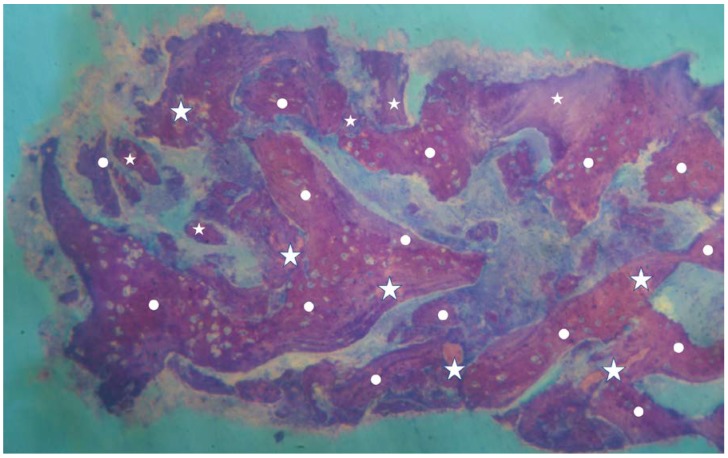
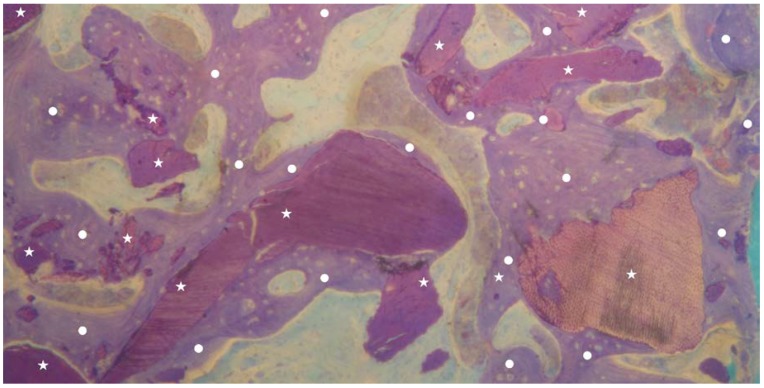
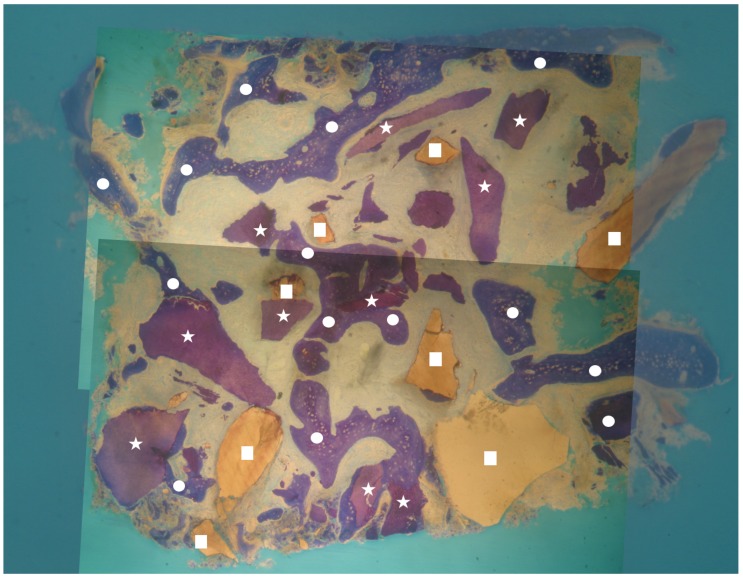
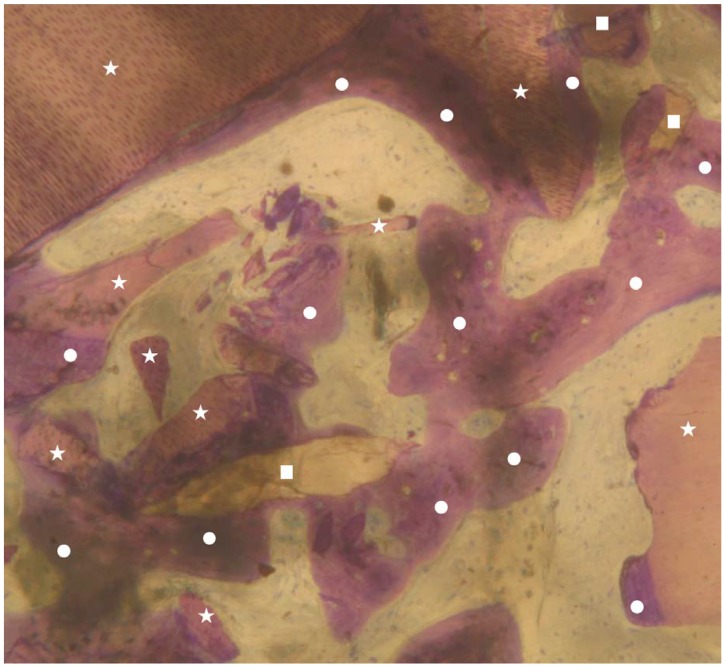
During the bone healing period, no infection signs were observed. Nineteen biopsies in group 1 and 13 biopsies in group 2 were detected. The histological analysis showed neither inflammatory nor infective reaction in both groups. Autologous grafts surrounded by new bone were observed in all samples and, at high magnification, partially resorbed dentin and enamel structures were detected. No gutta-percha or cement was identified. Small non-statistically significant differences between the groups, in total bone volume (BV), autologous graft residual, and vital bone percentage were detected.
The study showed that the TT Transformer grafts were capable of producing new vital bone in socket preservation procedures. The histomorphometric results showed no statistical differences comparing whole and endodontically treated teeth in bone regeneration. Further studies will be carried out in order to understand the advantages of the autologous graft materials obtained from the tooth compared with the current biomaterials in bone regeneration treatments.
在拔牙后牙槽窝保存手术中,对作为自体移植物使用的活髓完整牙和经牙髓治疗的无活力牙进行了组织学和组织形态计量学结果评估。
五个牙科中心招募了28例(平均年龄51.79±5.97岁)有拔牙后缺损的患者。所有患者分为两组:完整牙组(第1组)和牙髓根管治疗牙组(第2组)。用牙齿转化装置处理拔除的牙齿,以获得脱矿质和颗粒状的移植材料,并与可吸收胶原膜一起用于牙槽窝保存。四个月后,获取32份骨活检样本进行组织学、组织形态计量学和统计学分析。
在骨愈合期,未观察到感染迹象。第1组检测到19份活检样本,第2组检测到13份活检样本。组织学分析显示两组均无炎症或感染反应。在所有样本中均观察到自体移植物被新骨包围,在高倍镜下,检测到部分吸收的牙本质和釉质结构。未发现牙胶或黏固剂。两组在总骨体积(BV)、自体移植物残留和活性骨百分比方面存在微小的无统计学意义的差异。
该研究表明,牙齿转化器移植物能够在牙槽窝保存手术中产生新的活性骨。组织形态计量学结果显示,在骨再生方面,完整牙和经牙髓治疗的牙之间无统计学差异。将进行进一步研究,以了解从牙齿获得的自体移植材料与目前骨再生治疗中的生物材料相比的优势。