Luyckx Valerie A, Cherney David Z I, Bello Aminu K
Institute of Biomedical Ethics and the History of Medicine, University of Zurich, Zurich, Switzerland.
Renal Division, Brigham and Women's Hospital, Harvard Medical School, Boston, USA.
Kidney Int Rep. 2019 Dec 18;5(3):263-277. doi: 10.1016/j.ekir.2019.12.003. eCollection 2020 Mar.
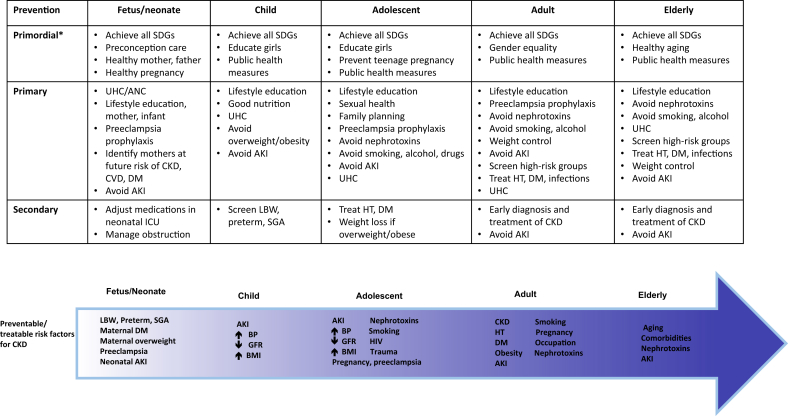
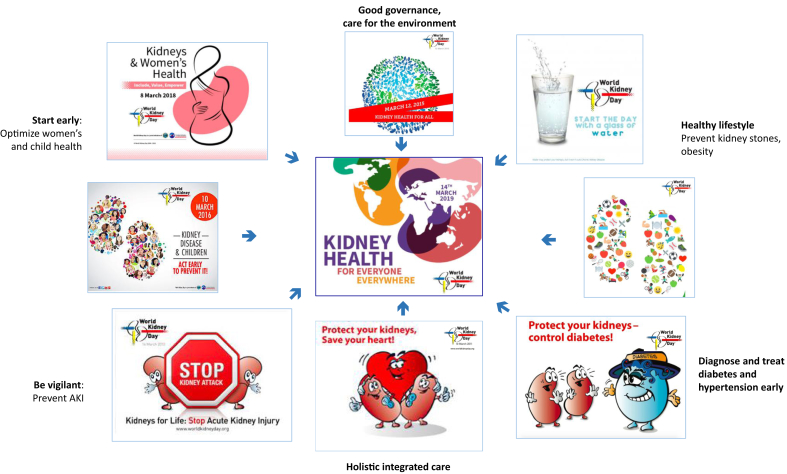
Chronic kidney disease (CKD) is an important public health concern in developed countries because of both the number of people affected and the high cost of care when prevention strategies are not effectively implemented. Prevention should start at the governance level with the institution of multisectoral polices supporting sustainable development goals and ensuring safe and healthy environments. Primordial prevention of CKD can be achieved through implementation of measures to ensure healthy fetal (kidney) development. Public health strategies to prevent diabetes, hypertension, and obesity as risk factors for CKD are important. These approaches are cost-effective and reduce the overall noncommunicable disease burden. Strategies to prevent nontraditional CKD risk factors, including nephrotoxin exposure, kidney stones, infections, environmental exposures, and acute kidney injury (AKI), need to be tailored to local needs and epidemiology. Early diagnosis and treatment of CKD risk factors such as diabetes, obesity, and hypertension are key for primary prevention of CKD. CKD tends to occur more frequently and to progress more rapidly among indigenous, minority, and socioeconomically disadvantaged populations. Special attention is required to meet the CKD prevention needs of these populations. Effective secondary prevention of CKD relies on screening of individuals at risk to detect and treat CKD early, using established and emerging strategies. Within high-income countries, barriers to accessing effective CKD therapies must be recognized, and public health strategies must be developed to overcome these obstacles, including training and support at the primary care level to identify individuals at risk of CKD, and appropriately implement clinical practice guidelines.
慢性肾脏病(CKD)在发达国家是一个重要的公共卫生问题,这是由于受影响的人数众多,以及在预防策略未有效实施时护理成本高昂。预防应从治理层面开始,制定支持可持续发展目标并确保安全健康环境的多部门政策。通过实施确保胎儿(肾脏)健康发育的措施,可以实现CKD的初级预防。预防作为CKD危险因素的糖尿病、高血压和肥胖的公共卫生策略很重要。这些方法具有成本效益,并能减轻总体非传染性疾病负担。预防非传统CKD危险因素(包括肾毒素暴露、肾结石、感染、环境暴露和急性肾损伤(AKI))的策略需要根据当地需求和流行病学情况进行调整。对CKD危险因素(如糖尿病、肥胖和高血压)进行早期诊断和治疗是CKD一级预防的关键。CKD在原住民、少数族裔和社会经济弱势群体中往往更频繁地发生且进展更快。需要特别关注以满足这些人群的CKD预防需求。CKD的有效二级预防依赖于对高危个体进行筛查,以便利用既定和新出现的策略早期发现和治疗CKD。在高收入国家,必须认识到获得有效CKD治疗的障碍,并且必须制定公共卫生策略来克服这些障碍,包括在初级保健层面进行培训和提供支持,以识别有CKD风险的个体,并适当实施临床实践指南。