Hayashi K, Kishida R, Tsuchiya A, Ishikawa K
Department of Biomaterials, Faculty of Dental Science, Kyushu University, 3-1-1 Maidashi, Higashi-ku, Fukuoka, 812-8582, Japan.
Mater Today Bio. 2019 Sep 24;4:100031. doi: 10.1016/j.mtbio.2019.100031. eCollection 2019 Sep.
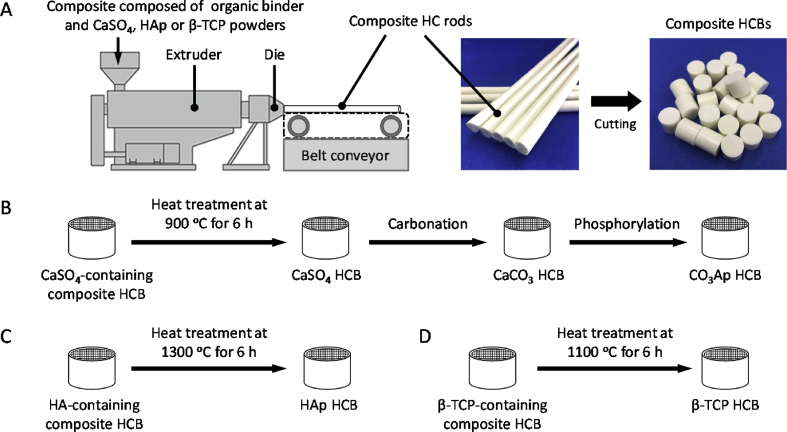
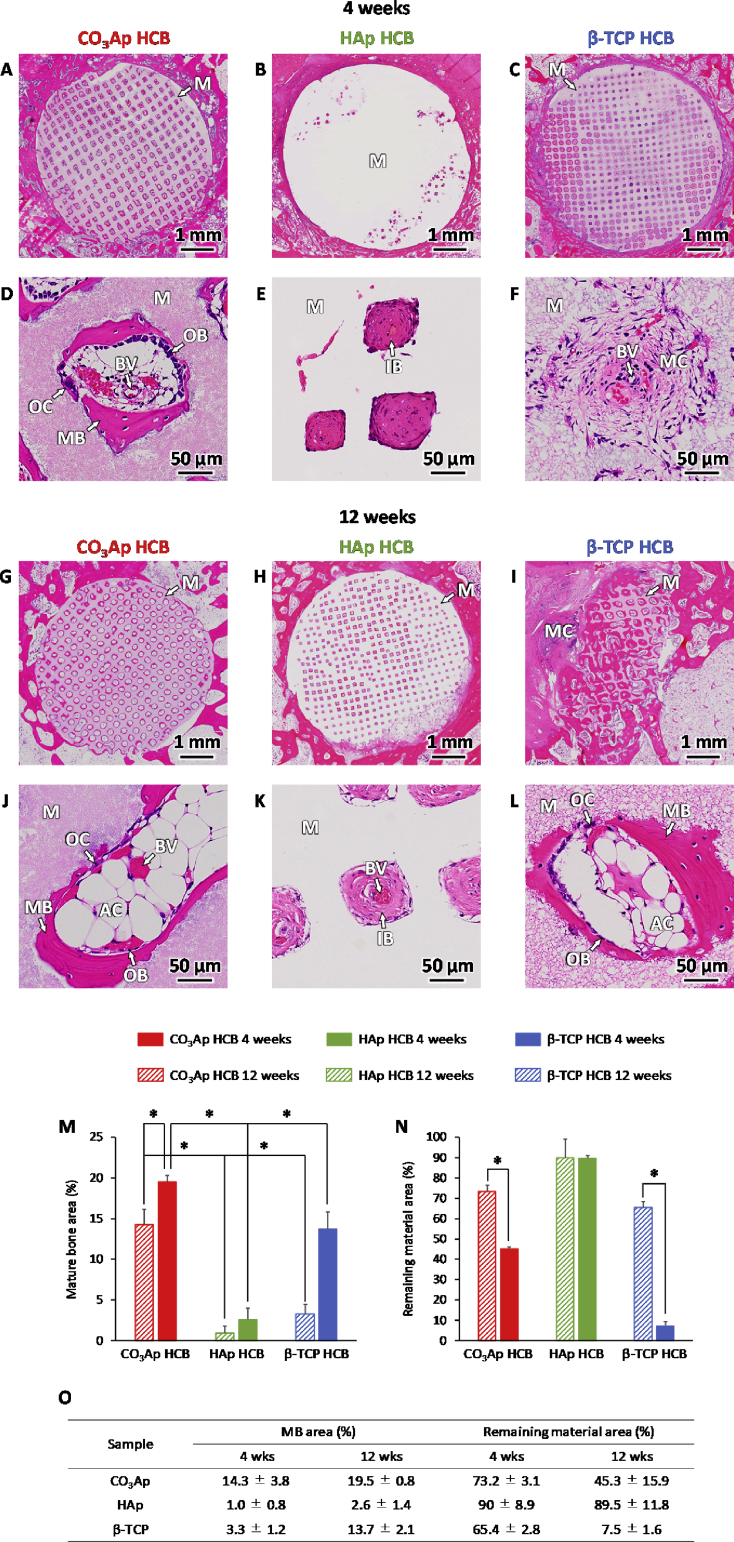
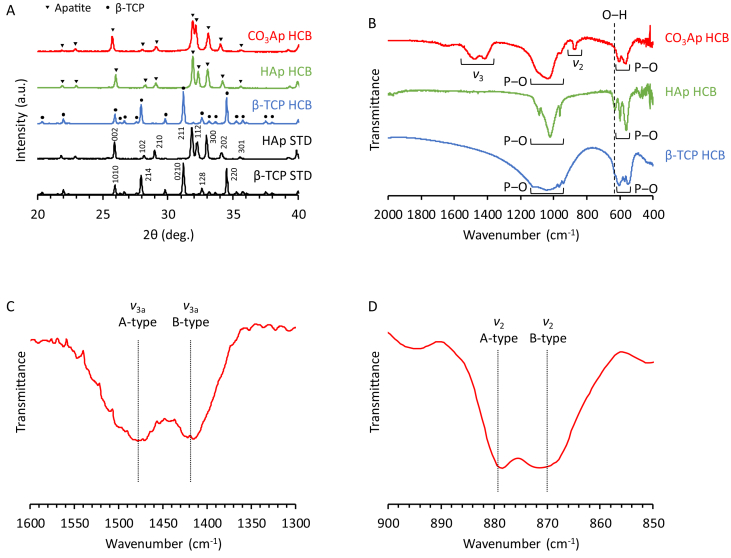
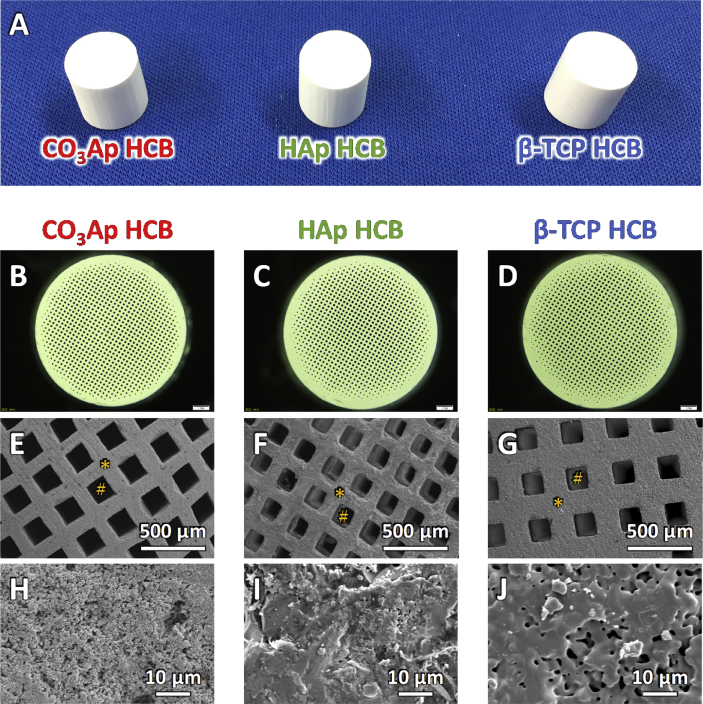
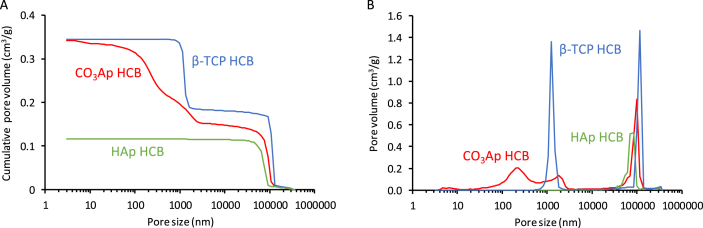
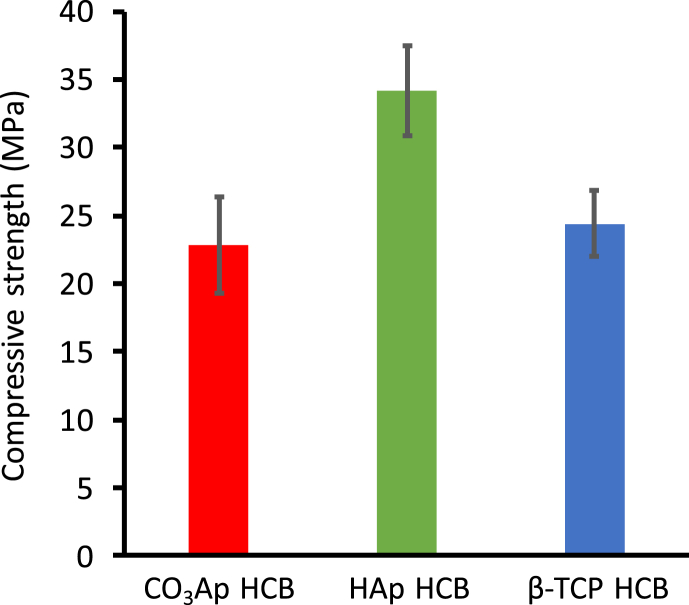
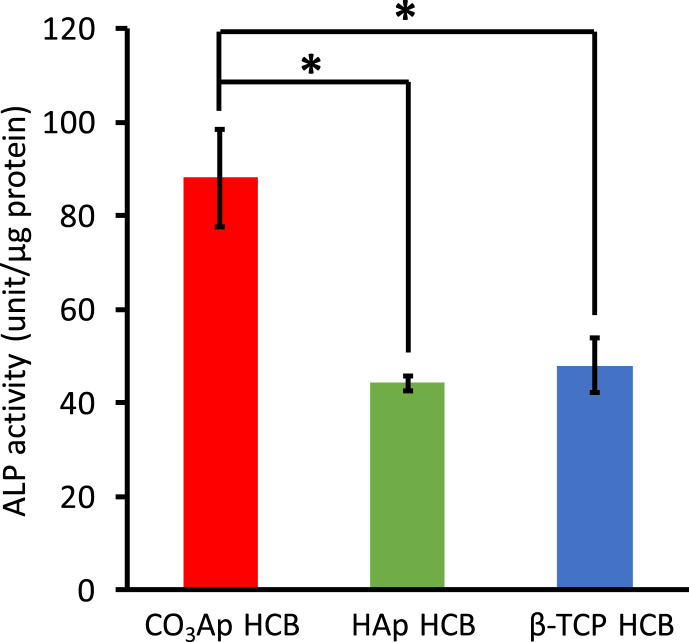
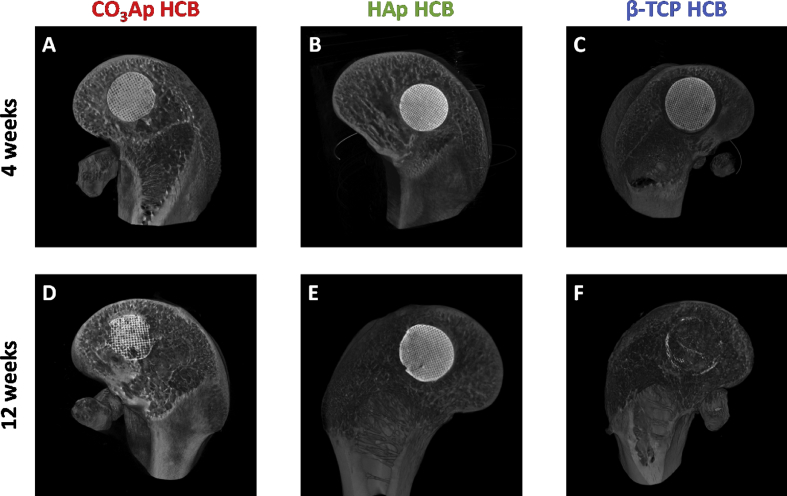
Synthetic scaffolds exhibiting bone repair ability equal to that of autogenous bone are required in the fields of orthopedics and dentistry. A suitable synthetic bone graft substitute should induce osteogenic differentiation of mesenchymal stem cells, osteogenesis, and angiogenesis. In this study, three types of honeycomb blocks (HCBs), composed of hydroxyapatite (HAp), β-tricalcium phosphate (TCP), and carbonate apatite (COAp), were fabricated, and the effects of HCB composition on bone formation and maturation were investigated. The HC structure was selected to promote cell penetration and tissue ingrowth. HAp and β-TCP HCBs were fabricated by extrusion molding followed by sintering. The COAp HCBs were fabricated by extrusion molding followed by sintering and dissolution-precipitation reactions. These HCBs had similar macroporous structures: all harbored uniformly distributed macropores (∼160 μm) that were regularly arrayed and penetrated the blocks unidirectionally. Moreover, the volumes of macropores were nearly equal (∼0.15 cm/g). The compressive strengths of COAp, HAp, and β-TCP HCBs were 22.8 ± 3.5, 34.2 ± 3.3, and 24.4 ± 2.4 MPa, respectively. Owing to the honeycomb-type macroporous structure, the compressive strengths of these HCBs were higher than those of commercial scaffolds with intricate three-dimensional or unidirectional macroporous structure. Notably, bone maturation was markedly faster in COAp HCB grafting than in β-TCP and HAp HCB grafting, and the mature bone area percentages for COAp HCBs at postsurgery weeks 4 and 12 were 14.3- and 4.3-fold higher and 7.5- and 1.4-fold higher than those for HAp and β-TCP HCBs, respectively. The differences in bone maturation and formation were probably caused by the disparity in concentrations of calcium ions surrounding the HCBs, which were dictated by the inherent material resorption behavior and mechanism; generally, COAp is resorbed only by osteoclastic resorption, HAp is not resorbed, and β-TCP is rapidly dissolved even in the absence of osteoclasts. Besides the composition, the microporous structure of HC struts, inevitably generated during the formation of HCBs of various compositions, may contribute to the differences in bone maturation and formation.
骨科和牙科领域需要具有与自体骨相当的骨修复能力的合成支架。合适的合成骨移植替代物应能诱导间充质干细胞的成骨分化、骨生成和血管生成。在本研究中,制备了三种由羟基磷灰石(HAp)、β-磷酸三钙(TCP)和碳酸磷灰石(COAp)组成的蜂窝状块体(HCB),并研究了HCB组成对骨形成和成熟的影响。选择HC结构以促进细胞穿透和组织向内生长。HAp和β-TCP HCB通过挤压成型后烧结制备。COAp HCB通过挤压成型后烧结以及溶解-沉淀反应制备。这些HCB具有相似的大孔结构:均具有均匀分布的大孔(160μm),这些大孔规则排列并单向穿透块体。此外,大孔体积几乎相等(0.15cm/g)。COAp、HAp和β-TCP HCB的抗压强度分别为22.8±3.5、34.2±3.3和24.4±2.4MPa。由于蜂窝状大孔结构,这些HCB的抗压强度高于具有复杂三维或单向大孔结构的商业支架。值得注意的是,COAp HCB移植后的骨成熟明显快于β-TCP和HAp HCB移植,术后第4周和第12周COAp HCB的成熟骨面积百分比分别比HAp和β-TCP HCB高14.3倍和4.3倍,以及7.5倍和1.4倍。骨成熟和形成的差异可能是由HCB周围钙离子浓度的差异引起的,这取决于材料固有的吸收行为和机制;一般来说,COAp仅通过破骨细胞吸收被吸收,HAp不被吸收,β-TCP即使在没有破骨细胞的情况下也会迅速溶解。除了组成外,在各种组成的HCB形成过程中不可避免地产生的HC支柱的微孔结构可能也导致了骨成熟和形成的差异。