Emerg Infect Dis. 2020 Jun;26(6):1257-1265. doi: 10.3201/eid2606.200251. Epub 2020 Jun 17.
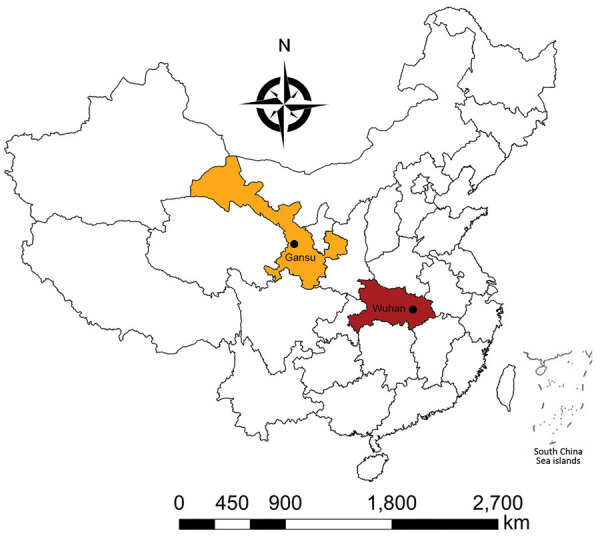
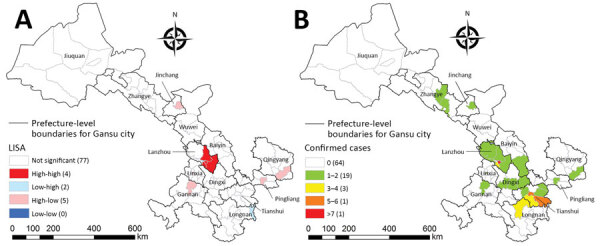
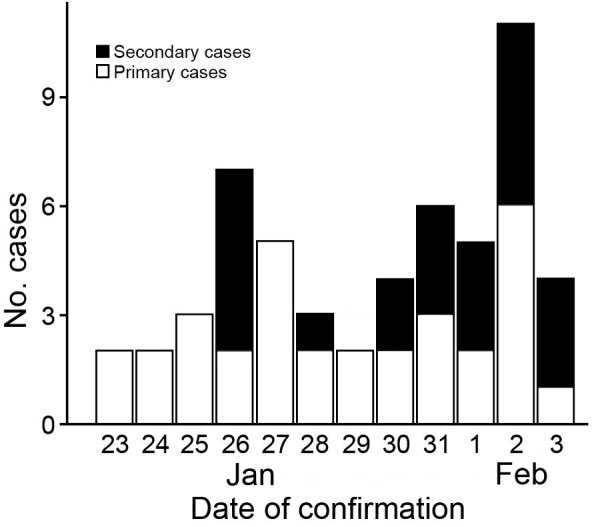
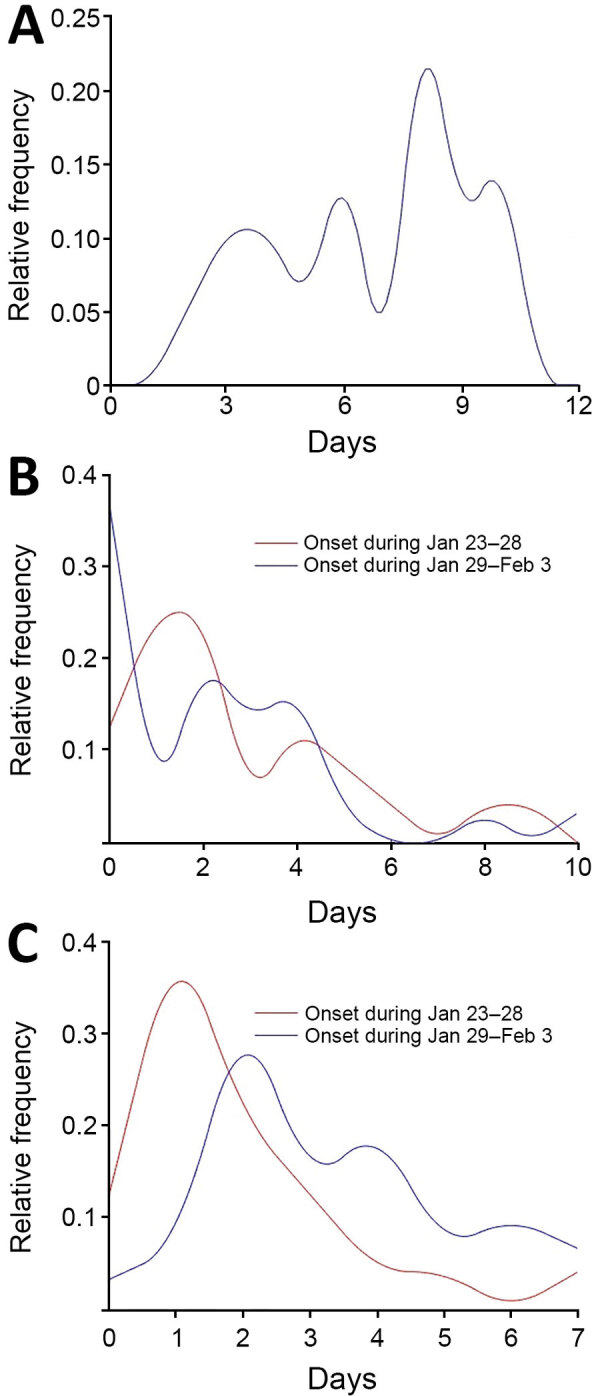
To determine the epidemiology of coronavirus disease (COVID-19) in a remote region of China, far from Wuhan, we analyzed the epidemiology of COVID-19 in Gansu Province. From January 23 through February 3, 2020, a total of 35 (64.8%) of 54 reported cases were imported from COVID-19-epidemic areas. Characteristics that differed significantly during the first and second waves of illness in Gansu Province were mean patient age, occupation, having visited epidemic areas, and mode of transportation. Time from infection to illness onset for family clusters was shorter in Gansu Province than in Wuhan, consistent with shortened durations from onset to first medical visit or hospitalization. Spatial distribution pattern analysis indicated hot spots and spatial outliers in Gansu Province. As a result of adequate interventions, transmission of the COVID-19 virus in Gansu Province is decreasing.
为了确定中国偏远地区(远离武汉)的冠状病毒病(COVID-19)的流行病学情况,我们分析了甘肃省 COVID-19 的流行病学情况。从 2020 年 1 月 23 日至 2 月 3 日,54 例报告病例中有 35 例(64.8%)来自 COVID-19 疫区。甘肃省第一波和第二波疾病期间有显著差异的特征是患者平均年龄、职业、曾到访疫区以及交通方式。甘肃省家庭聚集性病例从感染到发病的时间比武汉短,这与从发病到首次就诊或住院的时间缩短相一致。空间分布模式分析表明甘肃省存在热点和空间异常值。由于采取了充分的干预措施,甘肃省 COVID-19 病毒的传播正在减少。