Ripari Francesca, Cera Alessia, Freda Monica, Zumbo Giulia, Zara Francesca, Vozza Iole
Department of Oral and Maxillo facial Sciences, Sapienza University of Rome, Rome, Italy.
Eur J Dent. 2020 Feb;14(1):55-62. doi: 10.1055/s-0040-1703999. Epub 2020 Mar 13.
The study evaluated the efficacy of tea tree oil for the treatment of gingivitis.
The tea tree oil was administered in the form of mouthwash and then compared with a mouthwash with chlorhexidine 0.12%. Both treatments were domestic and lasted for 14 days. Patients were chosen according to random criteria, aged between 18 and 60 years, and who showed a clinically evident gingivitis. In clinical evaluation, the following clinical criteria were taken into consideration: gingival index (GI), plaque index (PI), bleeding index (BI), probing depth (PD), the presence of dental dyschromia, and the presence of taste alteration. The subjects were evaluated before (T0) and after the treatment (T1), and the data collected for each patient were recorded on a periodontal chart.
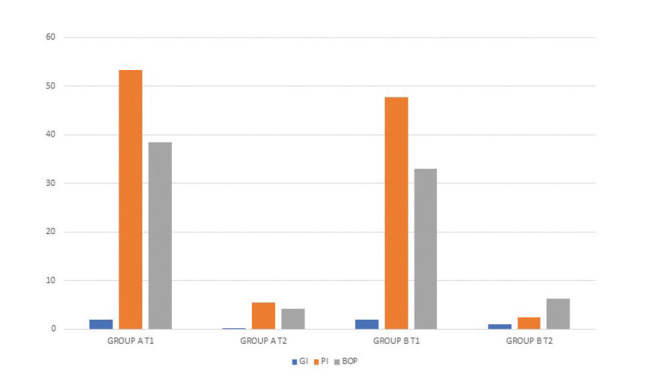
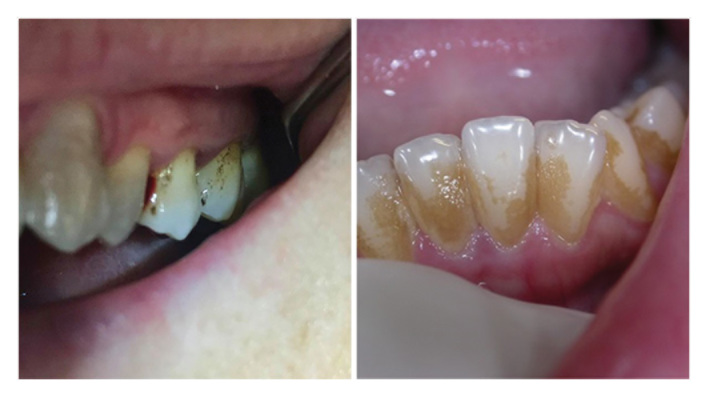
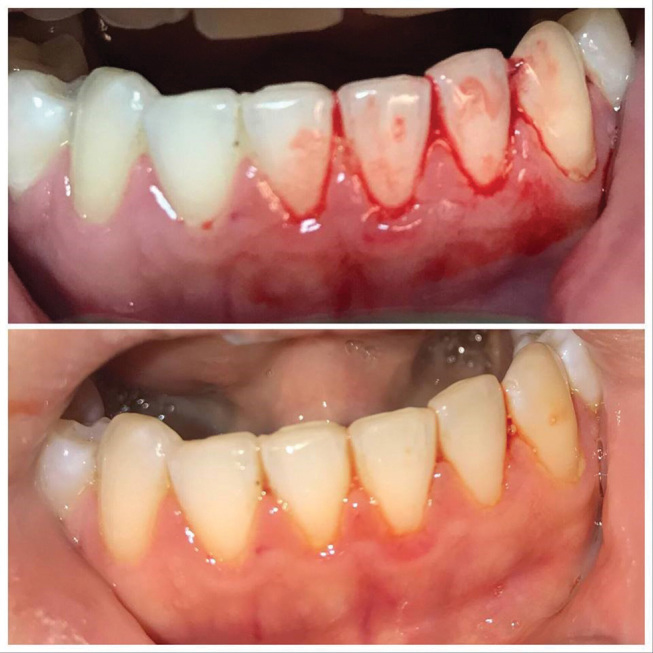
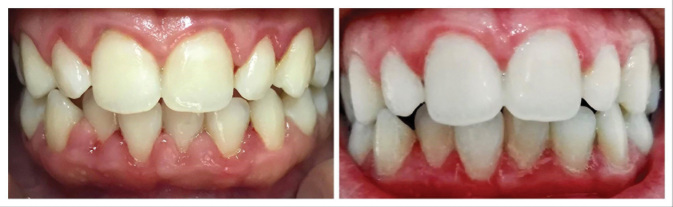
The comparison showed that tea tree oil offered a better improvement in the evaluation of PI, BOP, and PD; furthermore, it did not cause dental dyschromia and taste alteration. In group A, treated with tea tree oil, PI decreased from 53.25 to 5.50% and BI from 38.41 to 4.22%. In group B, treated with chlorhexidine PI decreased from 47.69 to 2.37% and BI from 32.93 to 6.28%. Instead, the subjects using chlorhexidine 0.12% blamed a distaste for the product that caused a slight taste alteration; 20% of them showed iatrogenic dental dyschromia.
The collected data showed the efficacy of both treatments. Although further research works will be necessary, this study showed that tea tree oil could be an effective nontoxic substitute for the therapy of gingivitis.
本研究评估了茶树油治疗牙龈炎的疗效。
以漱口水的形式使用茶树油,然后与含0.12%氯己定的漱口水进行比较。两种治疗均为居家治疗,持续14天。根据随机标准选择年龄在18至60岁之间、临床牙龈炎明显的患者。在临床评估中,考虑了以下临床标准:牙龈指数(GI)、菌斑指数(PI)、出血指数(BI)、探诊深度(PD)、牙齿变色情况以及味觉改变情况。在治疗前(T0)和治疗后(T1)对受试者进行评估,并将为每位患者收集的数据记录在牙周检查表上。
比较表明,茶树油在PI、BOP和PD评估方面改善更佳;此外,它不会导致牙齿变色和味觉改变。在使用茶树油治疗的A组中,PI从53.25%降至5.50%,BI从38.41%降至4.22%。在使用氯己定治疗的B组中,PI从47.69%降至2.37%,BI从32.93%降至6.28%。相反,使用0.12%氯己定的受试者抱怨该产品味道不佳导致轻微味觉改变;其中20%出现医源性牙齿变色。
收集的数据显示了两种治疗方法的疗效。尽管还需要进一步的研究工作,但本研究表明茶树油可能是治疗牙龈炎的一种有效的无毒替代品。