Meng Xiao, Zhou Jing, Zhao Cai-Ning, Gan Ren-You, Li Hua-Bin
Guangdong Provincial Key Laboratory of Food, Nutrition and Health, Department of Nutrition, School of Public Health, Sun Yat-Sen University, Guangzhou 510080, Guangdong Province, China.
School of Public Health, Hainan Medical University, Haikou 571199, China.
Foods. 2020 Mar 14;9(3):340. doi: 10.3390/foods9030340.
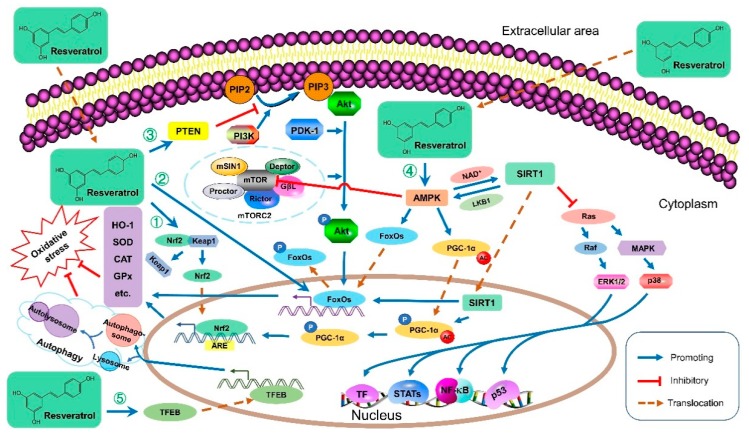
Resveratrol is a bioactive compound in many foods. Since its anticancer activity was reported in 1997, its health benefits have been intensively investigated. Resveratrol has antioxidant, anti-inflammatory, immunomodulatory, glucose and lipid regulatory, neuroprotective, and cardiovascular protective effects, therefore, can protect against diverse chronic diseases, such as cardiovascular diseases (CVDs), cancer, liver diseases, obesity, diabetes, Alzheimer's disease, and Parkinson's disease. This review summarizes the main findings of resveratrol-related health benefits in recent epidemiological surveys, experimental studies, and clinical trials, highlighting its related molecular mechanisms. Resveratrol, therefore, has been regarded as a potent candidate for the development of nutraceuticals and pharmaceuticals to prevent and treat certain chronic diseases.
白藜芦醇是许多食物中的一种生物活性化合物。自1997年其抗癌活性被报道以来,人们对其健康益处进行了深入研究。白藜芦醇具有抗氧化、抗炎、免疫调节、葡萄糖和脂质调节、神经保护以及心血管保护作用,因此可以预防多种慢性疾病,如心血管疾病(CVDs)、癌症、肝脏疾病、肥胖症、糖尿病、阿尔茨海默病和帕金森病。本综述总结了近期流行病学调查、实验研究和临床试验中与白藜芦醇相关的健康益处的主要发现,突出了其相关分子机制。因此,白藜芦醇被认为是开发预防和治疗某些慢性疾病的营养保健品和药物的有力候选物。