Falcon Tiago, Foletto Kelly Carraro, Siebert Marina, Pinto Denise Entrudo, Andrades Michael, Bertoluci Marcello Casaccia
Hospital de Clínicas de Porto Alegre (HCPA), Centro de Pesquisa Experimental, Núcleo de Bioinformática, Porto Alegre, RS, Brazil.
Universidade Federal do Rio Grande do Sul (UFRGS), Programa de Pós-Graduação em Medicina: Ciências Médicas, Porto Alegre, RS, Brazil.
Genet Mol Biol. 2020 Mar 16;43(1):e20190028. doi: 10.1590/1678-4685-GMB-2019-0028. eCollection 2020.
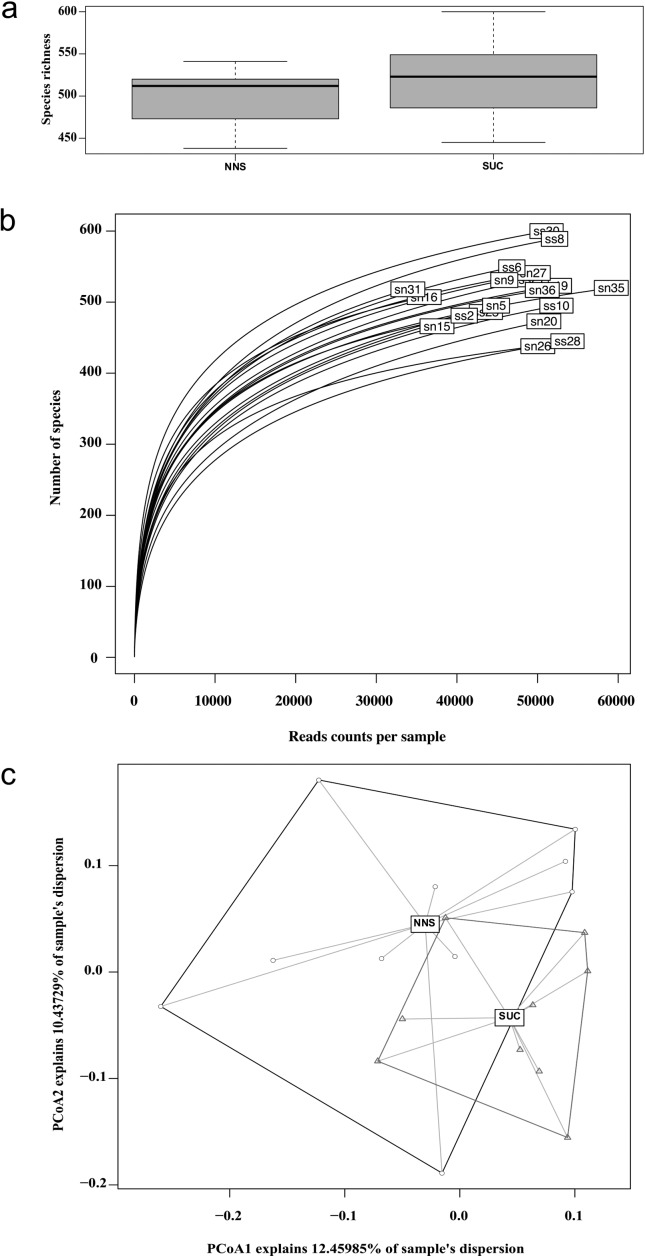
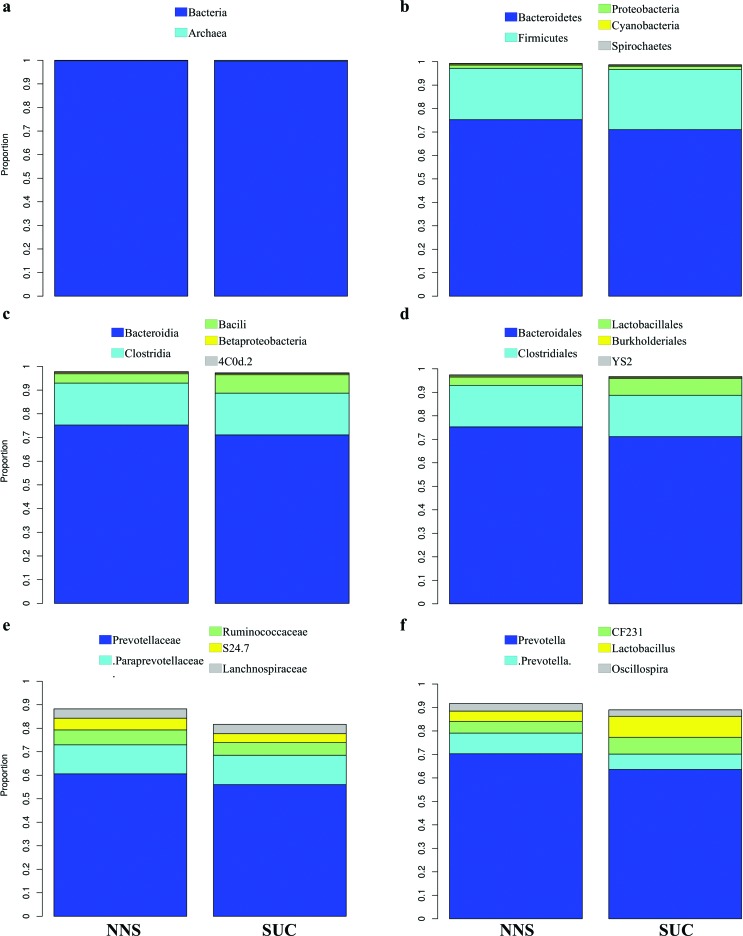
The effects of non-nutritive sweeteners (NNS) on the gut microbiota are an area of increasing research interest due to their potential influence on weight gain, insulin resistance, and inflammation. Studies have shown that mice and rats fed saccharin develop weight gain and metabolic alterations, possibly related to changes in gut microbiota. Here, we hypothesized that chronic exposure to a commercial NNS would change the gut microbiota composition in Wistar rats when compared to sucrose exposure. To test this hypothesis, Wistar rats were fed either NNS- or sucrose-supplemented yogurt for 17 weeks alongside standard chow (ad libitum). The gut microbiome was assessed by 16S rDNA deep sequencing. Assembly and quantification were conducted using the Brazilian Microbiome Project pipeline for Ion Torrent data with modifications. Statistical analyses were performed in the R software environment. We found that chronic feeding of a commercial NNS-sweetened yogurt to Wistar rats, within the recommended dose range, did not significantly modify gut microbiota composition in comparison to sucrose-sweetened yogurt. Our findings do not support the hypothesis that moderate exposure to NNS is associated with changes in gut microbiota pattern compared to sucrose, at least in this experimental model.
由于非营养性甜味剂(NNS)对体重增加、胰岛素抵抗和炎症可能产生影响,其对肠道微生物群的作用成为一个研究兴趣日益浓厚的领域。研究表明,喂食糖精的小鼠和大鼠会出现体重增加和代谢改变,这可能与肠道微生物群的变化有关。在此,我们假设,与蔗糖暴露相比,长期接触一种商业NNS会改变Wistar大鼠的肠道微生物群组成。为了验证这一假设,Wistar大鼠在自由采食标准饲料的同时,分别喂食添加NNS或蔗糖的酸奶17周。通过16S rDNA深度测序评估肠道微生物组。使用巴西微生物组计划流程对Ion Torrent数据进行组装和定量,并做了修改。在R软件环境中进行统计分析。我们发现,在推荐剂量范围内,长期给Wistar大鼠喂食商业NNS甜味酸奶,与蔗糖甜味酸奶相比,并没有显著改变肠道微生物群组成。我们的研究结果不支持以下假设:至少在这个实验模型中,与蔗糖相比,适度接触NNS会导致肠道微生物群模式发生变化。