Division of Pharmacoengineering and Molecular Pharmaceutics, Eshelman School of Pharmacy, University of North Carolina at Chapel Hill, Chapel Hill, North Carolina 27599, United States.
School of Pharmaceutical Sciences, Jilin University, Changchun 130021, China.
Theranostics. 2020 Feb 10;10(7):3099-3117. doi: 10.7150/thno.42998. eCollection 2020.
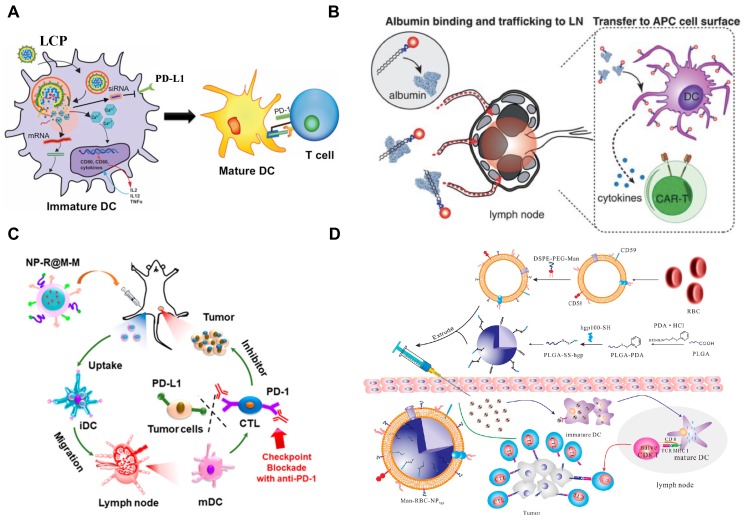
Recent advances in the field of immunotherapy have profoundly opened up the potential for improved cancer therapy and reduced side effects. However, the tumor microenvironment (TME) is highly immunosuppressive, therefore, clinical outcomes of currently available cancer immunotherapy are still poor. Recently, nanomaterial-based strategies have been developed to modulate the TME for robust immunotherapeutic responses. In this review, the immunoregulatory cell types (cells relating to the regulation of immune responses) inside the TME in terms of stimulatory and suppressive roles are described, and the technologies used to identify and quantify these cells are provided. In addition, recent examples of nanomaterial-based cancer immunotherapy are discussed, with particular emphasis on those designed to overcome barriers caused by the complexity and diversity of TME.
近年来,免疫疗法领域的进展极大地开拓了改善癌症治疗和降低副作用的潜力。然而,肿瘤微环境(TME)具有高度免疫抑制性,因此,目前可用的癌症免疫疗法的临床效果仍然不佳。最近,已经开发出基于纳米材料的策略来调节 TME 以产生强大的免疫治疗反应。在这篇综述中,描述了 TME 中具有刺激和抑制作用的免疫调节细胞类型(与免疫反应调节有关的细胞),并提供了用于识别和量化这些细胞的技术。此外,还讨论了基于纳米材料的癌症免疫疗法的最新实例,特别强调了那些旨在克服 TME 的复杂性和多样性所带来的障碍的设计。