Kalra Shivam, Tizhoosh H R, Shah Sultaan, Choi Charles, Damaskinos Savvas, Safarpoor Amir, Shafiei Sobhan, Babaie Morteza, Diamandis Phedias, Campbell Clinton J V, Pantanowitz Liron
Huron Digital Pathology, St. Jacobs, ON Canada.
2Kimia Lab, University of Waterloo, Waterloo, ON Canada.
NPJ Digit Med. 2020 Mar 10;3:31. doi: 10.1038/s41746-020-0238-2. eCollection 2020.
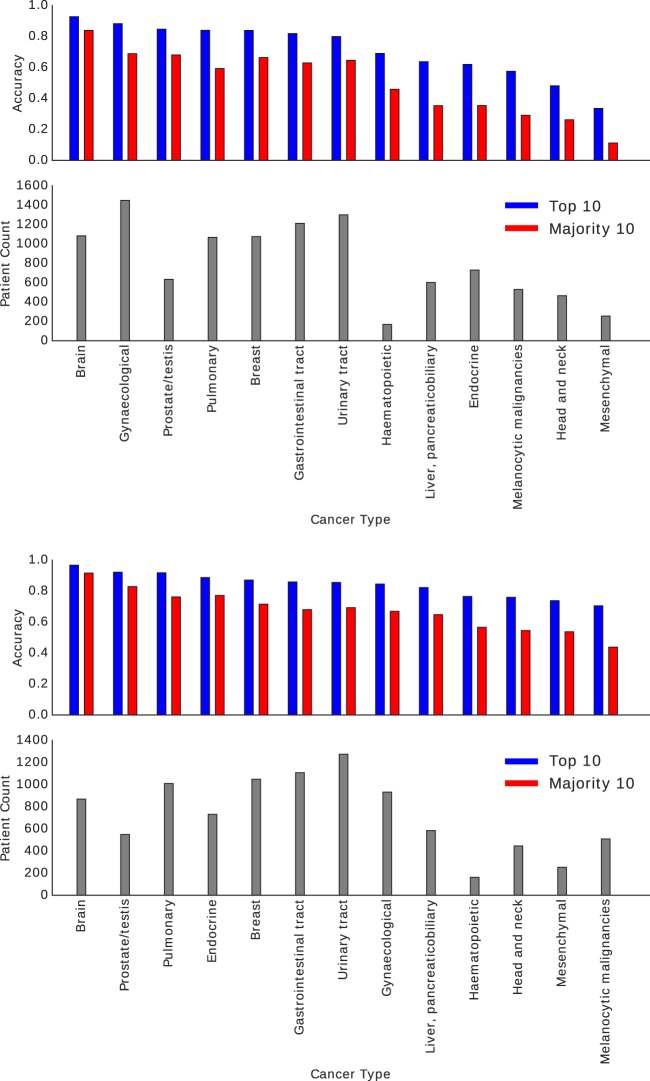
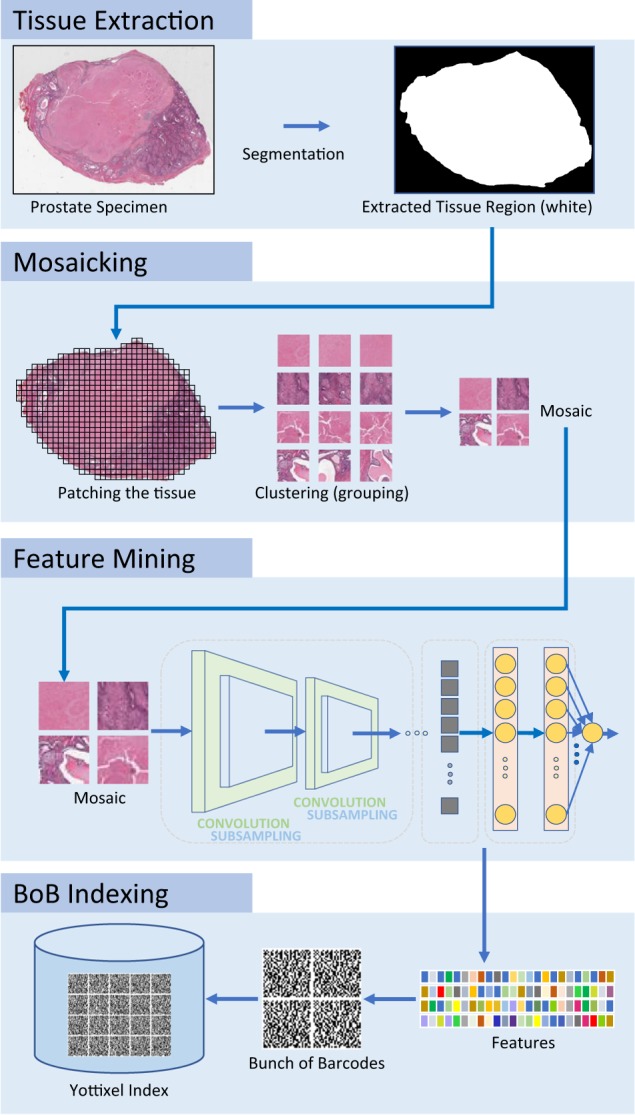
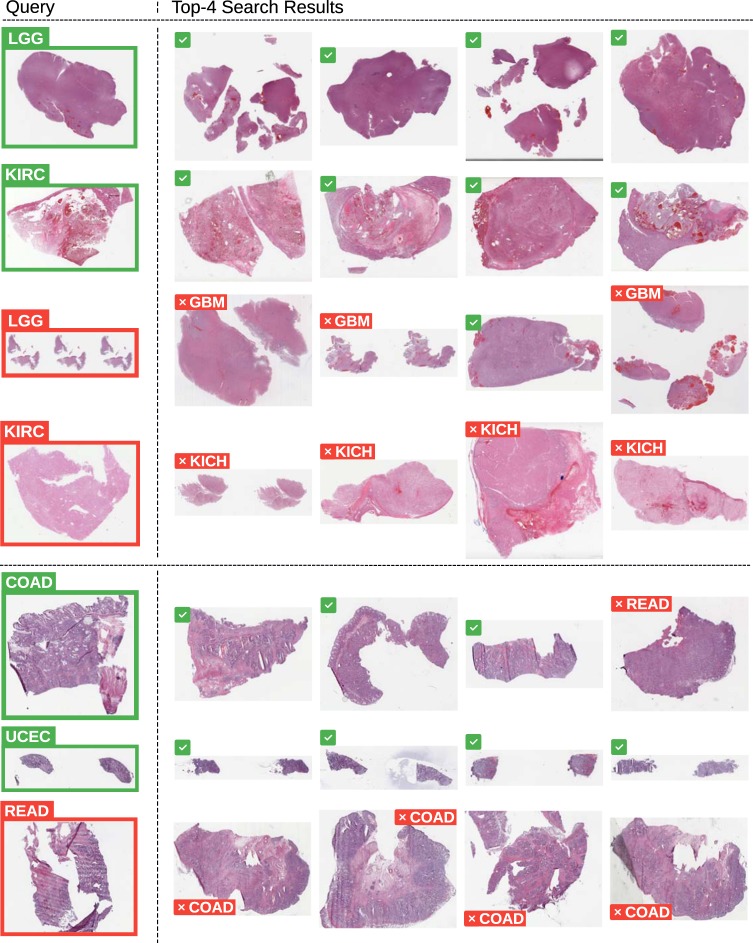
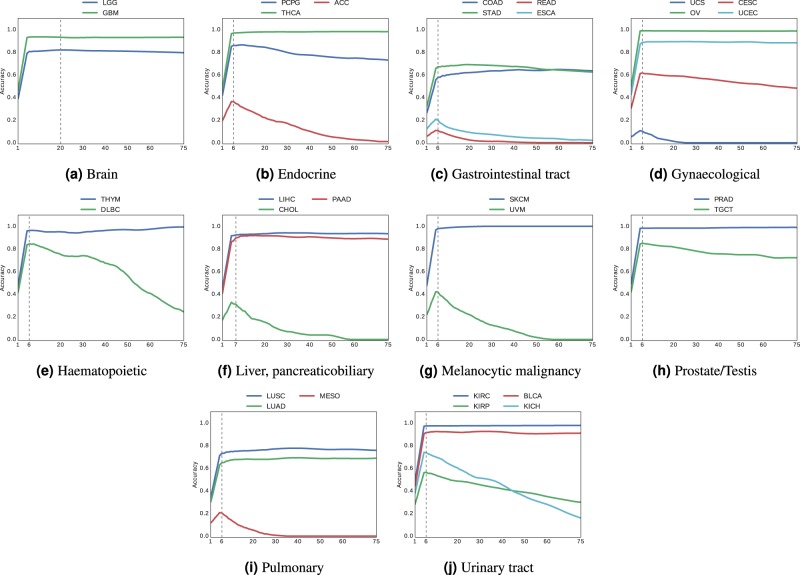
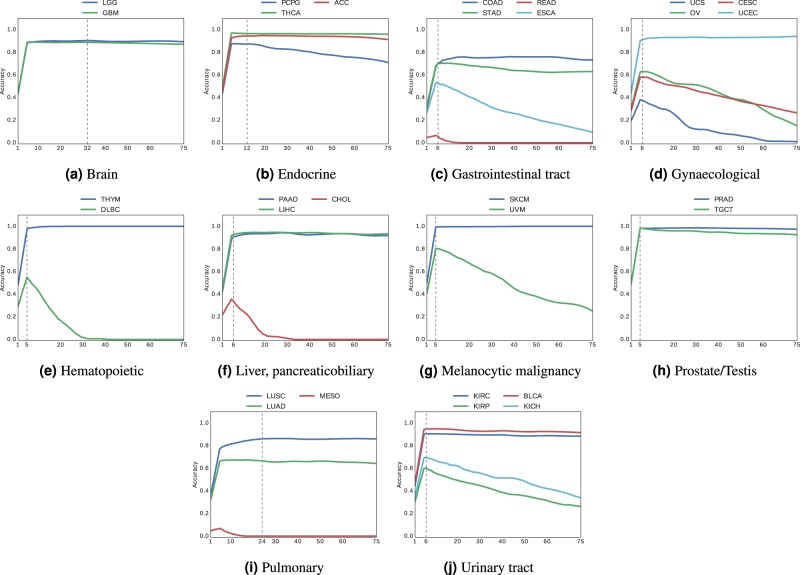
The emergence of digital pathology has opened new horizons for histopathology. Artificial intelligence (AI) algorithms are able to operate on digitized slides to assist pathologists with different tasks. Whereas AI-involving classification and segmentation methods have obvious benefits for image analysis, image search represents a fundamental shift in computational pathology. Matching the pathology of new patients with already diagnosed and curated cases offers pathologists a new approach to improve diagnostic accuracy through visual inspection of similar cases and computational majority vote for consensus building. In this study, we report the results from searching the largest public repository (The Cancer Genome Atlas, TCGA) of whole-slide images from almost 11,000 patients. We successfully indexed and searched almost 30,000 high-resolution digitized slides constituting 16 terabytes of data comprised of 20 million 1000 × 1000 pixels image patches. The TCGA image database covers 25 anatomic sites and contains 32 cancer subtypes. High-performance storage and GPU power were employed for experimentation. The results were assessed with conservative "majority voting" to build consensus for subtype diagnosis through vertical search and demonstrated high accuracy values for both frozen section slides (e.g., bladder urothelial carcinoma 93%, kidney renal clear cell carcinoma 97%, and ovarian serous cystadenocarcinoma 99%) and permanent histopathology slides (e.g., prostate adenocarcinoma 98%, skin cutaneous melanoma 99%, and thymoma 100%). The key finding of this validation study was that computational consensus appears to be possible for rendering diagnoses if a sufficiently large number of searchable cases are available for each cancer subtype.
数字病理学的出现为组织病理学开辟了新的视野。人工智能(AI)算法能够对数字化切片进行操作,以协助病理学家完成不同的任务。虽然涉及AI的分类和分割方法在图像分析方面具有明显优势,但图像搜索代表了计算病理学的一个根本性转变。将新患者的病理学与已诊断和整理的病例进行匹配,为病理学家提供了一种新方法,通过目视检查相似病例并进行计算多数投票以达成共识,从而提高诊断准确性。在本研究中,我们报告了在近11000名患者的全切片图像的最大公共存储库(癌症基因组图谱,TCGA)中进行搜索的结果。我们成功地对近30000张高分辨率数字化切片进行了索引和搜索,这些切片构成了16太字节的数据,由2000万个1000×1000像素的图像块组成。TCGA图像数据库涵盖25个解剖部位,包含32种癌症亚型。实验采用了高性能存储和GPU算力。通过垂直搜索,用保守的“多数投票”对结果进行评估,以达成亚型诊断的共识,结果显示冰冻切片(如膀胱尿路上皮癌93%、肾透明细胞癌97%、卵巢浆液性囊腺癌99%)和永久性组织病理学切片(如前列腺腺癌98%、皮肤黑色素瘤99%、胸腺瘤100%)的诊断准确率都很高。这项验证研究的关键发现是,如果每个癌症亚型有足够数量的可搜索病例,那么通过计算达成诊断共识似乎是可行的。