Nerve Regeneration Group, Porto, Portugal.
i3S- Instituto de Investigação e Inovação em Saúde, Universidade do Porto, Porto, Portugal.
Elife. 2020 Mar 20;9:e55471. doi: 10.7554/eLife.55471.
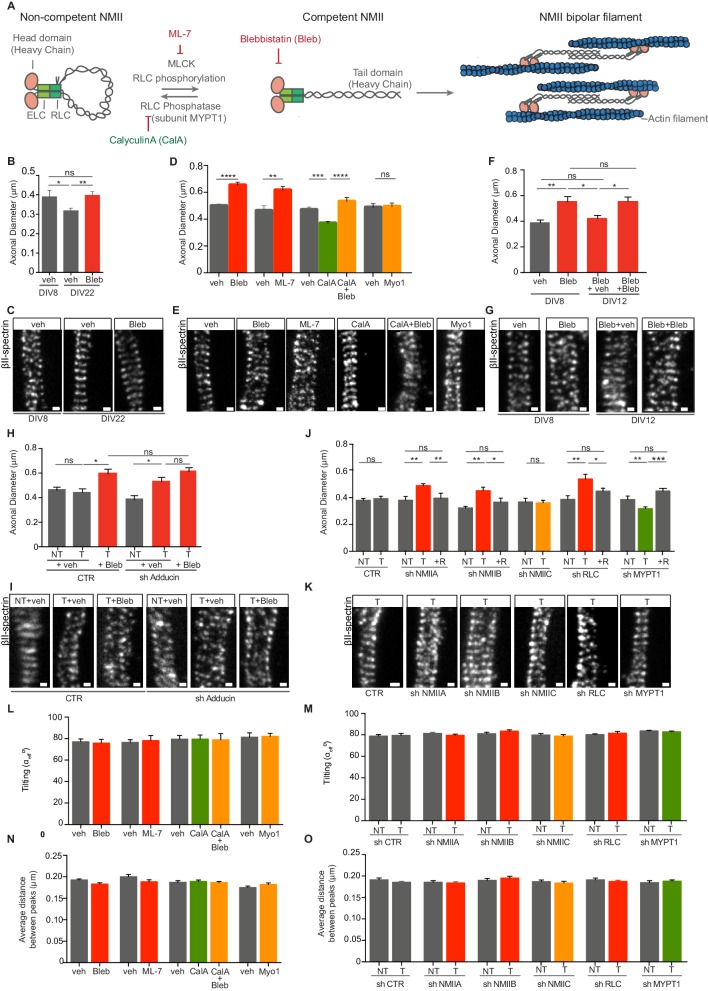
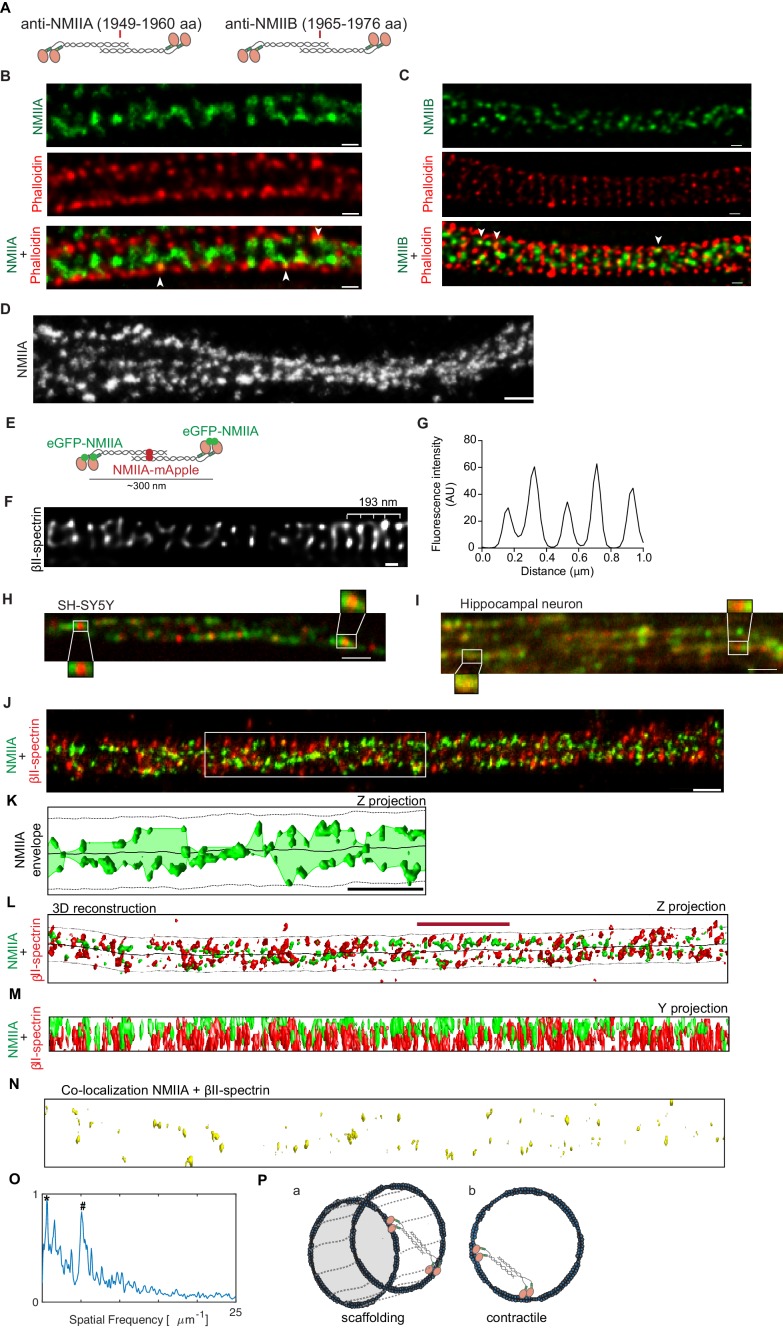
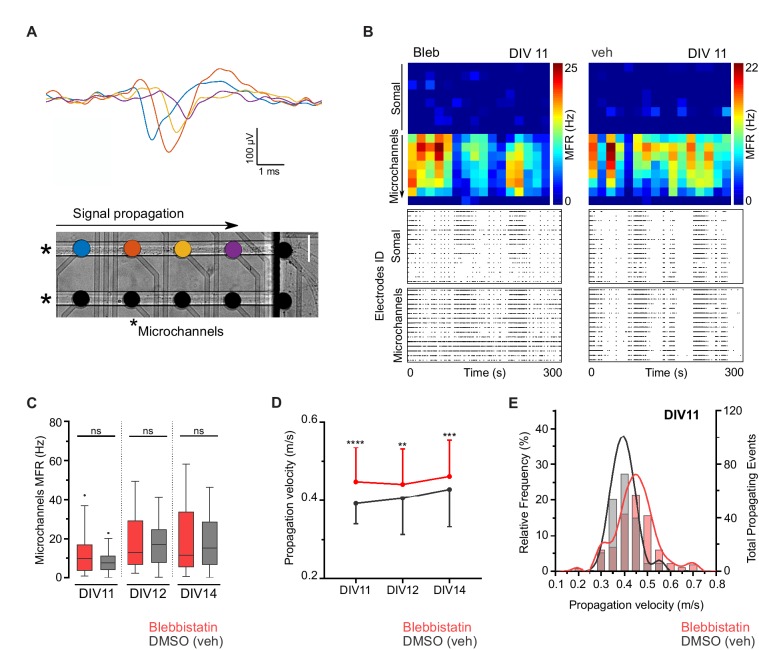
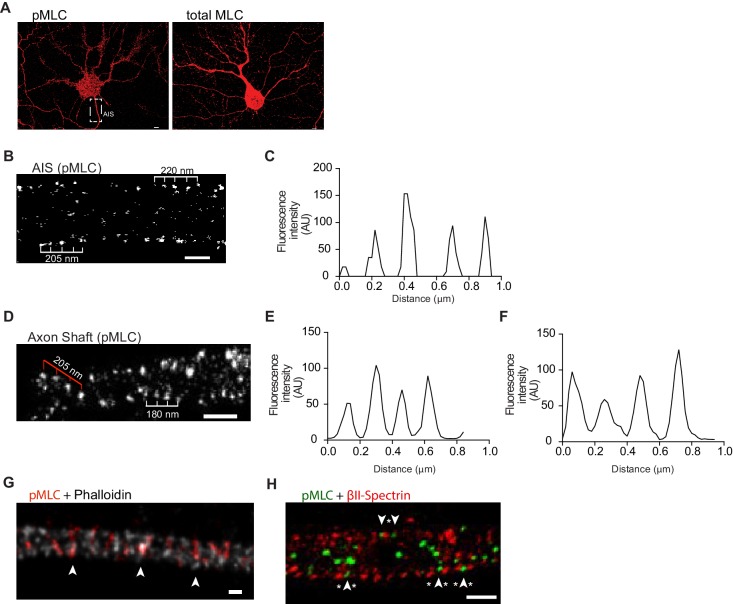
Neurons have a membrane periodic skeleton (MPS) composed of actin rings interconnected by spectrin. Here, combining chemical and genetic gain- and loss-of-function assays, we show that in rat hippocampal neurons the MPS is an actomyosin network that controls axonal expansion and contraction. Using super-resolution microscopy, we analyzed the localization of axonal non-muscle myosin II (NMII). We show that active NMII light chains are colocalized with actin rings and organized in a circular periodic manner throughout the axon shaft. In contrast, NMII heavy chains are mostly positioned along the longitudinal axonal axis, being able to crosslink adjacent rings. NMII filaments can play contractile or scaffolding roles determined by their position relative to actin rings and activation state. We also show that MPS destabilization through NMII inactivation affects axonal electrophysiology, increasing action potential conduction velocity. In summary, our findings open new perspectives on axon diameter regulation, with important implications in neuronal biology.
神经元具有由肌动蛋白环通过血影蛋白相互连接组成的膜周期性骨架(MPS)。在这里,我们通过结合化学和遗传的功能获得和功能丧失实验,表明在大鼠海马神经元中,MPS 是一种肌动球蛋白网络,它控制着轴突的扩张和收缩。我们使用超分辨率显微镜分析了轴突中非肌肉肌球蛋白 II(NMII)的定位。我们发现,活性 NMII 轻链与肌动蛋白环共定位,并在整个轴突干中呈周期性排列。相比之下,NMII 重链主要定位于沿纵向轴突的轴,能够交联相邻的环。NMII 纤维可以发挥收缩或支架作用,具体取决于它们相对于肌动蛋白环的位置和激活状态。我们还表明,通过 NMII 失活导致 MPS 不稳定会影响轴突的电生理学,增加动作电位传导速度。总之,我们的发现为轴突直径调节开辟了新的视角,对神经元生物学具有重要意义。