Avramović Nataša, Mandić Boris, Savić-Radojević Ana, Simić Tatjana
Institute of Medical Chemistry, Faculty of Medicine, University of Belgrade, 11000 Belgrade, Serbia.
Faculty of Chemistry, University of Belgrade, Studentski trg 12-16, 11000 Belgrade, Serbia.
Pharmaceutics. 2020 Mar 25;12(4):298. doi: 10.3390/pharmaceutics12040298.
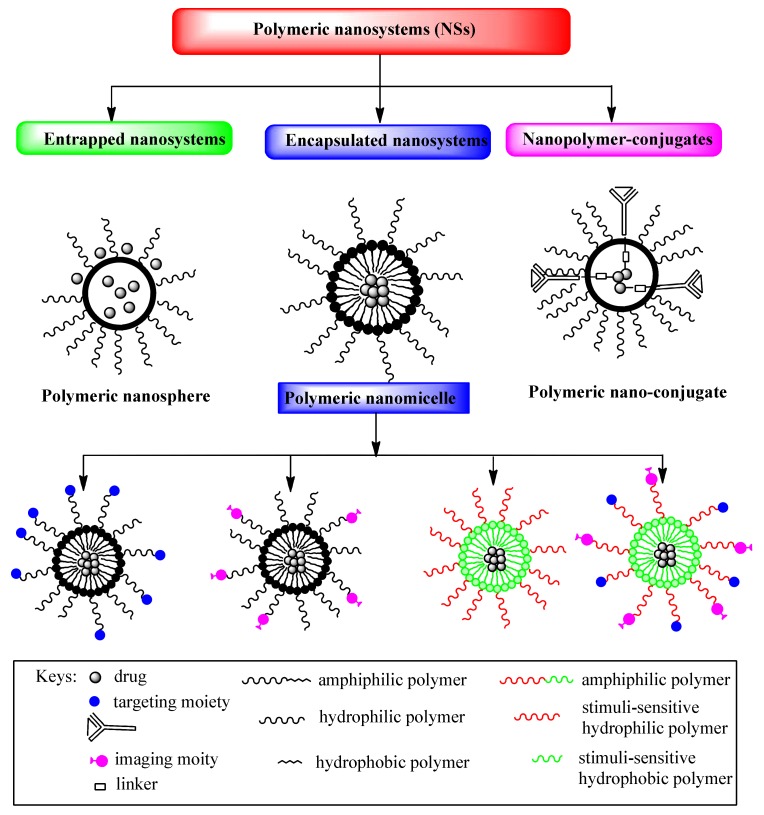
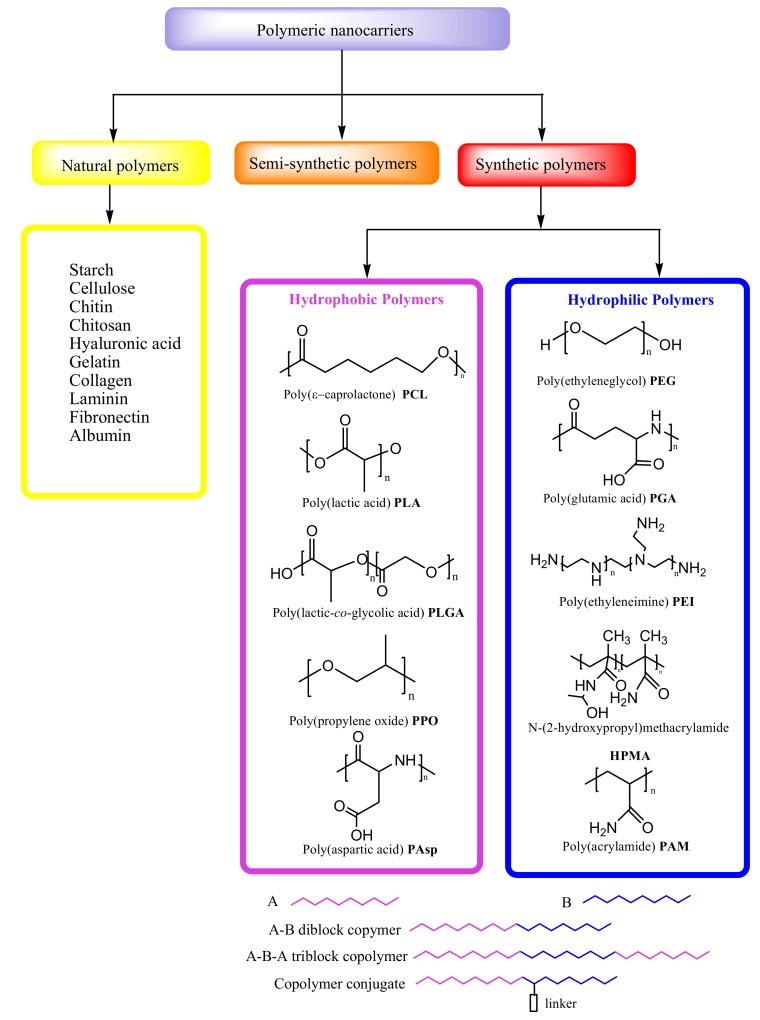
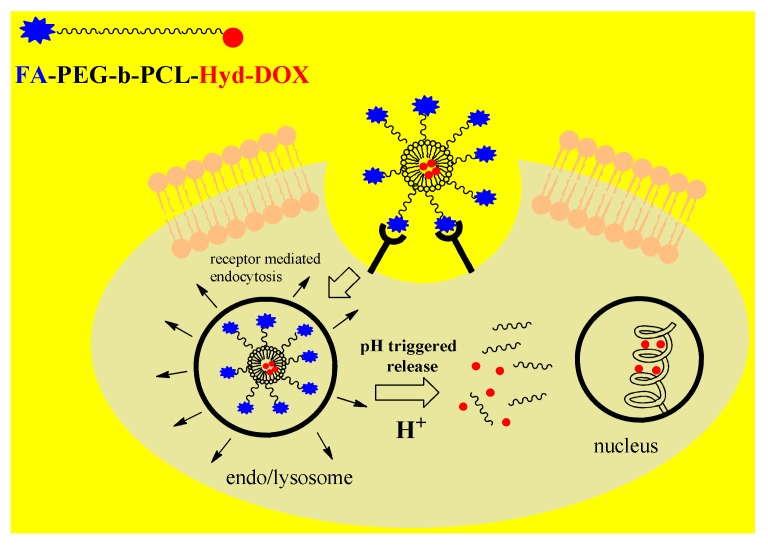
Conventional chemotherapy is the most common therapeutic method for treating cancer by the application of small toxic molecules thatinteract with DNA and causecell death. Unfortunately, these chemotherapeutic agents are non-selective and can damage both cancer and healthy tissues,producing diverse side effects, andthey can have a short circulation half-life and limited targeting. Many synthetic polymers have found application as nanocarriers of intelligent drug delivery systems (DDSs). Their unique physicochemical properties allow them to carry drugs with high efficiency,specificallytarget cancer tissue and control drug release. In recent years, considerable efforts have been made to design smart nanoplatforms, including amphiphilic block copolymers, polymer-drug conjugates and in particular pH- and redox-stimuli-responsive nanoparticles (NPs). This review is focused on a new generation of polymer-based DDSs with specific chemical functionalities that improve their hydrophilicity, drug loading and cellular interactions.Recentlydesigned multifunctional DDSs used in cancer therapy are highlighted in this review.
传统化疗是通过应用与DNA相互作用并导致细胞死亡的小分子毒性药物来治疗癌症的最常见治疗方法。不幸的是,这些化疗药物是非选择性的,会对癌症组织和健康组织都造成损害,产生各种副作用,并且它们的循环半衰期较短且靶向性有限。许多合成聚合物已被用作智能药物递送系统(DDS)的纳米载体。它们独特的物理化学性质使它们能够高效携带药物,特异性靶向癌症组织并控制药物释放。近年来,人们在设计智能纳米平台方面付出了巨大努力,包括两亲性嵌段共聚物、聚合物-药物缀合物,特别是对pH和氧化还原刺激响应的纳米颗粒(NP)。本综述聚焦于具有特定化学功能的新一代基于聚合物的DDS,这些功能可改善其亲水性、药物负载和细胞相互作用。本综述重点介绍了最近设计的用于癌症治疗的多功能DDS。