Jilin University School of Public Health, Department of Epidemiology and Biostatistics, Key Laboratory of Zoonosis Research, Ministry of Education, Changchun 130000, China.
Jilin Provincial Center for Disease Control and Prevention, Microbiological laboratory, Changchun 130000, China.
Int J Environ Res Public Health. 2020 Mar 31;17(7):2382. doi: 10.3390/ijerph17072382.
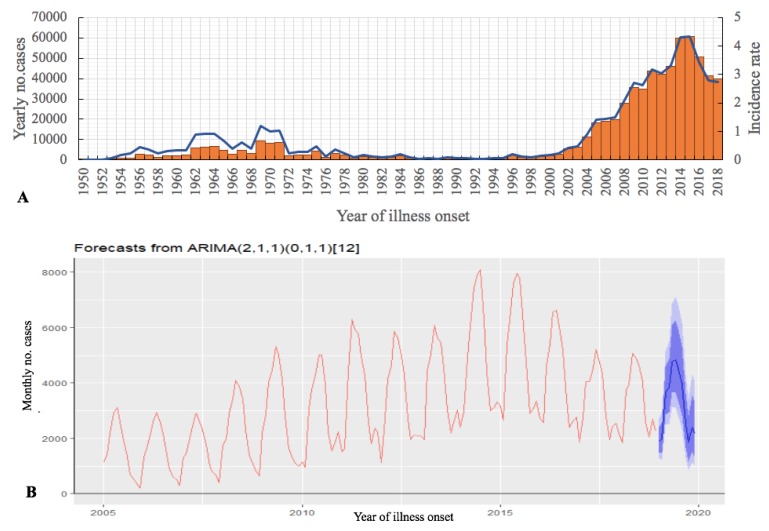
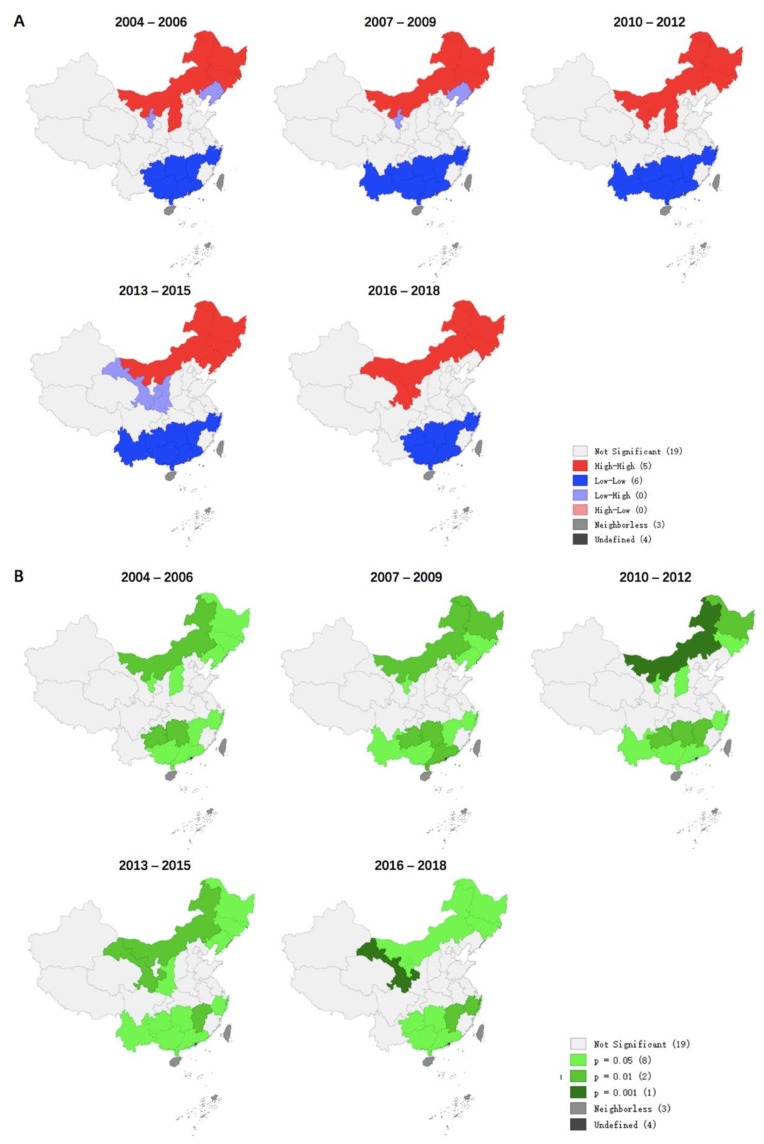
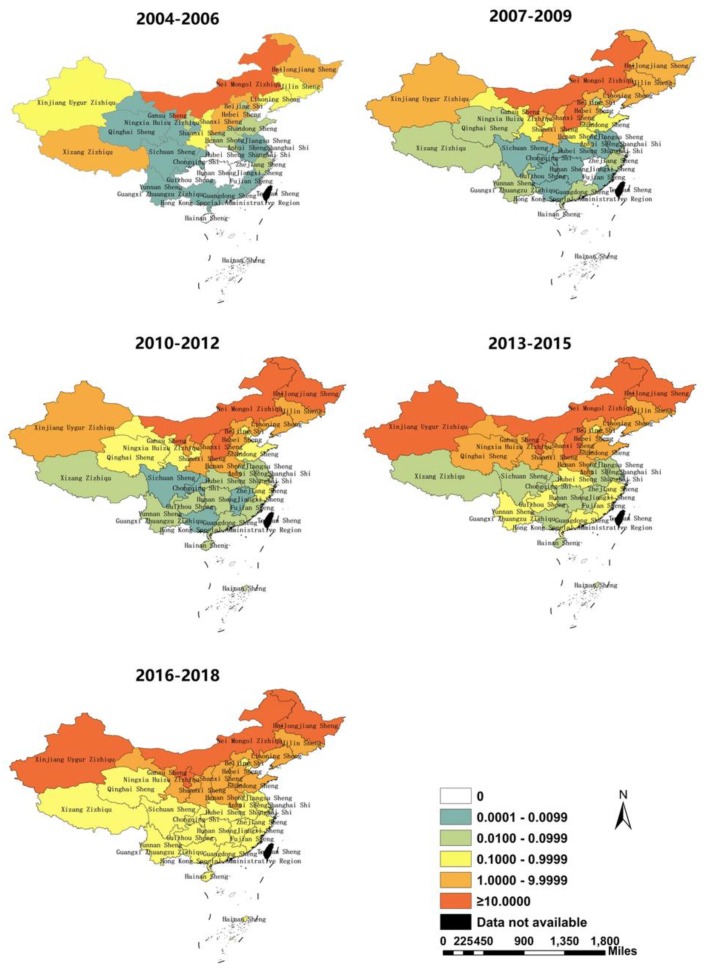
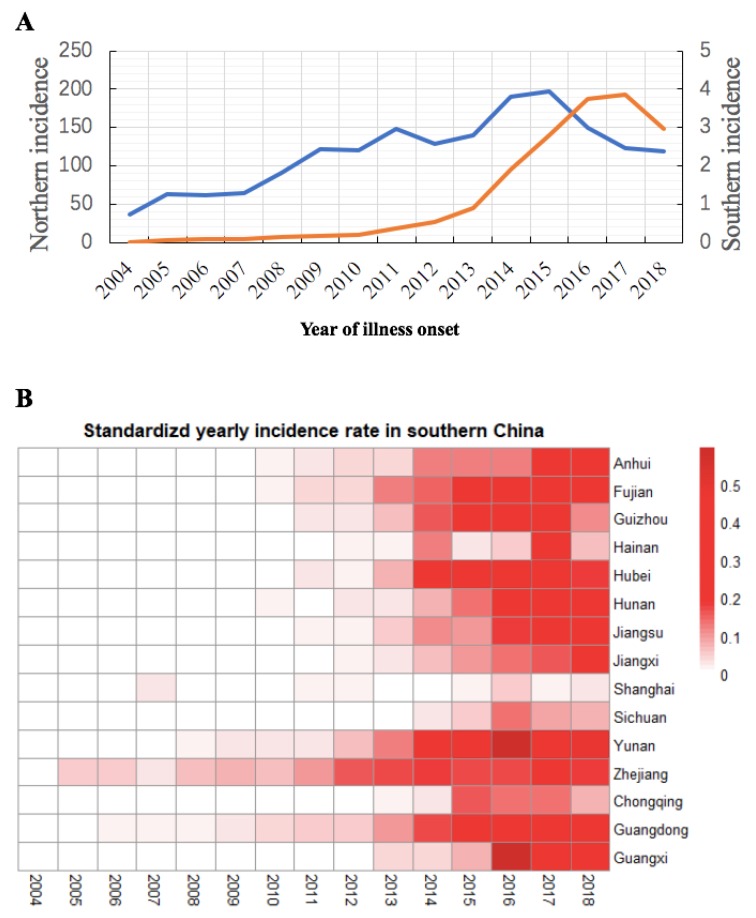
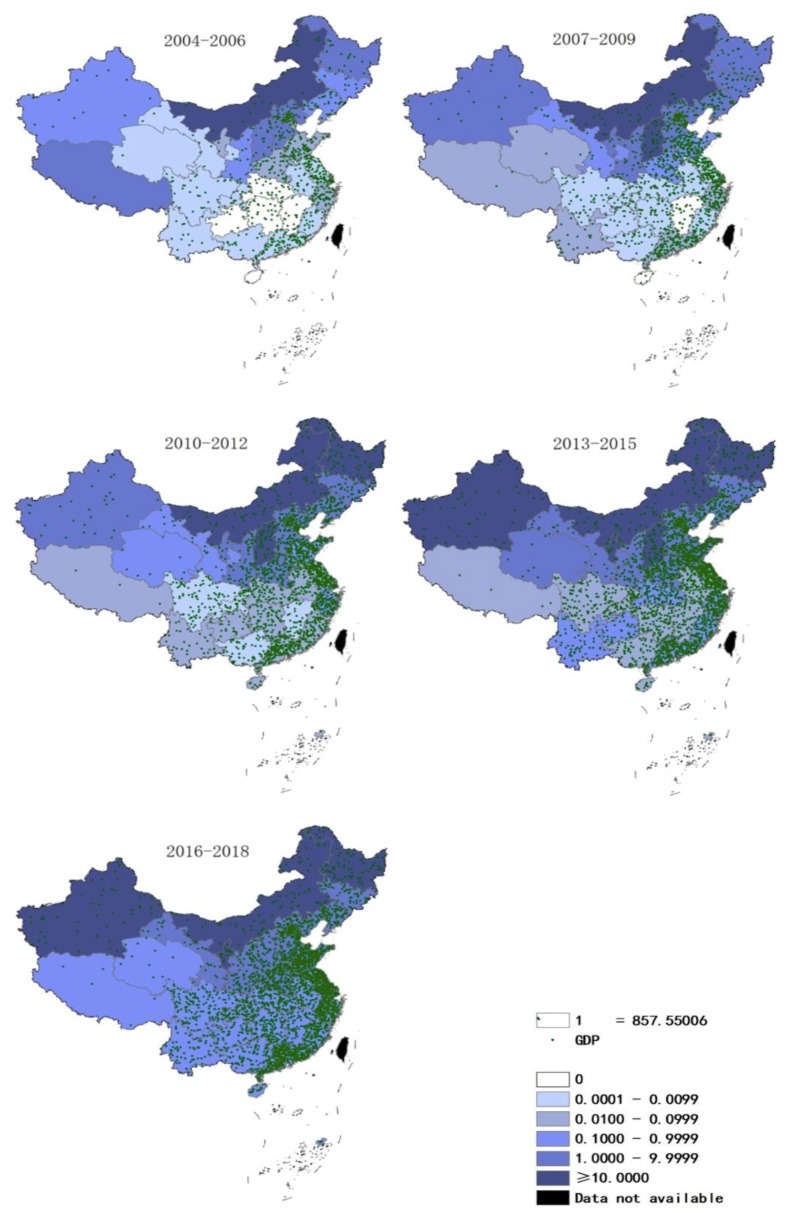
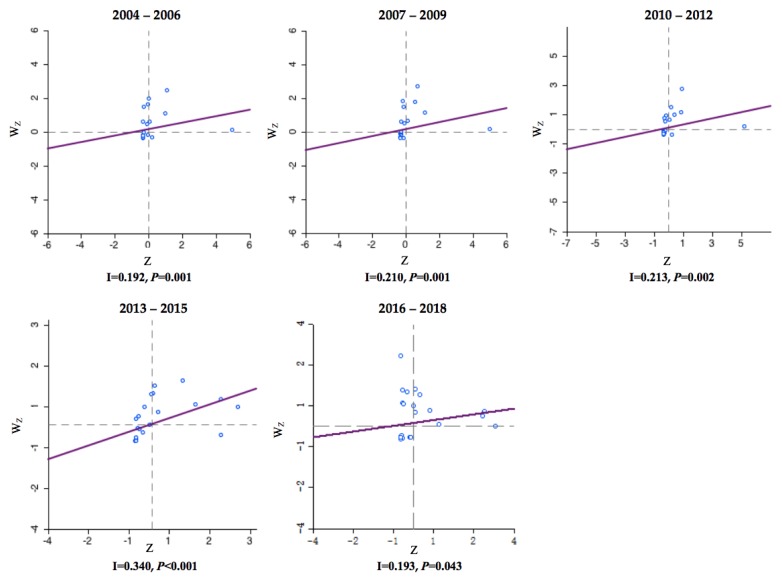
The rate of brucellosis, a zoonotic disease, has rapidly increased in humans brucellosis(HB) in recent years. In 1950-2018, a total of 684,380 HB cases (median 2274/year (interquartile range (IQR) 966-8325)) were reported to the National Infectious Disease Surveillance System in mainland China. The incidence of HB peaked in 2014 (4.32/100,000), and then showed a downward trend; we predict that it will maintain a steady downward trend in 2019-2020. Since 2015, the incidence of HB has shown opposite trends in the north and south of China; rates in the north have fallen and rates in the south have increased. In 2004-2018, the most significant increases in incidence of HB were in Yunnan (IQR 0.002-0.463/100,000), Hubei (IQR 0.000-0.338/100,000), and Guangdong (IQR 0.015-0.350/100,000). The areas where HB occurs have little overlap with areas with high per capita GDP in China. The "high-high" clusters of HB are located in northeastern China (Inner Mongolia, Heilongjiang, Jilin, Liaoning, Ningxia, Shanxi, and Gansu), and the "low-low" clusters of HB are located in southern China (Yunnan, Jiangxi, Shanghai, Guangxi, Guangdong, Zhejiang, Guizhou, and Hunan). In recent years, the incidence of HB in China has been controlled to some extent, but the incidence of HB has increased in southern China, and the disease has spread geographically in China from north to south. Further research is needed to address this change and to continue to explore the relationship between the incidence of HB and relevant factors.
近年来,一种人畜共患疾病——布鲁氏菌病(简称布病)在人类中的发病率迅速上升。1950-2018 年,中国大陆国家传染病监测系统共报告 684380 例布病病例(中位数 2274/年(四分位距(IQR)966-8325))。布病发病率在 2014 年达到峰值(4.32/10 万),随后呈下降趋势;我们预测 2019-2020 年将保持稳定下降趋势。自 2015 年以来,中国南北地区布病的发病率呈相反趋势;北方地区发病率下降,南方地区发病率上升。2004-2018 年,布病发病率上升最显著的省份为云南(IQR 0.002-0.463/10 万)、湖北(IQR 0.000-0.338/10 万)和广东(IQR 0.015-0.350/10 万)。布病发生地区与中国人均 GDP 较高的地区几乎没有重叠。布病的“高高”聚集区位于中国东北地区(内蒙古、黑龙江、吉林、辽宁、宁夏、山西和甘肃),“低低”聚集区位于中国南方(云南、江西、上海、广西、广东、浙江、贵州和湖南)。近年来,中国布病的发病率得到了一定程度的控制,但南方地区布病的发病率有所上升,布病在中国的地理分布已从北向南扩展。需要进一步研究以应对这一变化,并继续探讨布病发病率与相关因素之间的关系。