Department of Radiology, Mayo Clinic College of Medicine and Science, Mayo Clinic, Rochester, MN, USA.
Beckman Institute, University of Illinois at Urbana-Champaign, Urbana, IL, USA.
Sci Rep. 2020 Apr 7;10(1):6007. doi: 10.1038/s41598-020-62898-9.
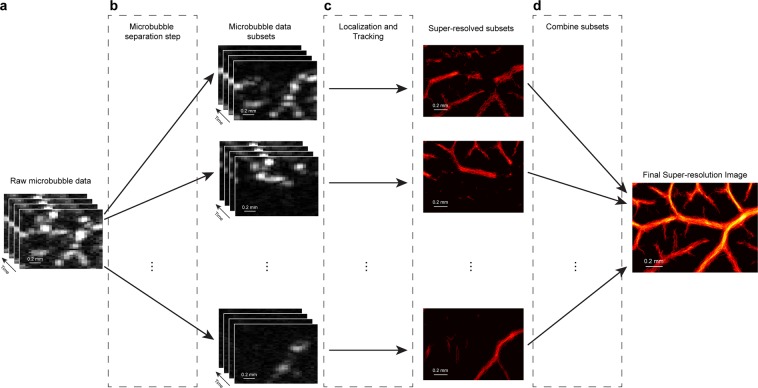
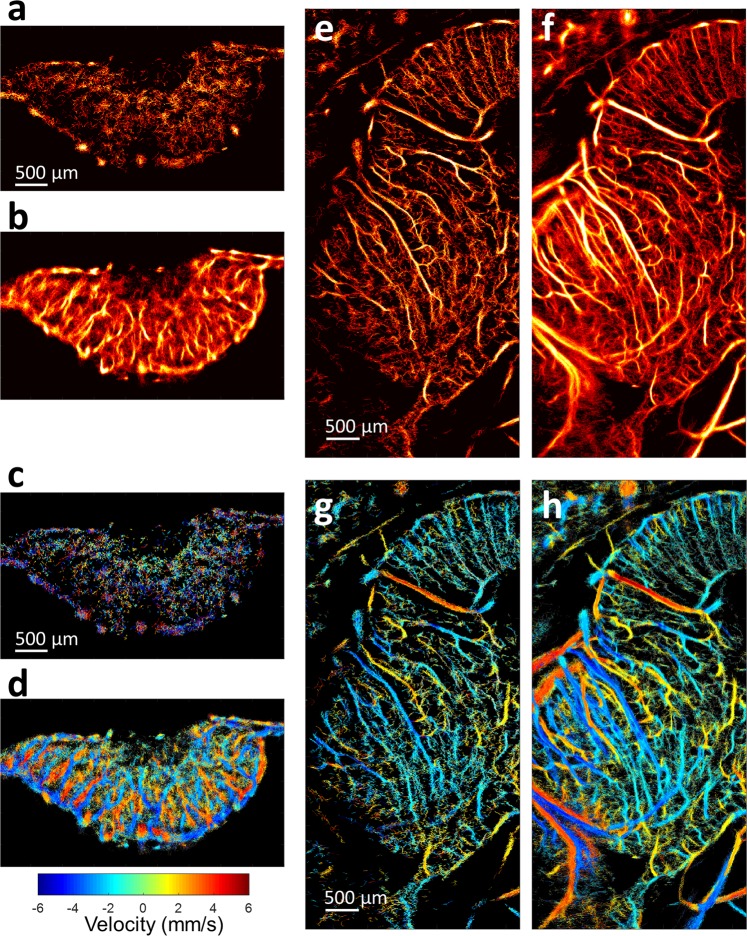
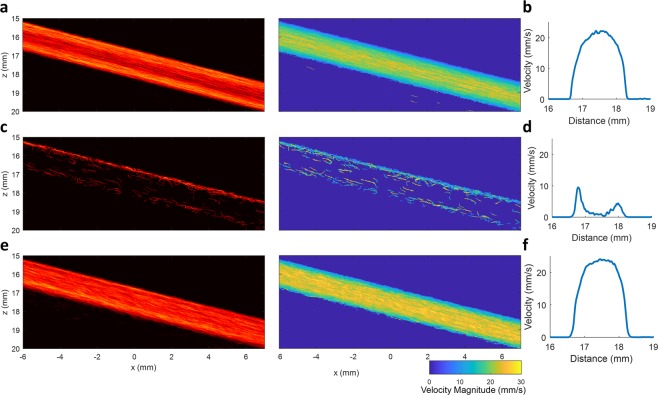
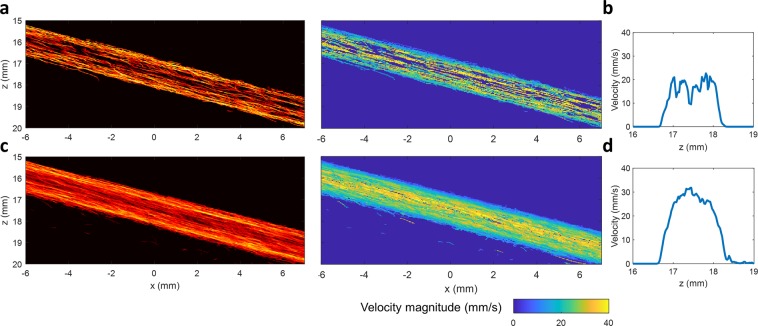
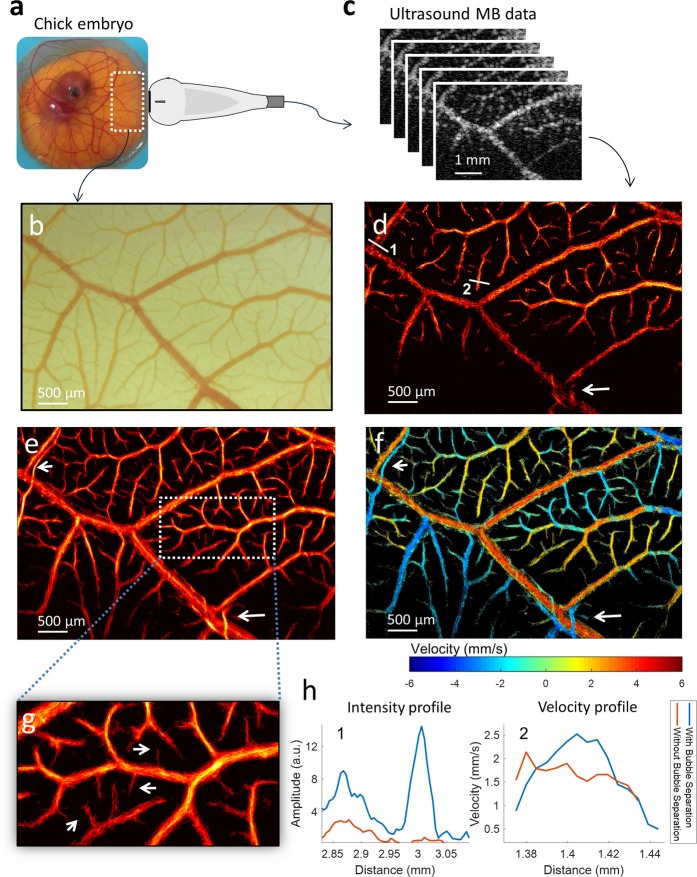
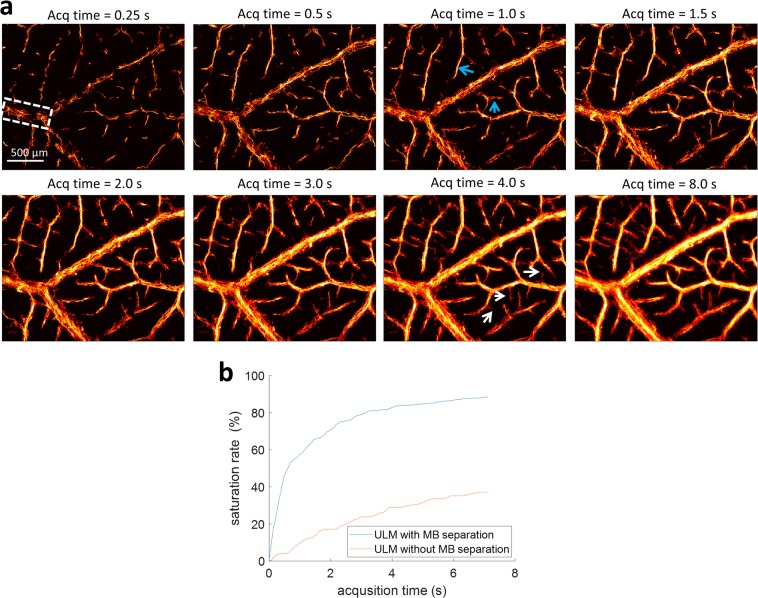
Super-resolution ultrasound localization microscopy (ULM), based on localization and tracking of individual microbubbles (MBs), offers unprecedented microvascular imaging resolution at clinically relevant penetration depths. However, ULM is currently limited by the requirement of dilute MB concentrations to ensure spatially sparse MB events for accurate localization and tracking. The corresponding long imaging acquisition times (tens of seconds or several minutes) to accumulate sufficient isolated MB events for full reconstruction of microvasculature preclude the clinical translation of the technique. To break this fundamental tradeoff between acquisition time and MB concentration, in this paper we propose to separate spatially overlapping MB events into sub-populations, each with sparser MB concentration, based on spatiotemporal differences in the flow dynamics (flow speeds and directions). MB localization and tracking are performed for each sub-population separately, permitting more robust ULM imaging of high-concentration MB injections. The superiority of the proposed MB separation technique over conventional ULM processing is demonstrated in flow channel phantom data, and in the chorioallantoic membrane of chicken embryos with optical imaging as an in vivo reference standard. Substantial improvement of ULM is further demonstrated on a chicken embryo tumor xenograft model and a chicken brain, showing both morphological and functional microvasculature details at super-resolution within a short acquisition time (several seconds). The proposed technique allows more robust MB localization and tracking at relatively high MB concentrations, alleviating the need for dilute MB injections, and thereby shortening the acquisition time of ULM imaging and showing great potential for clinical translation.
基于单个微泡(MB)定位和跟踪的超分辨率超声定位显微镜(ULM),在临床相关穿透深度下提供了前所未有的微血管成像分辨率。然而,ULM 目前受到需要稀释 MB 浓度的限制,以确保空间稀疏的 MB 事件用于准确的定位和跟踪。相应的长成像采集时间(数十秒或数分钟)来积累足够的孤立 MB 事件以完全重建微血管,排除了该技术的临床转化。为了打破采集时间和 MB 浓度之间的这种基本权衡,在本文中,我们提出了一种基于流动力学(流速和方向)的时空差异,将空间重叠的 MB 事件分离成具有更稀疏 MB 浓度的亚群。对每个亚群分别进行 MB 定位和跟踪,允许对高浓度 MB 注射进行更稳健的 ULM 成像。所提出的 MB 分离技术在流动通道幻影数据和鸡胚的脉络丛膜中表现出优于传统 ULM 处理的优越性,作为体内参考标准的光学成像。在鸡胚肿瘤异种移植模型和鸡脑中进一步证明了 ULM 的显著改进,在短采集时间(几秒钟)内以超分辨率显示了形态和功能微血管细节。该技术允许在相对较高的 MB 浓度下进行更稳健的 MB 定位和跟踪,减轻了对稀释 MB 注射的需求,从而缩短了 ULM 成像的采集时间,并显示出临床转化的巨大潜力。