Institut Langevin, CNRS, INSERM, ESPCI Paris, PSL Research University, 17 rue Moreau, 75012, Paris, France.
Sci Rep. 2019 Feb 21;9(1):2456. doi: 10.1038/s41598-018-38349-x.
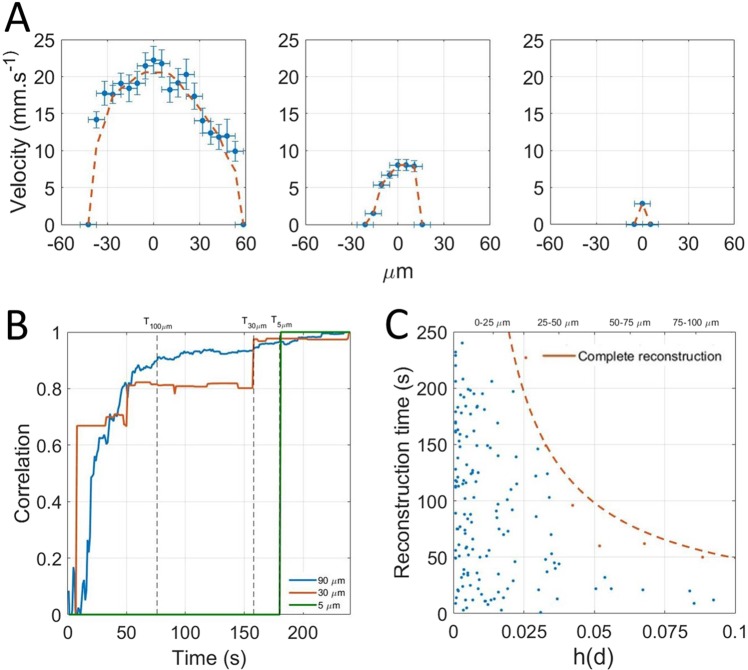
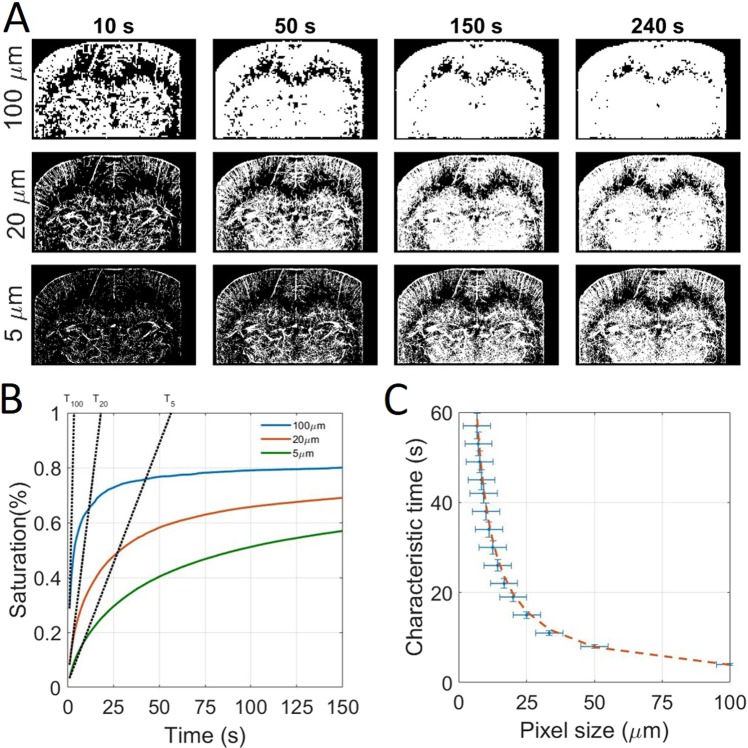
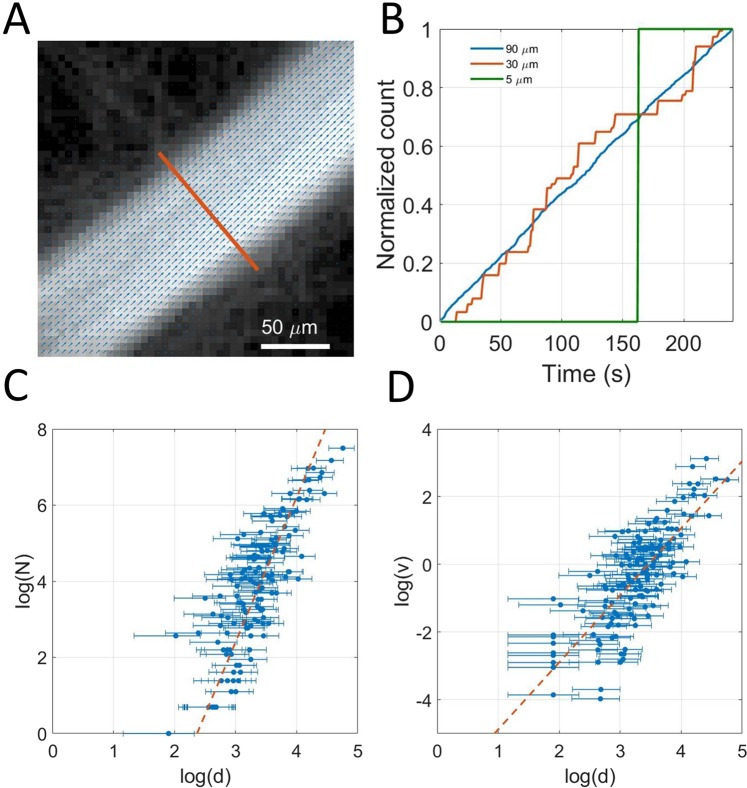
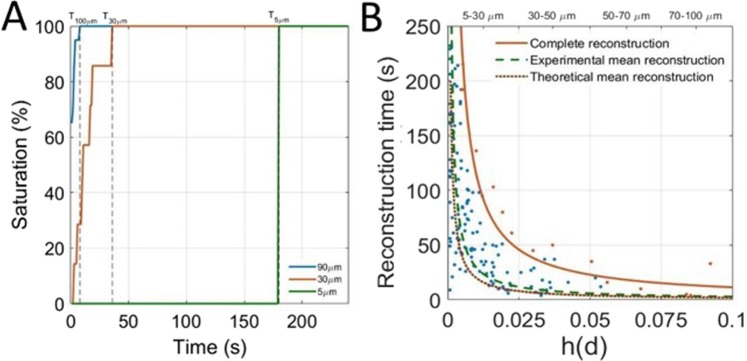
Medical ultrasound is a widely used diagnostic imaging technique for tissues and blood vessels. However, its spatial resolution is limited to a sub-millimeter scale. Ultrasound Localization Microscopy was recently introduced to overcome this limit and relies on subwavelength localization and tracking of microbubbles injected in the blood circulation. Yet, as microbubbles follow blood flow, long acquisition time are required to detect them in the smallest vessels, leading to long reconstruction of the microvasculature. The objective of this work is to understand how blood flow limits acquisition time. We studied the reconstruction of a coronal slice of a rat's brain during a continuous microbubble injection close to clinical concentrations. After acquiring 192000 frames over 4 minutes, we find that the biggest vessels can be reconstructed in seconds but that it would take tens of minutes to map the entire capillary network. Moreover, the appropriate characterization of flow profiles based on microbubble velocity within vessels is bound by even more stringent temporal limitations. As we use simple blood flow models to characterize its impact on reconstruction time, we foresee that these results and methods can be adapted to determine adequate microbubble injections and acquisition times in clinical and preclinical practice.
医学超声是一种广泛应用于组织和血管的诊断成像技术。然而,其空间分辨率限于亚毫米级。最近引入了超声定位显微镜来克服这个限制,它依赖于亚波长的微泡在血液循环中的定位和跟踪。然而,由于微泡跟随血流,需要长时间的采集才能在最小的血管中检测到微泡,从而导致微血管的重建时间很长。这项工作的目的是了解血流如何限制采集时间。我们研究了在接近临床浓度的连续微泡注射过程中对大鼠大脑冠状切片的重建。在 4 分钟内采集了 192000 帧后,我们发现最大的血管可以在几秒钟内重建,但要绘制整个毛细血管网络则需要数十分钟。此外,基于血管内微泡速度对血流剖面的适当特征描述受到更严格的时间限制。由于我们使用简单的血流模型来描述其对重建时间的影响,我们预计这些结果和方法可以适应于临床和临床前实践中确定适当的微泡注射和采集时间。