University of Malta, Department of Health Services Management, Faculty of Health Science, Malta.
Politecnico di Milano, Department Architecture Built environment Construction engineering (ABC), Italy.
Acta Biomed. 2020 Apr 10;91(3-S):9-20. doi: 10.23750/abm.v91i3-S.9414.
Important public health improvements have been achieved over the past decades, but new challenges are emerging and progress cannot be taken for granted. Urban settlements host most of the global population, but they are also sources of several threats. The aim of the paper is to investigate the role of architects and planners in contributing to overcome these critical health challenges and propose strategic actions for collaboration with the public health workforce.
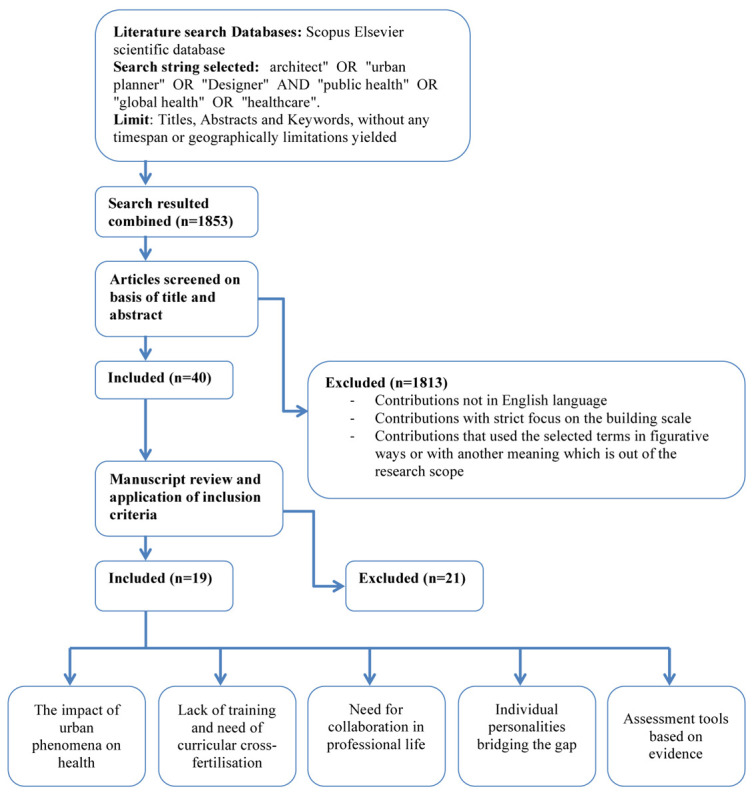
Taking global trends and public health challenges as starting point, a scoping literature review has been conducted to illustrate the possible synergies that architecture and public health workforce should exploit to support population health improvement and tackle key public health challenges.
The built environment affects climate change and public health through the use of resources, site location, and green spaces. In architecture curricula, limited space is devoted to health and vice versa. There is an urgent need for recognition of the benefits of collaboration and cross-fertilisation between public health and planning workforce from local to global levels.
Public health is evolving from a bio-medical to a socio-anthropological approach and architects/planners have fundamental roles; further collaboration, research and training are needed.
在过去几十年中,已经取得了重要的公共卫生改善,但新的挑战正在出现,进展不能被视为理所当然。城市住区容纳了全球大部分人口,但它们也是多种威胁的源头。本文的目的是探讨建筑师和规划师在应对这些关键健康挑战方面的作用,并提出与公共卫生工作者合作的战略行动。
本文以全球趋势和公共卫生挑战为起点,进行了范围广泛的文献综述,以说明建筑和公共卫生工作者应利用哪些协同作用来支持人口健康改善和应对主要公共卫生挑战。
建筑环境通过资源利用、场地位置和绿地影响气候变化和公共卫生。在建筑课程中,很少有空间用于健康问题,反之亦然。从地方到全球各级,都迫切需要认识到公共卫生和规划工作者之间合作和交叉授粉的好处。
公共卫生正在从生物医学方法向社会人类学方法发展,建筑师/规划师发挥着重要作用;需要进一步的合作、研究和培训。