Department of Basic Research, Talengen Institute of Life Sciences, Shenzhen, P.R. China.
Department of Respiratory Medicine, Beijing Chang'an Chinese and Western Integrated Medicine Hospital, Beijing, P.R. China.
QJM. 2020 Aug 1;113(8):539-545. doi: 10.1093/qjmed/hcaa121.
Lungs from patients with coronavirus disease 2019 (COVID-19) have shown typical signs of acute respiratory distress syndrome (ARDS), formation of hyaline membrane mainly composed of fibrin and 'ground-glass' opacity. Previously, we showed plasminogen itself is a key regulator in fibrin degradation, wound healing and infection.
We aimed to investigate whether plasminogen can improve lung lesions and hypoxemia of COVID-19.
Thirteen clinically moderate, severe or critical COVID-19 patients were treated with atomization inhalation of freeze-dried plasminogen.
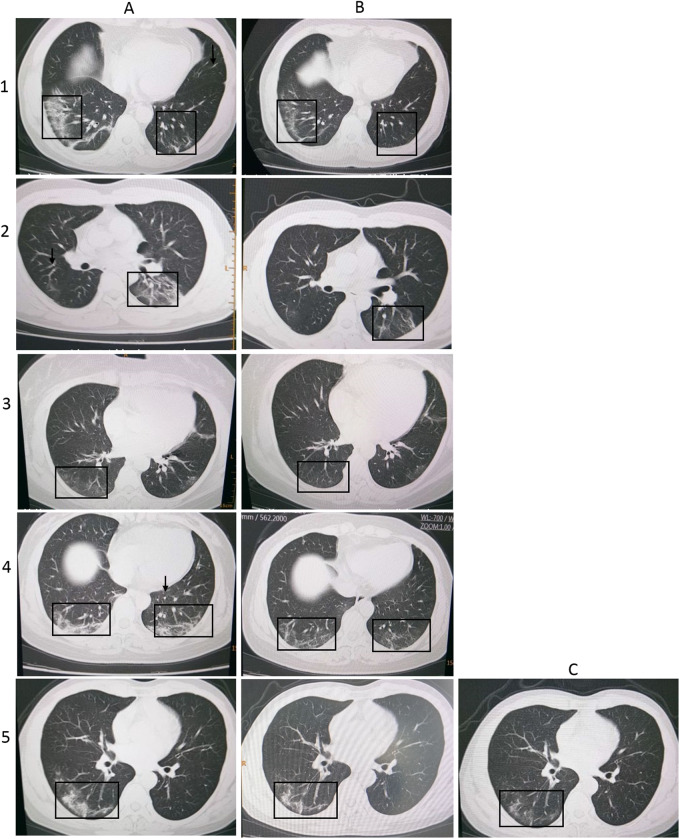
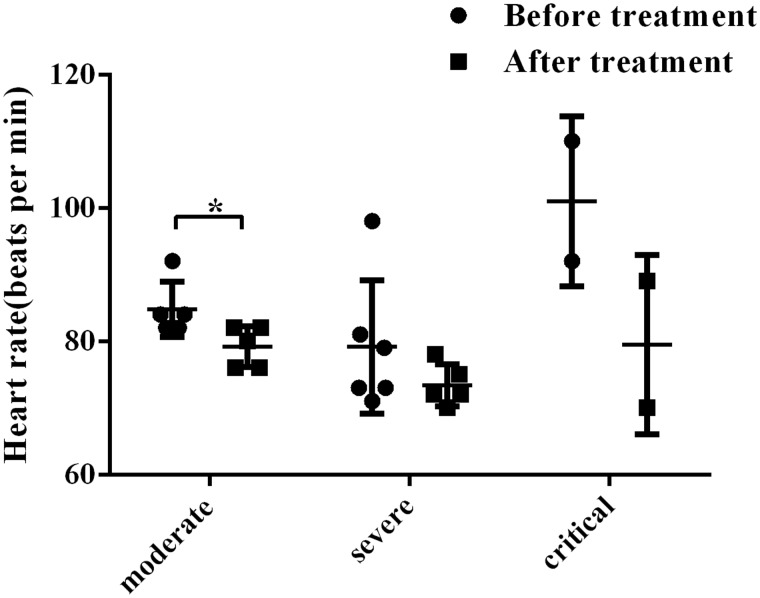
Levels of their lung lesions, oxygen saturation and heart rates were compared before and after treatment by computed tomography scanning images and patient monitor.
After plasminogen inhalation, conditions of lung lesions in five clinically moderate patients have quickly improved, shown as the decreased range and density of 'ground glass' opacity. Improvements of oxygen saturation were observed in six clinically severe patients. In the two patients with critical conditions, the oxygen levels have significantly increased from 79-82% to 91% just about 1 h after the first inhalation. In 8 of 13 patients, the heart rates had slowed down. For the five clinically moderate patients, the difference is even statistically significant. Furthermore, a general relief of chest tightness was observed.
Whereas it is reported that plasminogen is dramatically increased in adults with ARDS, this study suggests that additional plasminogen may be effective and efficient in treating lung lesions and hypoxemia during COVID-19 infections. Although further studies are needed, this study highlights a possible hope of efficiently combating this rapid epidemic emergency.
新冠肺炎(COVID-19)患者的肺部表现出典型的急性呼吸窘迫综合征(ARDS)迹象,主要由纤维蛋白和“磨玻璃”样混浊组成透明膜的形成。先前,我们发现纤溶酶原本身是纤维蛋白降解、伤口愈合和感染的关键调节因子。
我们旨在研究纤溶酶原是否可以改善 COVID-19 患者的肺部病变和低氧血症。
对 13 名临床中度、重度或危重新冠肺炎患者进行冷冻干燥纤溶酶原雾化吸入治疗。
通过计算机断层扫描图像和患者监护仪比较治疗前后患者的肺部病变程度、氧饱和度和心率。
纤溶酶原吸入后,5 名临床中度患者的肺部病变情况迅速改善,表现为“磨玻璃”样混浊的范围和密度降低。6 名临床重度患者的氧饱和度有所改善。在 2 名危重症患者中,氧水平从 79-82%显著升高至 91%,仅在首次吸入后约 1 小时。在 13 例患者中的 8 例中,心率减慢。对于 5 名临床中度患者,差异具有统计学意义。此外,观察到胸闷症状普遍缓解。
虽然据报道,ARDS 成人中纤溶酶原显著增加,但本研究表明,在 COVID-19 感染期间,额外添加纤溶酶原可能对治疗肺部病变和低氧血症有效且高效。虽然还需要进一步研究,但本研究强调了有效应对这一快速流行紧急情况的可能希望。