ICTEAM institute, Université Catholique de Louvain, Louvain-la-Neuve, Belgium.
IONS institute, Université Catholique de Louvain, Brussels, Belgium.
PLoS One. 2020 Apr 23;15(4):e0231698. doi: 10.1371/journal.pone.0231698. eCollection 2020.
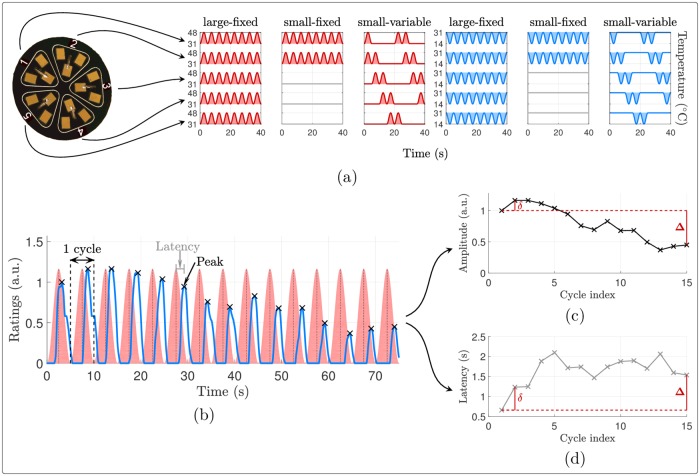
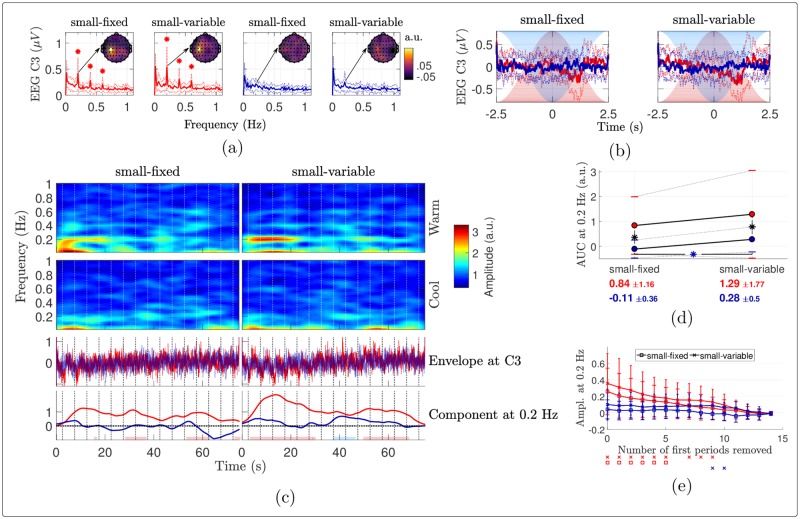
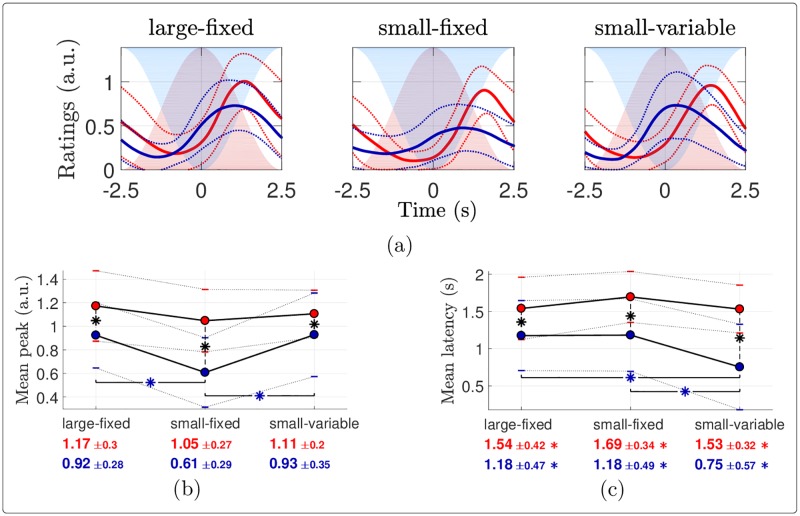
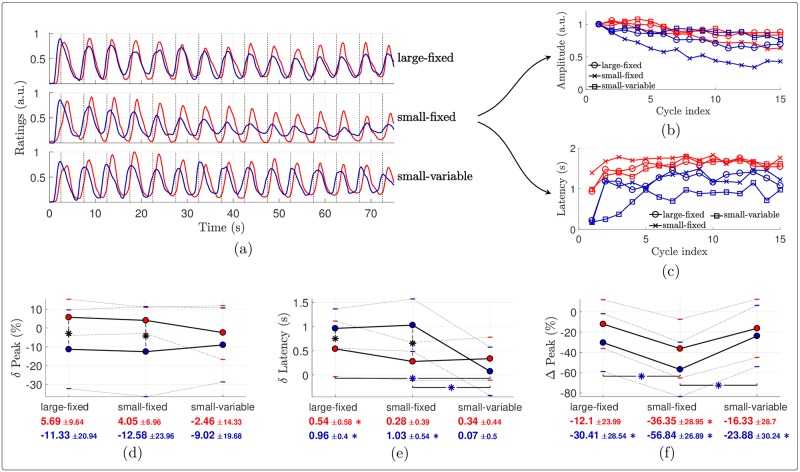
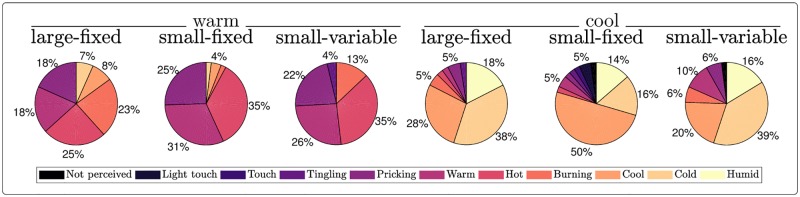
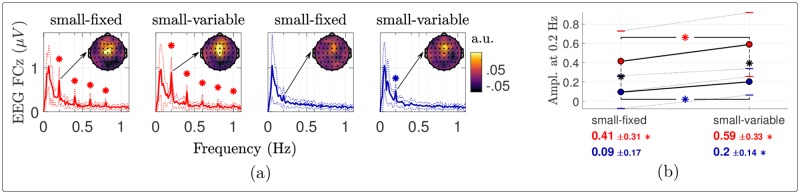
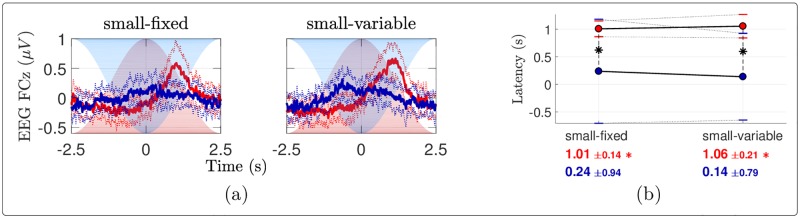
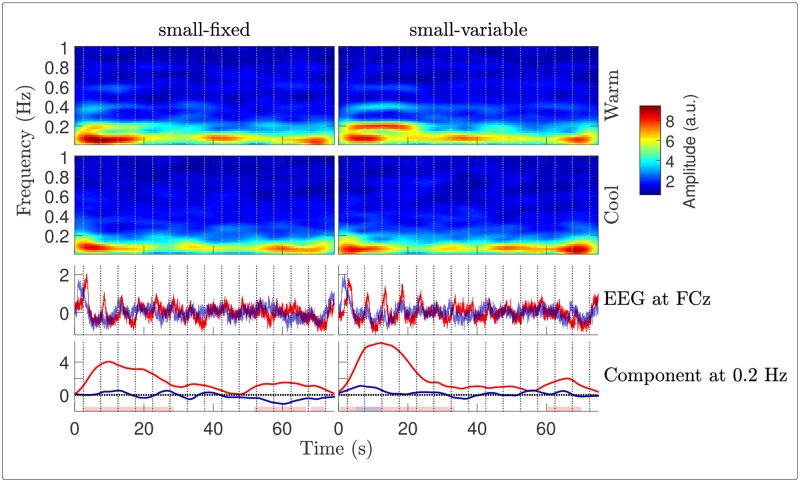
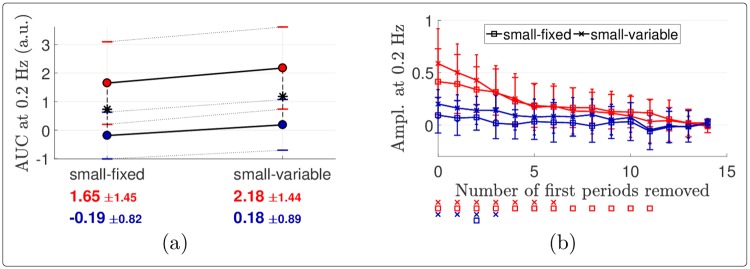
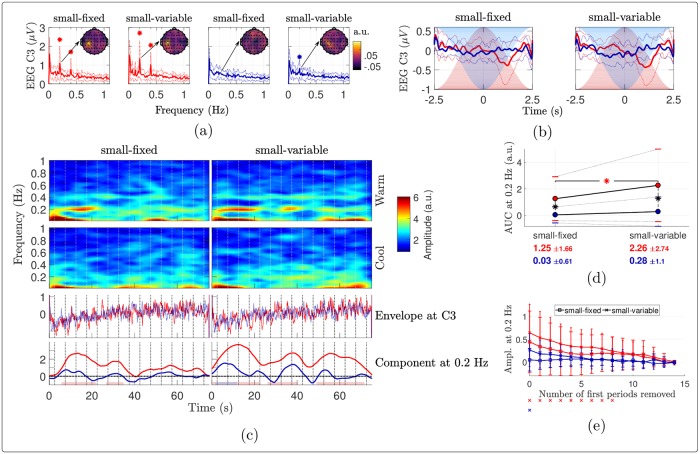
Thermosensation is crucial for humans to probe the environment and detect threats arising from noxious heat or cold. Over the last years, EEG frequency-tagging using long-lasting periodic radiant heat stimulation has been proposed as a means to study the cortical processes underlying tonic heat perception. This approach is based on the notion that periodic modulation of a sustained stimulus can elicit synchronized periodic activity in the neuronal populations responding to the stimulus, known as a steady-state response (SSR). In this paper, we extend this approach using a contact thermode to generate both heat- and cold-evoked SSRs. Furthermore, we characterize the temporal dynamics of the elicited responses, relate these dynamics to perception, and assess the effects of displacing the stimulated skin surface to gain insight on the heat- and cold-sensitive afferents conveying these responses. Two experiments were conducted in healthy volunteers. In both experiments, noxious heat and innocuous cool stimuli were applied during 75 seconds to the forearm using a Peltier-based contact thermode, with intensities varying sinusoidally at 0.2 Hz. Displacement of the thermal stimulation on the skin surface was achieved by independently controlling the Peltier elements of the thermal probe. Continuous intensity ratings to sustained heat and cold stimulation were obtained in the first experiment with 14 subjects, and the EEG was recorded in the second experiment on 15 subjects. Both contact heat and cool stimulation elicited periodic EEG responses and percepts. Compared to heat stimulation, the responses to cool stimulation had a lower magnitude and shorter latency. All responses tended to habituate along time, and this response attenuation was most pronounced for cool compared to warm stimulation, and for stimulation delivered using a fixed surface compared to a variable surface.
温度感觉对于人类探测环境和检测来自有害热或冷的威胁至关重要。在过去的几年中,使用长时间持续的周期性辐射热刺激进行脑电图频率标记已被提出作为研究构成热感觉的皮质过程的一种手段。这种方法基于这样的假设,即持续刺激的周期性调制可以在响应刺激的神经元群体中引起同步的周期性活动,称为稳态反应(SSR)。在本文中,我们使用接触热模块扩展了这种方法,以产生热和冷诱发的 SSR。此外,我们描述了引出响应的时间动态,将这些动态与感知相关联,并评估了刺激皮肤表面的位移对获得这些响应的热和冷敏感传入的见解的影响。在健康志愿者中进行了两项实验。在两项实验中,使用基于珀耳帖的接触热模块在前臂上以 0.2 Hz 的正弦波强度在 75 秒内施加有害热和无害冷刺激。通过独立控制热探头的珀耳帖元件来实现皮肤表面的热刺激位移。在第一项实验中,有 14 名受试者连续获得对持续热和冷刺激的强度评分,而在第二项实验中有 15 名受试者记录了脑电图。接触热和冷刺激都诱发了周期性的 EEG 反应和知觉。与热刺激相比,冷刺激的反应幅度较小,潜伏期较短。所有反应都倾向于随着时间的推移而习惯化,与温暖刺激相比,冷刺激的反应衰减更为明显,与使用固定表面相比,使用可变表面的刺激衰减更为明显。