Department of Medicine, Surgery and Dentistry, University of Salerno, Via S. Allende, 84081 Baronissi (SA), Italy.
Department of Electrical, Electronic and Information Engineering "Guglielmo Marconi" (DEI), University of Bologna, Via dell'Università 50, 47522 Cesena (FC), Italy.
Cells. 2020 May 20;9(5):1268. doi: 10.3390/cells9051268.
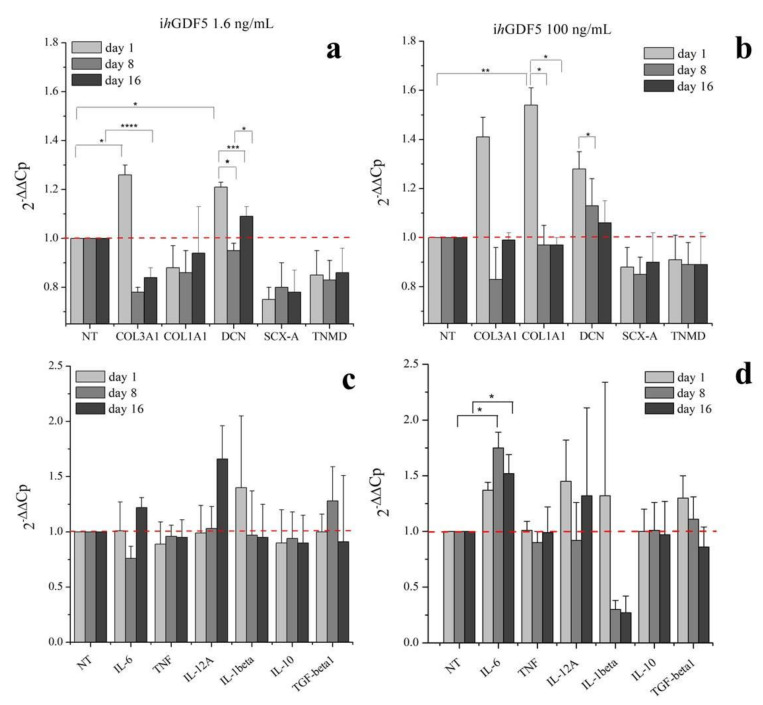
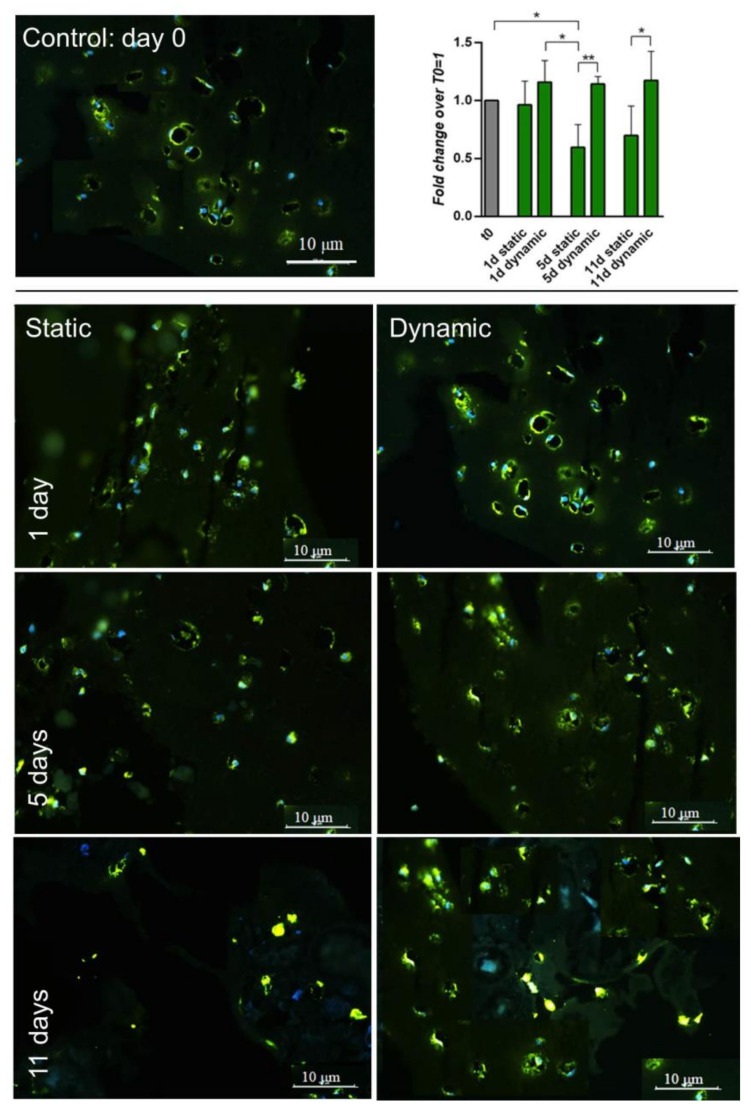
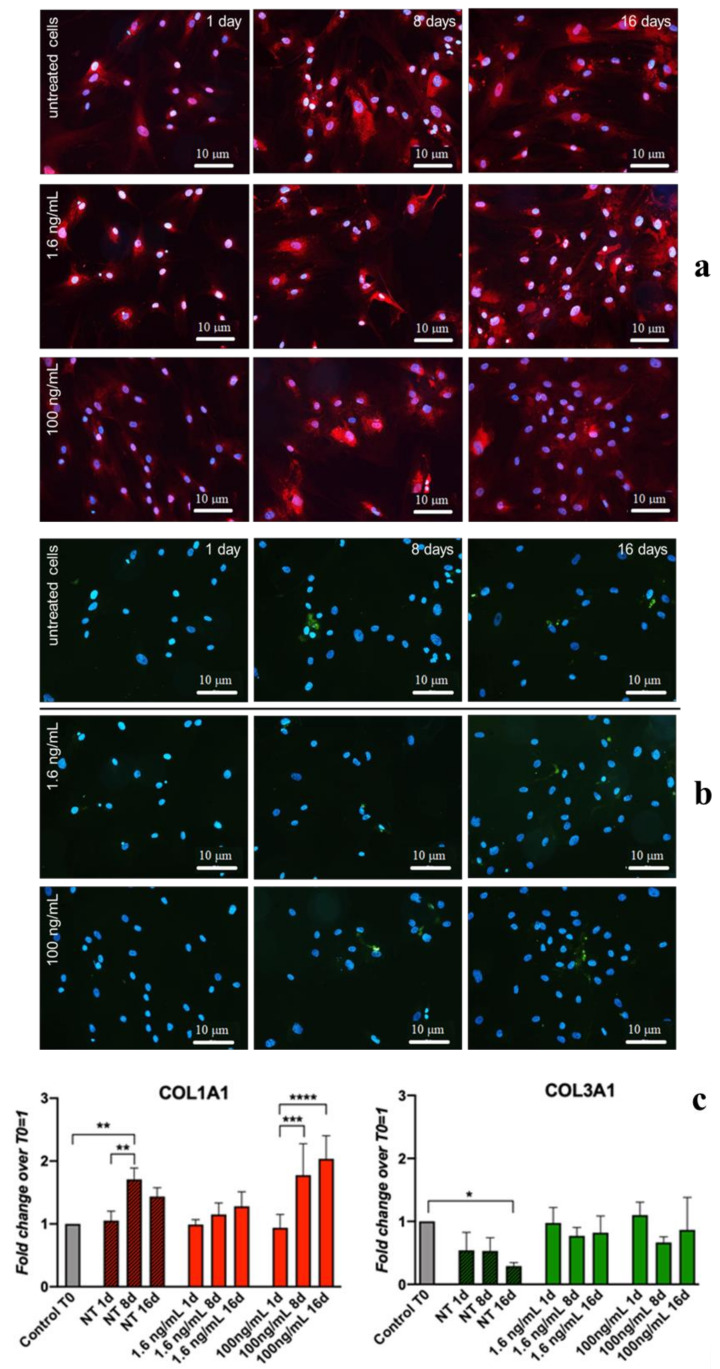
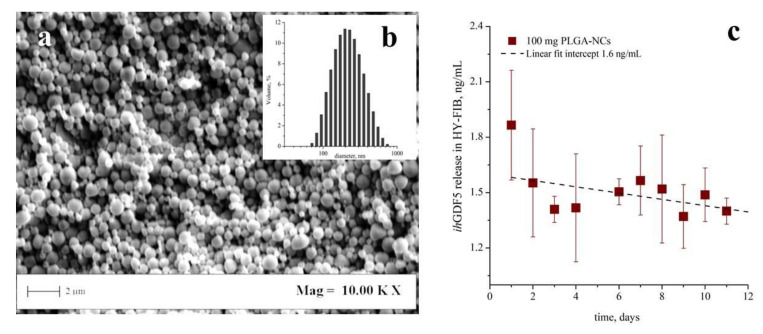
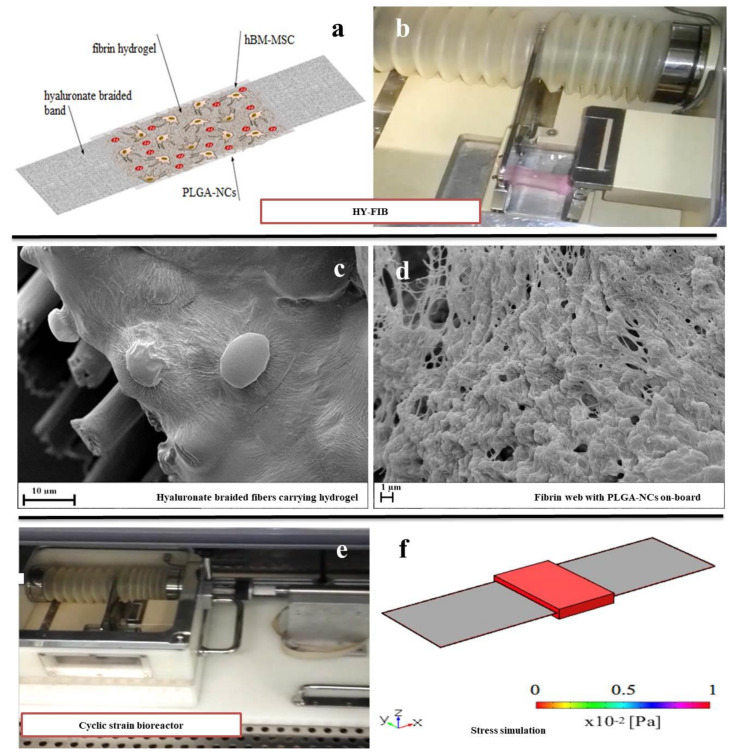
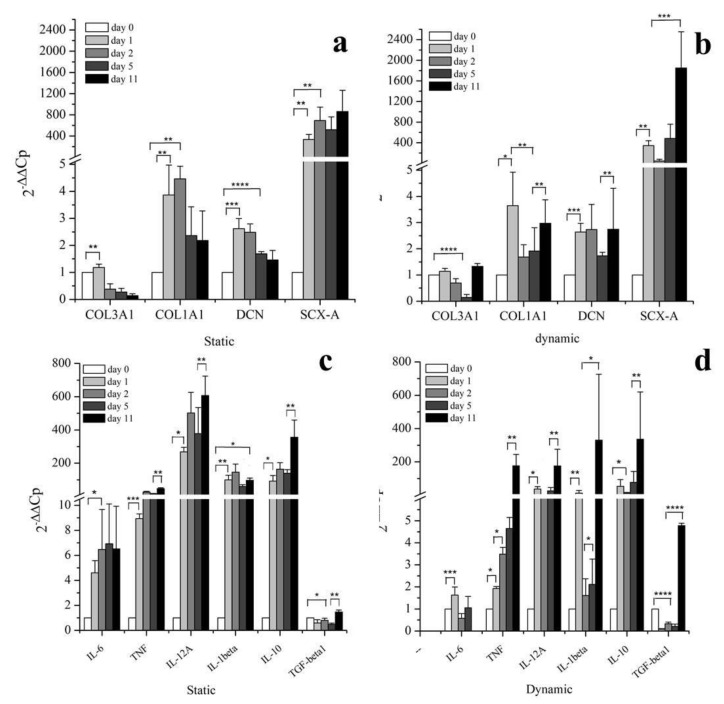
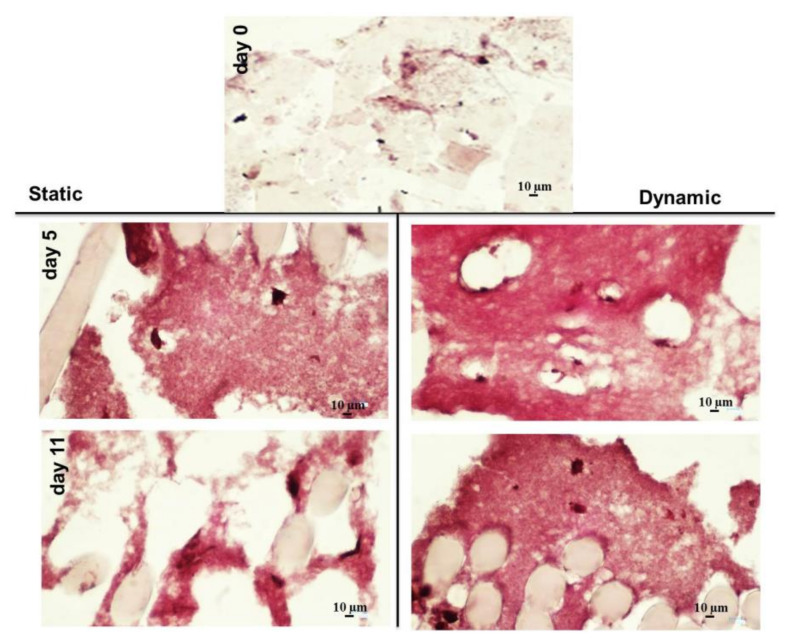
We developed a (three-dimensional) 3D scaffold, we named HY-FIB, incorporating a force-transmission band of braided hyaluronate embedded in a cell localizing fibrin hydrogel and poly-lactic-co-glycolic acid (PLGA) nanocarriers as transient components for growth factor controlled delivery. The tenogenic supporting capacity of HY-FIB on human-Bone Marrow Mesenchymal Stem Cells (hBM-MSCs) was explored under static conditions and under bioreactor-induced cyclic strain conditions. HY-FIB elasticity enabled to deliver a mean shear stress of 0.09 Pa for 4 h/day. Tendon and cytokine marker expression by hBM-MSCs were studied. Results: hBM-MSCs embedded in HY-FIB and subjected to mechanical stimulation, resulted in a typical tenogenic phenotype, as indicated by type 1 Collagen fiber immunofluorescence. RT-qPCR showed an increase of type 1 Collagen, scleraxis, and decorin gene expression (3-fold, 1600-fold, and 3-fold, respectively, at day 11) in dynamic conditions. Cells also showed pro-inflammatory (IL-6, TNF, IL-12A, IL-1β) and anti-inflammatory (IL-10, TGF-β1) cytokine gene expressions, with a significant increase of anti-inflammatory cytokines in dynamic conditions (IL-10 and TGF-β1 300-fold and 4-fold, respectively, at day 11). Mechanical signaling, conveyed by HY-FIB to hBM-MSCs, promoted tenogenic gene markers expression and a pro-repair cytokine balance. The results provide strong evidence in support of the HY-FIB system and its interaction with cells and its potential for use as a predictive in vitro model.
我们开发了一种(三维)3D 支架,命名为 HY-FIB,其中包含编织透明质酸盐的力传递带,嵌入细胞定位纤维蛋白水凝胶和聚乳酸-共-羟基乙酸(PLGA)纳米载体作为生长因子控制释放的瞬时成分。在静态条件和生物反应器诱导的循环应变条件下,研究了 HY-FIB 对人骨髓间充质干细胞(hBM-MSCs)的腱支持能力。HY-FIB 的弹性能够在 4 小时/天的时间内输送 0.09 Pa 的平均剪切应力。研究了 hBM-MSCs 的肌腱和细胞因子标志物表达。结果:在 HY-FIB 中嵌入并受到机械刺激的 hBM-MSCs 表现出典型的腱样表型,如 I 型胶原纤维免疫荧光所示。RT-qPCR 显示动态条件下 I 型胶原、粘连蛋白和饰胶蛋白基因表达增加(分别在第 11 天增加 3 倍、1600 倍和 3 倍)。细胞还表现出促炎(IL-6、TNF、IL-12A、IL-1β)和抗炎(IL-10、TGF-β1)细胞因子基因表达,动态条件下抗炎细胞因子显著增加(分别在第 11 天增加 300 倍和 4 倍,IL-10 和 TGF-β1)。HY-FIB 向 hBM-MSCs 传递的机械信号促进了腱形成基因标志物的表达和促修复细胞因子的平衡。这些结果为 HY-FIB 系统及其与细胞的相互作用及其作为预测性体外模型的潜力提供了强有力的证据。