Skowrońska Roksana, Mariańska Monika, Ulaszewski Waldemar, Tomkowiak Agnieszka, Nawracała Jerzy, Kwiatek Michał T
Department of Genetics and Plant Breeding, Poznań University of Life Sciences, Poznań, Poland.
Institute of Plant Genetics of the Polish Academy of Sciences, Poznań, Poland.
Front Plant Sci. 2020 May 7;11:447. doi: 10.3389/fpls.2020.00447. eCollection 2020.
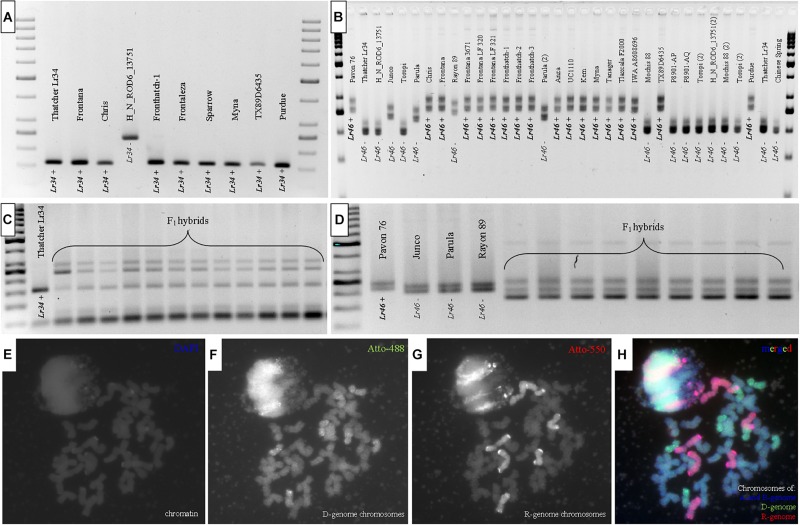
There is a growing interest in breeding and production of hexaploid triticale (× Wittmack ex A. Camus) in European Union and in the world. It is reported that triticale can be an alternative to wheat ( L.) for livestock feed production and has a potential to become preferred industrial energy crop. Fungal diseases, mainly leaf and stripe rusts, are the limiting factors of triticale growth and yield. Geneticists and breeders are now focusing on accumulation of the major genes for durability of rust resistance. Slow-rusting genes and are being exploited in many wheat breeding programs. This type of horizontal resistance is reported to be effective over space and time. Classical breeding techniques supported by marker-assisted selection (MAS) are the main tools in breeding programs. The aim of this study was to assess the possibility of transfer of slow-rusting genes from resistant genotypes of wheat into hexaploid triticale through cross-hybridizations. A total of 5,094 manual pollinations were conducted between two triticale cultivars Fredro and Twingo and 33 accessions of common wheat, which were reported as sources of slow-rusting resistance genes. The investigation of the slow-rusting gene transmission was performed using both molecular markers analyses and genomic hybridization (GISH). In total, 34 F hybrid plants were obtained, and 29 of them carried both slow-rusting loci. Therefore, these hybrids may be used for triticale prebreeding program.
在欧盟乃至全球,六倍体小黑麦(×Wittmack ex A. Camus)的育种和生产正受到越来越多的关注。据报道,小黑麦可作为小麦(L.)的替代品用于家畜饲料生产,并且有潜力成为首选的工业能源作物。真菌病害,主要是叶锈病和条锈病,是小黑麦生长和产量的限制因素。遗传学家和育种家目前正专注于积累抗锈持久性的主要基因。慢锈基因和正在许多小麦育种项目中得到利用。据报道,这种水平抗性在空间和时间上都有效。由分子标记辅助选择(MAS)支持的传统育种技术是育种项目中的主要工具。本研究的目的是评估通过杂交将慢锈基因从抗锈小麦基因型转移到六倍体小黑麦中的可能性。在两个小黑麦品种Fredro和Twingo与33份普通小麦材料(据报道这些材料是慢锈抗性基因的来源)之间总共进行了5094次人工授粉。使用分子标记分析和基因组杂交(GISH)对慢锈基因的传递进行了研究。总共获得了34株F1杂交植株,其中29株携带了两个慢锈基因座。因此,这些杂交种可用于小黑麦的预育种项目。