Radboud Institute for Health Sciences, Department of Primary and Community Care, Radboud University Medical Center, Nijmegen, The Netherlands.
J Intellect Disabil Res. 2020 Jul;64(7):482-488. doi: 10.1111/jir.12739. Epub 2020 May 26.
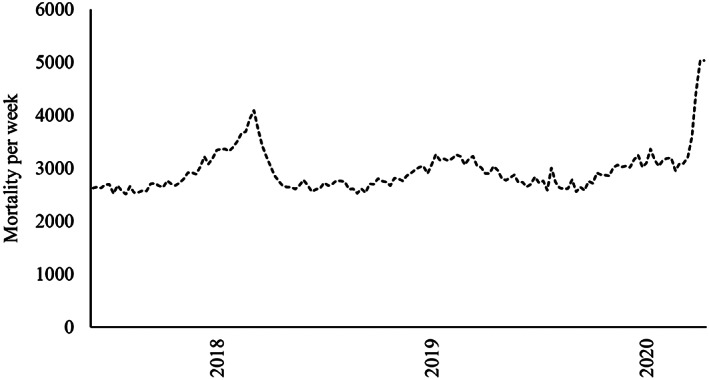
Data on the development of Covid-19 among people with intellectual disabilities (IDs) are scarce and it is uncertain to what extent general population data applies to people with ID. To give an indication of possible implications, this study investigated excess mortality patterns during a previous influenza epidemic.
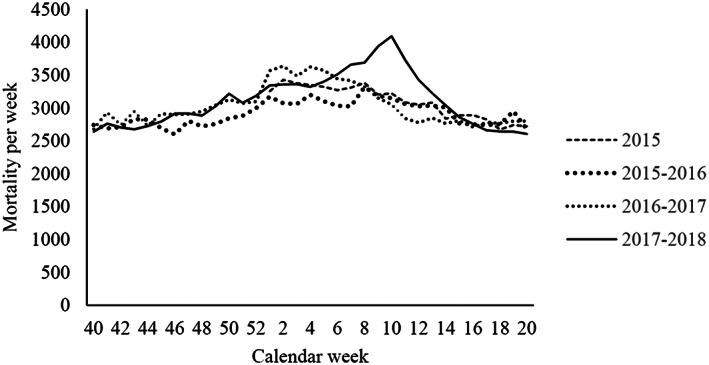
Using Dutch population and mortality registers, a historical cohort study was designed to compare mortality during the 2017-2018 influenza epidemic with mortality in the same period in the three previous years. People with ID were identified by entitlements to residential ID-care services as retrieved from a national database.
Data covered the entire adult Dutch population (12.6 million; GenPop), of which 91 064 individuals were identified with an ID. During the influenza epidemic, mortality among people with ID increased almost three times as much than in the GenPop (15.2% vs. 5.4%), and more among male individuals with ID (+19.5%) than among female individuals with ID (+10.6%), as compared with baseline. In both cohorts, comparable increases in mortality within older age groups and due to respiratory causes were seen. Particularly in the ID-cohort, excess deaths also occurred in younger age groups, due to endocrine diseases and ID-specific causes.
During the 2017-2018 influenza epidemic, excess mortality among people with ID was three times higher than in the general Dutch population, appeared more often at young age and with a broader range of underlying causes. These findings suggest that a pandemic may disproportionally affect people with ID while population data may not immediately raise warnings. Early detection of diverging patterns and faster implementation of tailored strategies therefore require collection of good quality data.
关于智力障碍(ID)人群中 COVID-19 发展的数据稀缺,不确定一般人群数据在多大程度上适用于 ID 人群。为了说明可能的影响,本研究调查了之前流感流行期间的超额死亡率模式。
使用荷兰人口和死亡率登记册,设计了一项历史队列研究,以比较 2017-2018 年流感流行期间的死亡率与前三年同期的死亡率。通过从国家数据库中检索到的居住 ID 护理服务的权益,确定 ID 人群。
数据涵盖了整个成年荷兰人口(1260 万;GenPop),其中有 91064 人被确定为 ID。在流感流行期间,ID 人群的死亡率增加了近三倍(15.2% 比 5.4%),男性 ID 人群(+19.5%)比女性 ID 人群(+10.6%)增加更多,与基线相比。在两个队列中,年龄较大的人群和由于呼吸道原因导致的死亡率都有类似的增加。特别是在 ID 队列中,由于内分泌疾病和 ID 特有的原因,在年轻人群中也发生了超额死亡。
在 2017-2018 年流感流行期间,ID 人群的超额死亡率是荷兰普通人群的三倍,在年轻人群中更为常见,且潜在原因更为广泛。这些发现表明,大流行可能不成比例地影响 ID 人群,而人群数据可能不会立即发出警告。因此,需要收集高质量的数据,以便早期发现差异模式并更快地实施有针对性的策略。