College of Pharmacy, Chongqing Medical University, Chongqing, People's Republic of China.
Institute of Life Sciences, Chongqing Medical University, Chongqing, People's Republic of China.
Int J Nanomedicine. 2020 May 8;15:3291-3302. doi: 10.2147/IJN.S241157. eCollection 2020.
Inhaled nanoparticles can cross pulmonary air-blood barrier into circulation and cause vascular endothelial injury and progression of cardiovascular disease. However, the molecular mechanism underlying the vascular toxicity of copper oxide nanoparticles (CuONPs) remains unclear. We have recently demonstrated that the release of copper ions and the accumulation of superoxide anions contributed to CuONPs-induced cell death in human umbilical vein endothelial cells (HUVECs). Herein, we further demonstrate the mechanism underlying copper ions-induced cell death in HUVECs.
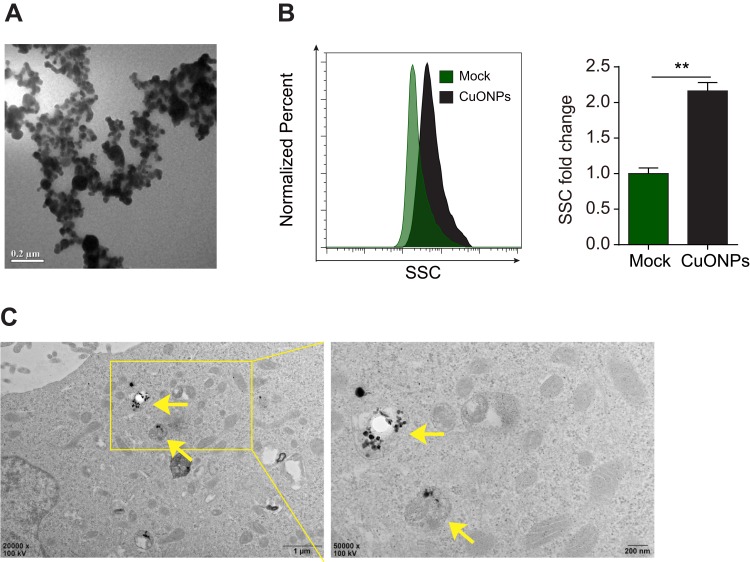
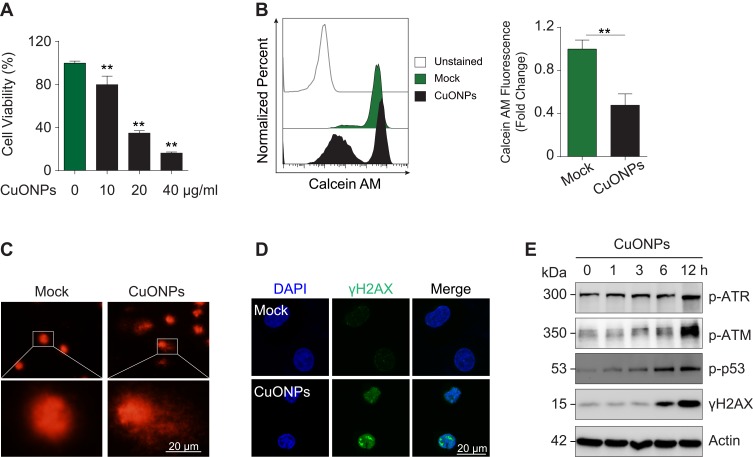
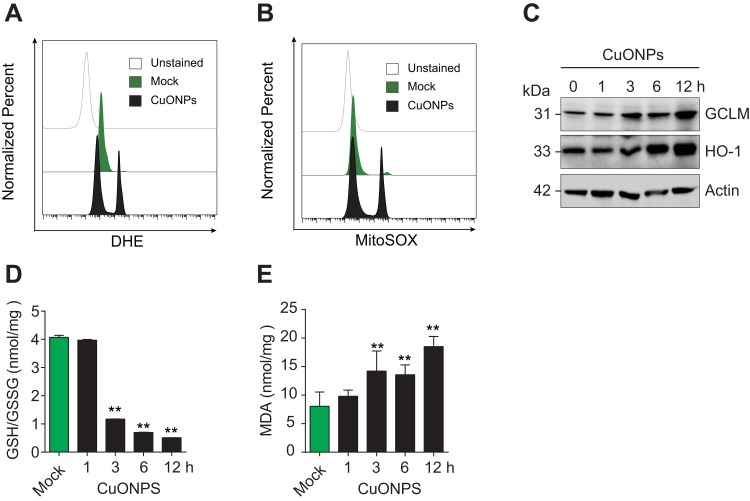
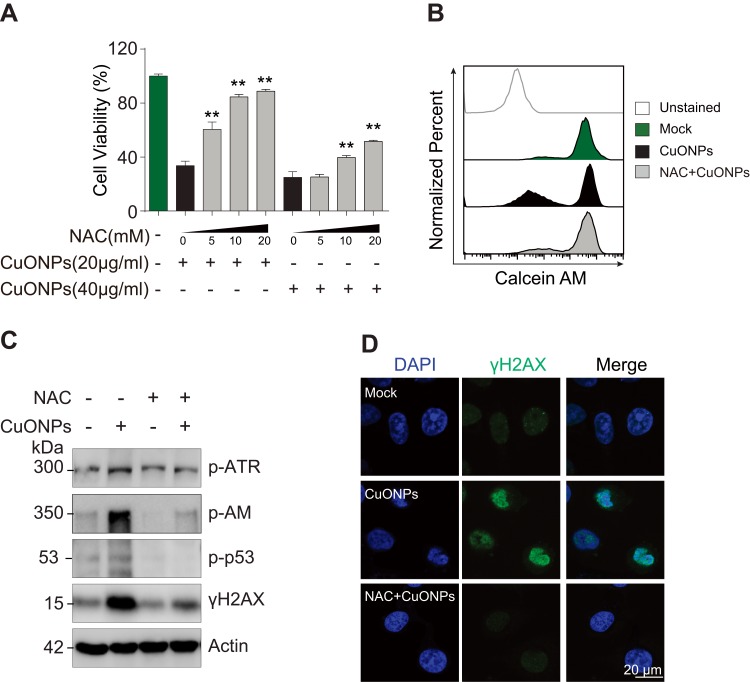
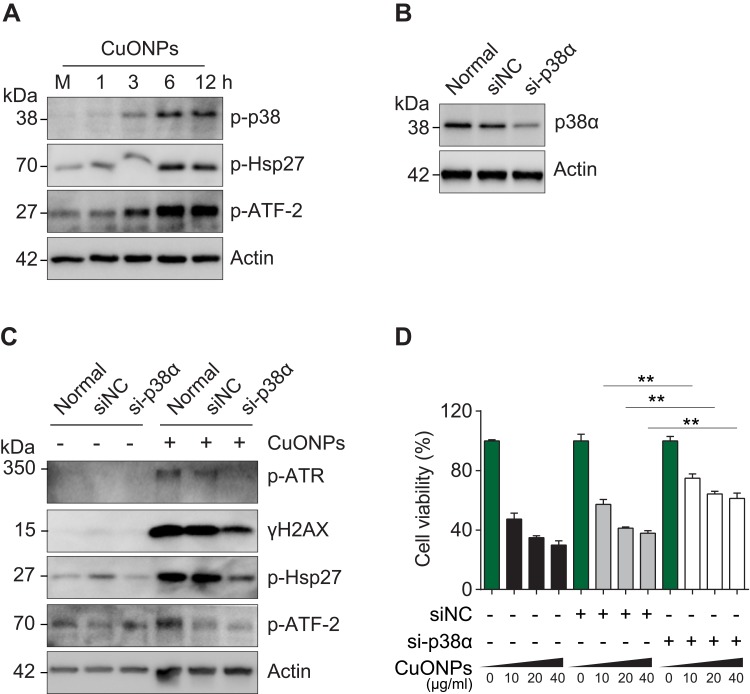
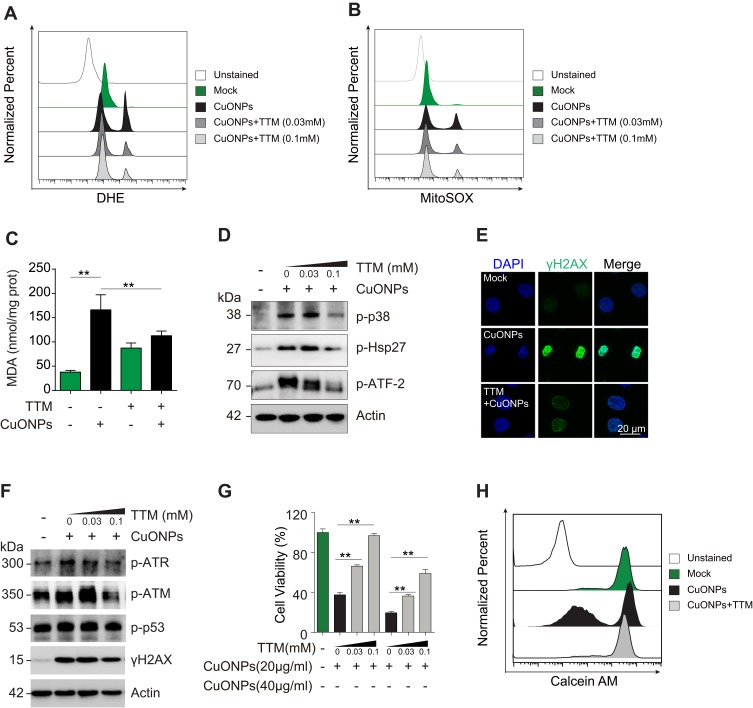
CuONPs were suspended in culture medium and vigorously vortexed for several seconds before exposure. After treatment with CuONPs, HUVECs were collected, and cell function assays were conducted to elucidate cellular processes including cell viability, oxidative stress, DNA damage and cell signaling pathways. We demonstrated that CuONPs uptake induced DNA damage in HUVECs as evidenced by γH2AX foci formation and increased phosphorylation levels of ATR, ATM, p53 and H2AX. Meanwhile, we showed that CuONPs exposure induced oxidative stress, indicated by the increase of cellular levels of superoxide anions, the upregulation of protein levels of heme oxygenase-1 (HO-1) and glutamate-cysteine ligase modifier subunit (GCLM), the elevation of the levels of malondialdehyde (MDA), but the reduction of glutathione to glutathione disulfide ratio. We also found that antioxidant N-acetyl-L-cysteine (NAC) could ameliorate CuONPs-induced oxidative stress and cell death. Interestingly, we demonstrated that p38 mitogen-activated protein kinase (MAPK) signaling pathway was activated in CuONPs-treated HUVECs, while p38α MAPK knockdown by siRNA significantly rescued HUVECs from CuONPs-induced DNA damage and cell death. Importantly, we showed that copper ions chelator tetrathiomolybdate (TTM) could alleviate CuONPs-induced oxidative stress, DNA damage, p38 MAPK pathway activation and cell death in HUVECs.
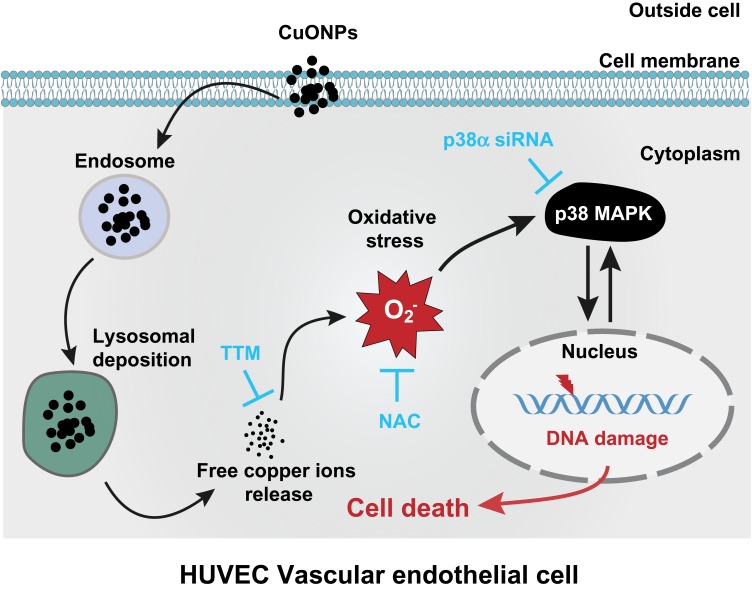
We demonstrated that CuONPs induced oxidative DNA damage and cell death via copper ions-mediated p38 MAPK activation in HUVECs, suggesting that the release of copper ions was the upstream activator for CuONPs-induced vascular endothelial toxicity, and the copper ions chelator TTM can alleviate CuONPs-associated cardiovascular disease.
吸入的纳米颗粒可以穿过肺气血屏障进入循环系统,导致血管内皮损伤,并促进心血管疾病的发生和发展。然而,氧化铜纳米颗粒(CuONPs)引起血管毒性的分子机制尚不清楚。我们最近的研究表明,铜离子的释放和超氧阴离子的积累导致了 CuONPs 诱导的人脐静脉内皮细胞(HUVEC)死亡。在此,我们进一步研究了铜离子诱导 HUVEC 死亡的机制。
CuONPs 在暴露前先悬浮于培养基中,剧烈涡旋数秒。用 CuONPs 处理 HUVECs 后,收集细胞,进行细胞功能测定,以阐明包括细胞活力、氧化应激、DNA 损伤和细胞信号通路在内的细胞过程。我们证明,CuONPs 的摄取导致 HUVECs 的 DNA 损伤,表现为 γH2AX 焦点形成和 ATR、ATM、p53 和 H2AX 的磷酸化水平增加。同时,我们表明,CuONPs 暴露诱导氧化应激,表现为细胞中超氧阴离子水平增加,血红素加氧酶-1(HO-1)和谷氨酸-半胱氨酸连接酶修饰亚基(GCLM)蛋白水平上调,丙二醛(MDA)水平升高,而谷胱甘肽/谷胱甘肽二硫化物比值降低。我们还发现抗氧化剂 N-乙酰-L-半胱氨酸(NAC)可以改善 CuONPs 诱导的氧化应激和细胞死亡。有趣的是,我们证明 p38 丝裂原活化蛋白激酶(MAPK)信号通路在 CuONPs 处理的 HUVECs 中被激活,而 siRNA 敲低 p38α MAPK 可显著挽救 HUVECs 免受 CuONPs 诱导的 DNA 损伤和细胞死亡。重要的是,我们表明铜离子螯合剂四硫钼酸盐(TTM)可以减轻 CuONPs 诱导的氧化应激、DNA 损伤、p38 MAPK 通路激活和 HUVECs 中的细胞死亡。
我们证明,CuONPs 通过铜离子介导的 p38 MAPK 激活诱导 HUVECs 发生氧化 DNA 损伤和细胞死亡,提示铜离子的释放是 CuONPs 诱导血管内皮毒性的上游激活剂,铜离子螯合剂 TTM 可以减轻 CuONPs 相关的心血管疾病。